Two More HÜRKUŞ-II Trainers Transfer to Çiğli, Turkish MoD Says
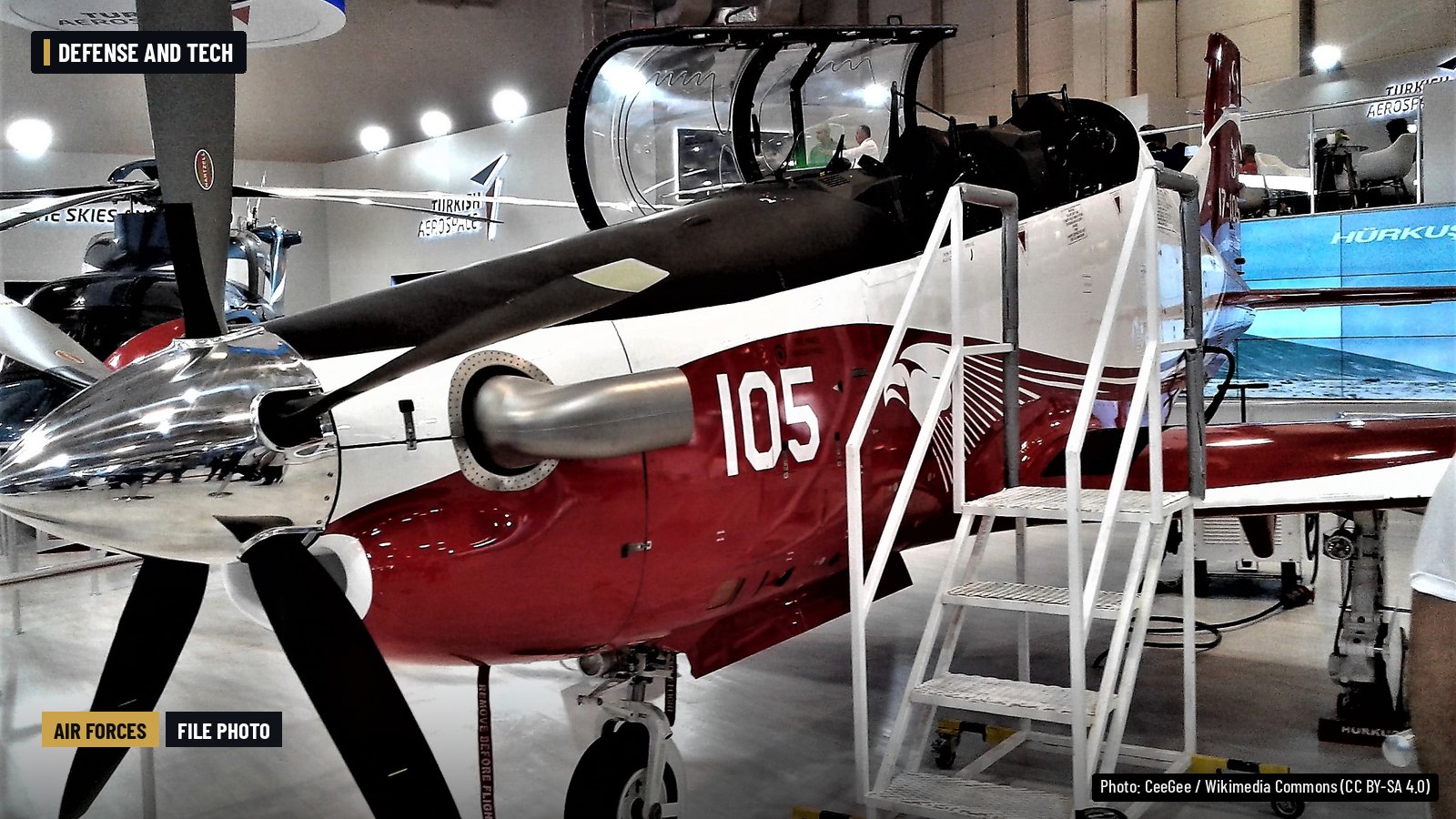
Türkiye’s Ministry of National Defence said on Sunday 8 November 2026 that two next-generation basic trainer HÜRKUŞ-II aircraft, developed with indigenous resources, had successfully transferred to their new home at the 2nd Main Jet Base and International Flight Training Centre Command in Çiğli after a send-off at Turkish Aerospace (TUSAŞ) facilities.
- The Ministry of National Defence said on 8 November 2026 that two next-generation basic trainer HÜRKUŞ-II aircraft transferred to the 2nd Main Jet Base and International Flight Training Centre Command at Çiğli after a send-off at TUSAŞ facilities
- The ministry posted the announcement at 13:44 Istanbul time, with video, on its official X account
- On 4 November, SSB President Haluk Görgün said SSB and the Air Force Command had completed acceptance of two more HÜRKUŞ aircraft, taking the number added to the Air Force inventory to four
- The first two HÜRKUŞ-II aircraft were handed over on 28 September 2026 at a ceremony at TUSAŞ’s Kahramankazan facilities, Anadolu Agency reported
- Görgün said on 28 September that the programme, originally 15 aircraft, had been expanded by 40 to 55, with HÜRKUŞ fleets planned for 2027 and all 55 due by the end of 2028
- TUSAŞ lists a 1,600 shp Pratt & Whitney Canada PT6A-68T engine, a maximum take-off weight of 3,300 kg, a maximum operating speed of 593 km/h and a service ceiling of 30,000 ft for the new-generation HÜRKUŞ
- Not disclosed: tail numbers, whether the airframes that reached Çiğli are the same pair accepted on 4 November, and the exact date of the ferry flight relative to the 8 November post
What the ministry announced
The ministry published the statement on its official X account at 13:44 Istanbul time (10:44 UTC) and attached a video (Ministry of National Defence). It described the two aircraft as next-generation basic trainers developed with indigenous means and said that, after the send-off at TUSAŞ, they had transferred successfully to their new home: the 2nd Main Jet Base and International Flight Training Centre Command at Çiğli, on the northern edge of İzmir.
Four days earlier, on 4 November, the president of the Presidency of Defence Industries (SSB), Prof. Dr Haluk Görgün, said SSB and the Air Force Command had completed acceptance of two further next-generation basic trainer HÜRKUŞ aircraft (Haluk Görgün). He wrote that the number of HÜRKUŞ aircraft added to the Air Force inventory had thereby reached four, and that deliveries were continuing as planned. The ministry’s 8 November post did not publish tail numbers, so it has not been independently confirmed that the airframes which arrived at Çiğli are the same pair accepted on 4 November. The post also did not say whether the ferry flight itself took place on 8 November or shortly before the announcement.
What HÜRKUŞ-II is
HÜRKUŞ-II is the new-generation basic trainer designed and built by TUSAŞ for the Turkish Air Force, as a step between elementary flying training and the jet-powered HÜRJET. TUSAŞ’s HÜRKUŞ product page lists a tandem-seat, low-wing, single-engine turboprop with a maximum take-off weight of 3,300 kg (7,275 lb), a wingspan of 10.86 metres, a length of 11.35 metres and a height of 3.53 metres. The listed engine is a 1,600 shp Pratt & Whitney Canada PT6A-68T — a foreign powerplant — driving the propeller. Published performance figures on the same page are a maximum operating speed of 593 km/h (320 knots), a rate of climb of 3,795 feet per minute, a service ceiling of 30,000 ft (9,144 metres), a maximum range of 625 nautical miles (1,158 km) and load limits of +7/−3 G. The cockpit is fitted with Martin-Baker MK T16N zero-zero ejection seats. Those are catalogue figures, not measurements from the Çiğli transfer.
For a fuller account of the family, including the earlier HÜRKUŞ-A and armed HÜRKUŞ-C, see our HÜRKUŞ trainer guide. How the programme sits inside TUSAŞ’s wider fixed-wing line — from HÜRKUŞ to HÜRJET and KAAN — is set out in our profile of Turkish Aerospace.
Previous developments
The first two HÜRKUŞ-II aircraft were handed over on 28 September 2026 at a ceremony at TUSAŞ’s Kahramankazan facilities, Anadolu Agency reported. SSB President Görgün, TUSAŞ chairman Ömer Cihad Vardan, TUSAŞ general manager Mehmet Demiroğlu and Air Force Commander General Rafet Dalkıran attended. Görgün said Türkiye was, for the first time, entrusting an indigenously designed manned aircraft to its own pilots. He said about 23,000 hours of ground, laboratory and system-integration testing had preceded a military type certificate issued on 9 September 2026.
At that ceremony Görgün said the procurement programme had begun with 15 aircraft and had been expanded by 40, to a total of 55. He said HÜRKUŞ fleets were expected to be seen in the Turkish Air Force in 2027, and that all 55 aircraft were planned to enter the inventory by the end of 2028. He put the local-content ratio at approaching 80 per cent and named ASELSAN, HAVELSAN, TASECS, KAREL, ANDAR, TAAC, Fotoniks, Volt Teknoloji, Volo, UDEA and other subcontractors as contributors. He also said the cockpit and avionics architecture had been designed to align with HÜRJET and KAAN, so that pilots moving on to those types would meet a familiar layout rather than an entirely new one. General Dalkıran said HÜRKUŞ would take an important role in Air Force flying training and would form a foundation for the transition to HÜRJET and KAAN.
Defense and Tech previously reported that TUSAŞ had confirmed a 14-aircraft HÜRKUŞ-II export order for Azerbaijan, with first deliveries planned in 2026. That contract is separate from the 55-aircraft Turkish Air Force programme.
Industry context
Moving two more aircraft from the factory to Çiğli, the Air Force’s main flying-training base, is the next step after factory acceptance: the aircraft leave TUSAŞ and join the unit that will use them to train pilots. Combined with Görgün’s 4 November statement, it indicates that serial deliveries are under way, not that a new contract has been signed. The ministry did not say how many HÜRKUŞ-II aircraft are already physically at Çiğli, including the pair handed over on 28 September.
The listed Pratt & Whitney Canada PT6A-68T engine remains an imported subsystem. Görgün’s 28 September remarks on an approaching 80 per cent local-content ratio concern the aircraft as a whole; neither he nor TUSAŞ’s product page states that the engine itself has been replaced by a domestic design. Until the ministry or TUSAŞ publish tail numbers, utilisation plans or a delivery-rate update, the confirmed facts are those in the official statements: two HÜRKUŞ-II aircraft transferred to Çiğli after a TUSAŞ send-off, as announced on 8 November, and two further aircraft accepted on 4 November, bringing the number added to the Air Force inventory to four.
Sources: Ministry of National Defence official X account, 8 November 2026, 13:44 Istanbul; Haluk Görgün official X account, 4 November 2026, 13:26 Istanbul; Anadolu Agency, 28 September 2026; TUSAŞ HÜRKUŞ product page.