BAE Systems Agrees Seven-Year APKWS Production Framework With Pentagon
BAE Systems and the Pentagon have agreed a framework for up to 25,000 APKWS guidance kits a year, for as long as seven years. The Defense Department announced the deal on October 19, 2026. It is a framework rather than a signed production contract, and Congress still has to approve and fund the buy.
APKWS, short for Advanced Precision Kill Weapon System, converts unguided 2.75-inch rockets into laser-guided munitions. BAE builds the kits in Hudson, New Hampshire, and Austin, Texas, and said it will raise output while a multiyear contract is negotiated.
A Seven-Year Framework for APKWS Guidance Kits
| Item | Detail |
|---|---|
| Customer | US Department of Defense (Department of War) |
| Contractor | BAE Systems |
| Instrument | Framework agreement; a multiyear contract is still being negotiated |
| Volume | Up to 25,000 APKWS guidance kits per year |
| Term | As long as seven years |
| Allied demand | Path to 35,000 kits per year if partners request more through Foreign Military Sales |
| Production sites | Hudson, New Hampshire, and Austin, Texas |
| Funding | Requires congressional approval and funding; cost not disclosed |
| Announced | October 19, 2026 |
Michael Duffey, the Pentagon’s undersecretary for acquisition and sustainment, said the agreement “keeps production lines running at capacity” and “flips the cost calculus in the taxpayer’s favor.” Neither side has put a price on the deal.
Tom Arseneault, president and CEO of BAE Systems Inc., said APKWS delivers “proven, reliable and affordable precision at scale.” The Pentagon’s reasoning, as reported, is that a longer demand signal lets BAE buy long-lead components and grow its skilled workforce ahead of orders.
How APKWS Turns a Rocket Into a Guided Round
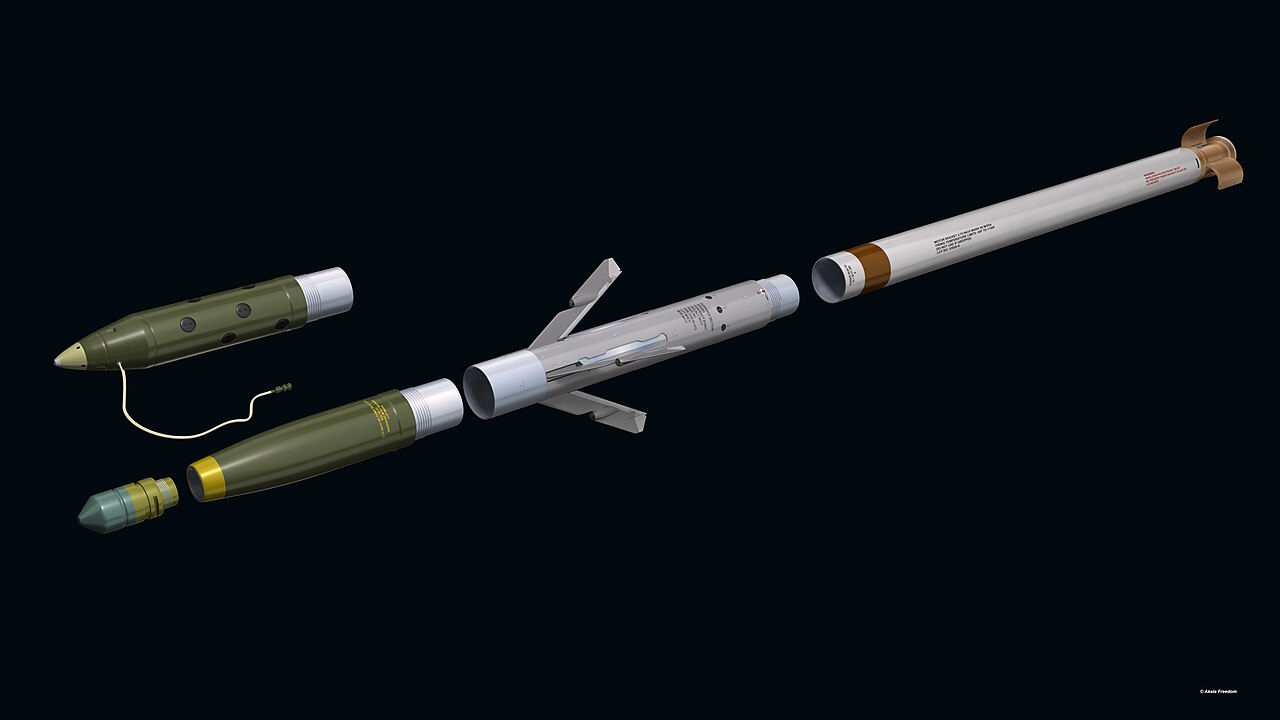
The kit bolts onto the front of a standard 2.75-inch rocket and adds a guidance section and control surfaces. The result is a laser-guided round that costs far less than a guided air-to-air missile. All four US services field the system.
That price gap is why APKWS has become a counter-drone tool. Fighters and helicopters can use it against slow, cheap unmanned aircraft without spending a missile that costs many times more. Italy is reportedly weighing 5,031 kits for counter-drone defence.
Framework Versus the Existing Navy Contract
BAE already holds a five-year Navy contract for the kits, so the new framework sits on top of existing demand rather than replacing it.
| Feature | Existing Navy contract | New Pentagon framework |
|---|---|---|
| Instrument | Five-year contract with a ceiling of about $1.7 billion | Framework agreement; multiyear contract under negotiation |
| Volume | Up to 55,000 kits for the Navy, Army and foreign customers | Up to 25,000 kits a year for up to seven years |
| Allied demand | Foreign customers covered within the contract | Path to 35,000 kits a year through Foreign Military Sales |
| Funding status | Contract vehicle in place; work expected to finish by December 2031 | Needs congressional approval and funding |
Taken at face value, 25,000 kits a year over seven years would be 175,000 kits. That figure is arithmetic on the announced ceiling, not a number either side has stated, and actual orders depend on appropriations.
Allied Demand Behind the 35,000-Kit Ceiling
The extra 10,000 kits a year are conditional. They depend on partner nations formally requesting kits through the Foreign Military Sales programme, and the framework only outlines the route.
Saudi Arabia is the largest visible prospect. The State Department approved a possible $1.96 billion package in July 2026 that includes up to 20,000 kits, split evenly between air-to-air and air-to-ground versions. Approval of a possible sale is not a signed order.
| Date | Event |
|---|---|
| February 2026 | BAE says it has delivered its 100,000th APKWS kit |
| July 2026 | State Department approves a possible $1.96 billion Saudi package, up to 20,000 kits |
| October 19, 2026 | Pentagon and BAE announce the seven-year framework |
BAE Systems Company Profile
| Item | Detail |
|---|---|
| Headquarters | London, United Kingdom |
| Founded | 1999 |
| Employees | About 110,000 (2026) |
| Revenue | About £28.3 billion (2025) |
| CEO | Charles Woodburn |
| Units | BAE Systems Inc. (US), Maritime, Submarines, Land and Armaments, Australia, Digital Intelligence |
| Known programmes | F-35 partner, Eurofighter Typhoon, Astute-class submarines, Type 26 frigates, M777 howitzer, APKWS |
Munitions Deals Stack Up Across the Pentagon
The APKWS framework follows a string of production agreements this year. In January, Lockheed Martin agreed to more than triple production of the PAC-3 MSE interceptor. A THAAD framework led to a June contract worth more than $35 billion, and in March BAE and Lockheed agreed to quadruple THAAD seeker production.
Each uses the same logic: guarantee demand now, ask industry to build capacity in advance. Whether Congress funds the APKWS buy at the full 25,000-kit level is the open question, and that reading is analysis rather than anything the Pentagon has said.
APKWS Framework FAQ
What is APKWS?
The Advanced Precision Kill Weapon System, a guidance kit that converts unguided 2.75-inch rockets into laser-guided munitions.
How many kits does the framework cover?
Up to 25,000 a year for as long as seven years, with a path to 35,000 a year if allies request more.
Is this a contract?
No. It is a framework agreement. A multiyear contract is still being negotiated and Congress must approve and fund the purchase.
Where are APKWS kits built?
BAE Systems builds them in Hudson, New Hampshire, and Austin, Texas.
Why is APKWS used against drones?
It is a much cheaper alternative to air-to-air missiles for shooting down drones, according to Defense News.
- BAE Systems – “BAE Systems, US Department of War sign long-term agreement to increase APKWS production”: baesystems.com
- Defense News – “Pentagon, BAE sign deal for up to 25,000 precision-guided munition kits a year” (October 19, 2026): defensenews.com
- Defence Industry Europe – “BAE Systems and Pentagon agree plan for up to 25,000 APKWS guidance kits annually”: defence-industry.eu
- FlightGlobal – “Pentagon and BAE boost APKWS production with seven-year framework” (October 20, 2026)
- Wikipedia – BAE Systems (company data)