Red Arrows Explained: The RAF Aerobatic Team, Hawk Jets, Pilots and Future Aircraft
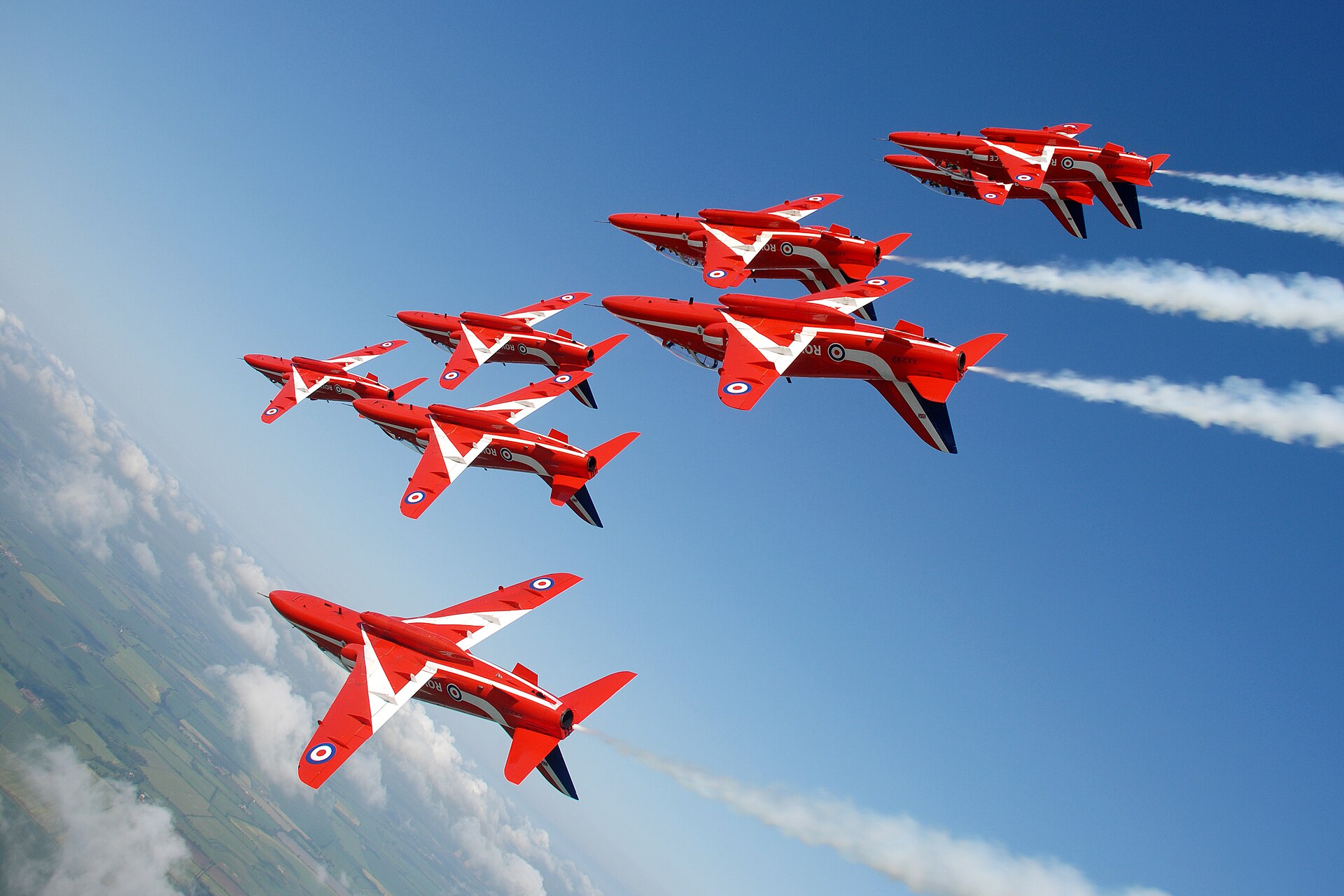

Few military units are as instantly recognisable as the Red Arrows. Nine red jets trailing red, white and blue smoke have become a symbol of the Royal Air Force and of Britain itself. Behind the shows is a highly trained team of front-line pilots and engineers, and a big question about which aircraft will carry the team into the 2030s.
- Official name: the Royal Air Force Aerobatic Team
- Formed in 1964, first public display season in 1965
- Flies nine BAE Systems Hawk T1 jet trainers
- Based at RAF Waddington, Lincolnshire, since leaving RAF Scampton
- Has performed thousands of displays in more than 50 countries
A short history
The Red Arrows were formed in 1964 at RAF Little Rissington, replacing several unofficial squadron display teams with a single national team. They first flew the Folland Gnat, a small and agile trainer, before switching to the Hawk in 1980. The team is part of the RAF and its pilots are serving officers, not civilians.
The Hawk T1
The BAE Systems Hawk T1 is a British-built advanced jet trainer that first flew in the 1970s. It is light, responsive and reliable, ideal for close formation flying. The team’s jets are modified to carry diesel mixed with dye, which is injected into the jet exhaust to create the famous coloured smoke trails.
Who are the pilots?
Every Red Arrows pilot is an experienced fast-jet pilot who has flown front-line aircraft such as the Typhoon or Tornado, usually with at least 1,500 flying hours. They apply to join and go through a demanding selection process. Pilots normally serve a three-year tour, so each year some leave and new members arrive. Red 1 is the team leader, and Reds 6 and 7 form the Synchro Pair, known for head-on passes.
Famous manoeuvres
The Diamond Nine, with all nine aircraft in a tight diamond, is the team’s signature formation. Other crowd favourites include the Vixen Break, where the jets split apart in a burst of smoke, the Tornado, where aircraft spiral around each other, and the Synchro Pair’s opposition passes. Displays are adjusted to the weather, with full, rolling and flat shows.
Ambassadors abroad
Beyond air shows in the UK, the Red Arrows tour overseas to support British diplomacy, defence exports and industry. They have performed in North America, the Middle East and Asia, often alongside trade events promoting the UK.
The future
The Hawk T1 is ageing and is expected to leave RAF service around 2030. The government has not yet confirmed a long-term replacement, and options under discussion include newer jet trainers and other aircraft types. Whatever is chosen will need to deliver the same precision and reliability, and will shape the team’s identity for decades.
Verdict
The Red Arrows are more than an air show act. They demonstrate the skill of RAF pilots and engineers, attract recruits and promote Britain abroad. Choosing the right successor to the Hawk will decide how the team flies for the next generation.
Featured image: Cpl. Andy Benson / OGL v1.0, via Wikimedia Commons