Eurocopter Tiger Attack Helicopter: Specs, Weapons, Variants and Its Uncertain Future
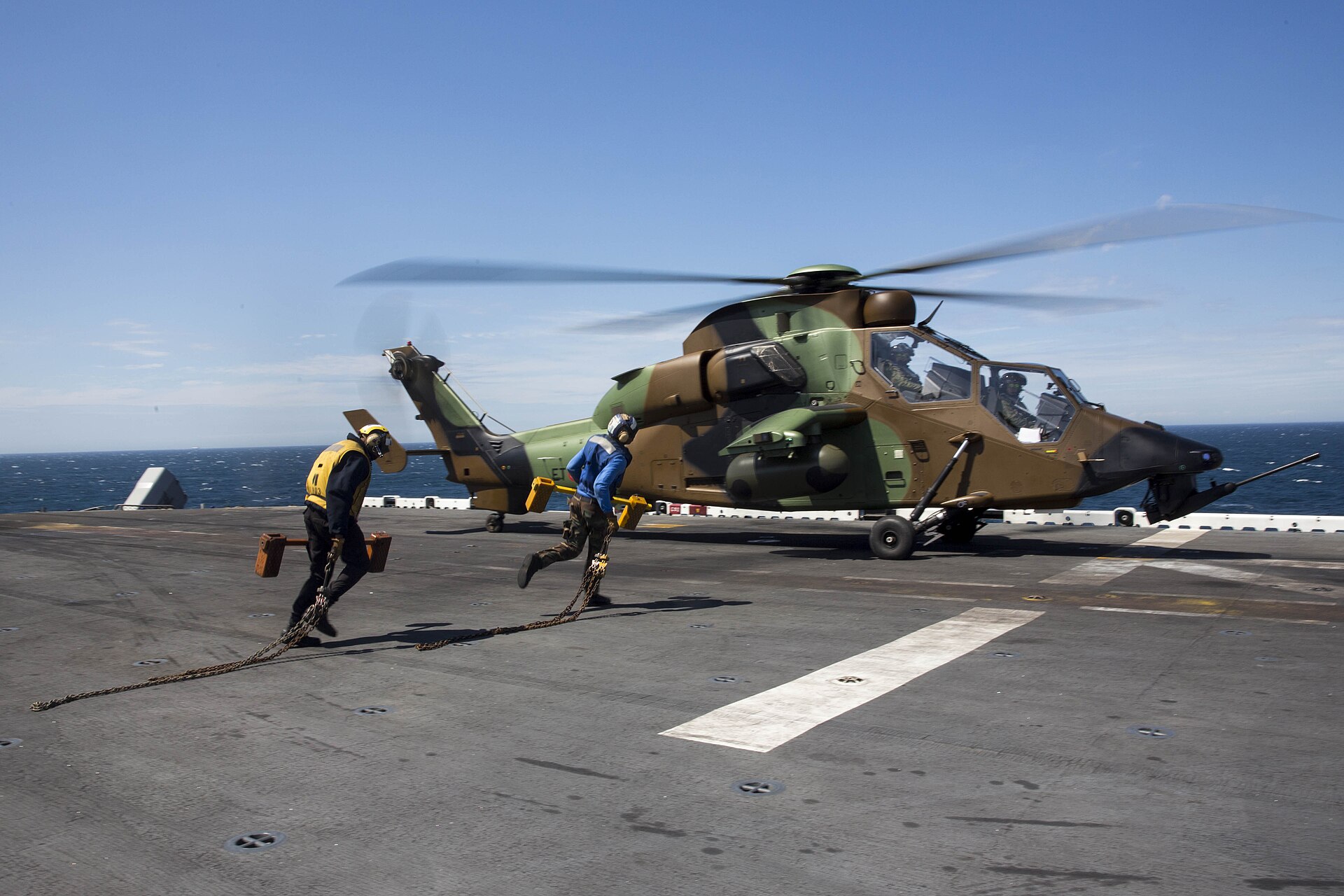
The Tiger was designed to be Europe’s answer to the American Apache: a fast, agile, high-tech attack helicopter built by a Franco-German team. It has flown combat missions from Afghanistan to Libya and the Sahel, but its story is also one of high costs and difficult maintenance. Here is the full picture.
- Franco-German attack helicopter built by Airbus Helicopters
- Entered service in the 2000s with France, Germany, Spain and Australia
- Armed with a 30 mm cannon, rockets and anti-tank and air-to-air missiles
- Combat in Afghanistan, Libya and the Sahel
- Germany and Australia are replacing it; France and Spain are upgrading
Origins
France and Germany launched the Tiger programme in the 1980s to counter Soviet tanks in a European war. By the time it entered service in the 2000s, the Cold War was over and missions had changed. It was built by Eurocopter, now Airbus Helicopters, and first flew in 1991.
Design and performance
The Tiger is a two-seat tandem helicopter with the pilot in front and the gunner behind, an unusual arrangement among attack helicopters. It is relatively light, at around 6 tonnes maximum take-off weight, and very manoeuvrable, with a top speed of about 290 km/h. Extensive use of composites and a mast-mounted or roof-mounted sight help keep it hidden behind trees and terrain.
Variants and weapons
HAP/HAD (France): armed with a 30 mm chin turret cannon, 68 mm rockets, Mistral air-to-air missiles and, in the HAD version, Hellfire anti-tank missiles. HAD-E (Spain): a more powerful version firing Spike ER missiles. UHT (Germany): focused on anti-tank work with PARS 3 LR and HOT missiles, without a gun turret. ARH (Australia): an armed reconnaissance variant with Hellfire missiles.
Combat record
French Tigers fought in Afghanistan from 2009, flew from helicopter carriers off Libya in 2011, and were heavily used against jihadist groups in Mali and the wider Sahel during operations Serval and Barkhane. German Tigers also deployed to Afghanistan and later to Mali with the UN mission. Crews praised its agility and sensors, but availability was often low.
An uncertain future
High operating costs and maintenance problems have hurt the Tiger. Australia decided to replace its fleet with AH-64E Apaches, and Germany is phasing out its Tigers in favour of the cheaper H145M light combat helicopter. France and Spain, by contrast, are pursuing the Tiger Mk3 upgrade with new sensors, data links and missiles to keep it in service into the 2040s.
Tiger vs Apache
The Tiger is lighter, more agile and in some ways more advanced in its use of composite materials. The Apache carries more weapons, has a larger global fleet and support network, and has much deeper combat experience. For most export customers, the Apache has been the safer choice.
Verdict
The Tiger is a capable machine that proved itself in combat, but it never achieved the scale needed to be cost-effective. Its future now rests with France and Spain, and with how well the Mk3 upgrade adapts it to battlefields full of drones and modern air defences.
Featured image: U.S. Navy photo by Mass Communication Specialist Seaman Ryre Arciaga / Public domain, via Wikimedia Commons