K-Defense: How South Korea Became One of the World’s Fastest-Growing Arms Exporters
Ten years ago South Korea was a solid but modest arms supplier. Today its “K-defense” industry is one of the biggest success stories in the global arms market, winning huge deals in Europe, the Middle East and Asia. Here is how it happened and what comes next.
- Record export contracts of about $17 billion in 2022
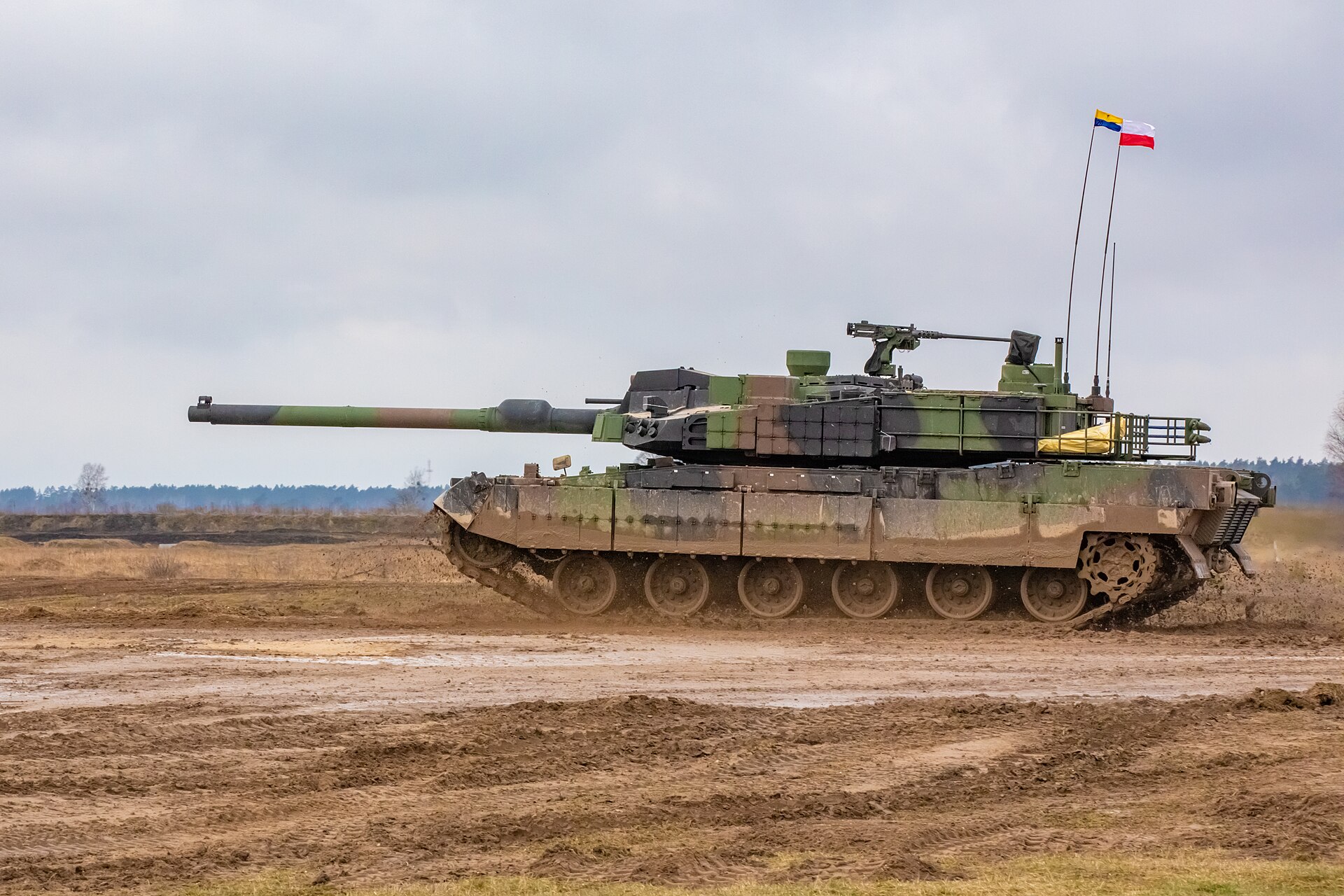
- Poland is the biggest customer: K2, K9, FA-50 and Chunmoo
- K9 howitzer used by around ten countries
- KM-SAM sold to the UAE, Saudi Arabia and Iraq
- Seoul aims to be the world’s 4th-largest exporter by 2027
The numbers
South Korean arms export contracts jumped to a record of about $17 billion in 2022, driven by Poland’s massive orders after Russia invaded Ukraine, and have remained far above pre-war levels since. SIPRI already ranks South Korea among the world’s top ten exporters, and the government’s stated goal is to become the fourth-largest arms exporter by 2027, behind only the US, Russia and France.
Poland: the breakthrough
Poland signed framework agreements in 2022 for up to 1,000 K2 Black Panther tanks, more than 600 K9 self-propelled howitzers, nearly 300 K239 Chunmoo rocket launchers and 48 FA-50 light combat aircraft. Executive contracts have followed in stages, including a second large K2 deal in 2025 that includes production of a Polish K2PL variant in Poland. No other customer has bought Korean weapons on this scale.
Star products
K9 Thunder: a 155 mm self-propelled howitzer, Korea’s best-selling weapon, used by countries including Türkiye (as the T-155 Fırtına base), Poland, Norway, Finland, Estonia, India, Australia, Egypt and Romania. K2 Black Panther: a modern main battle tank built by Hyundai Rotem. FA-50: a light combat aircraft from KAI flying in Asia, the Middle East and Europe. Redback: an infantry fighting vehicle chosen by Australia. KM-SAM: a medium-range air defence system sold to the UAE, Saudi Arabia and Iraq.
Why buyers choose Korea
South Korea’s secret is speed and scale. Because it maintains a large army facing North Korea, its factories run hot lines that can deliver quickly, sometimes by diverting equipment meant for Korean forces. Its systems are compatible with NATO standards, prices are competitive, and Seoul is willing to share technology and set up local production, as in Poland, India, Australia and Egypt.
Challenges
Financing large contracts has strained Korean export credit agencies, and some deals depend on loans. Competition is intensifying from European manufacturers rebuilding their capacity, and political changes in customer countries can delay contracts. South Korea also has limited experience supporting fleets abroad over decades.
Verdict
K-defense has turned South Korea into a serious global arms power. If it can keep delivering on time and expand local production deals, it is well placed to hit its top-four goal and to remain a key supplier for Europe’s rearmament.
Featured image: Staff Sgt. Matthew Foster / Public domain, via Wikimedia Commons