How Strong Is Brazil’s Military in 2026?
Brazil is the largest military power in Latin America by almost every measure. It has no major enemy on its borders, but it guards a huge territory, the Amazon and one of the world’s longest coastlines. In 2026 it is also turning its defence industry into a serious exporter. Here is how strong Brazil’s armed forces really are.
- Global Firepower 2026 rank: 11th, first in Latin America
- About 360,000 active personnel
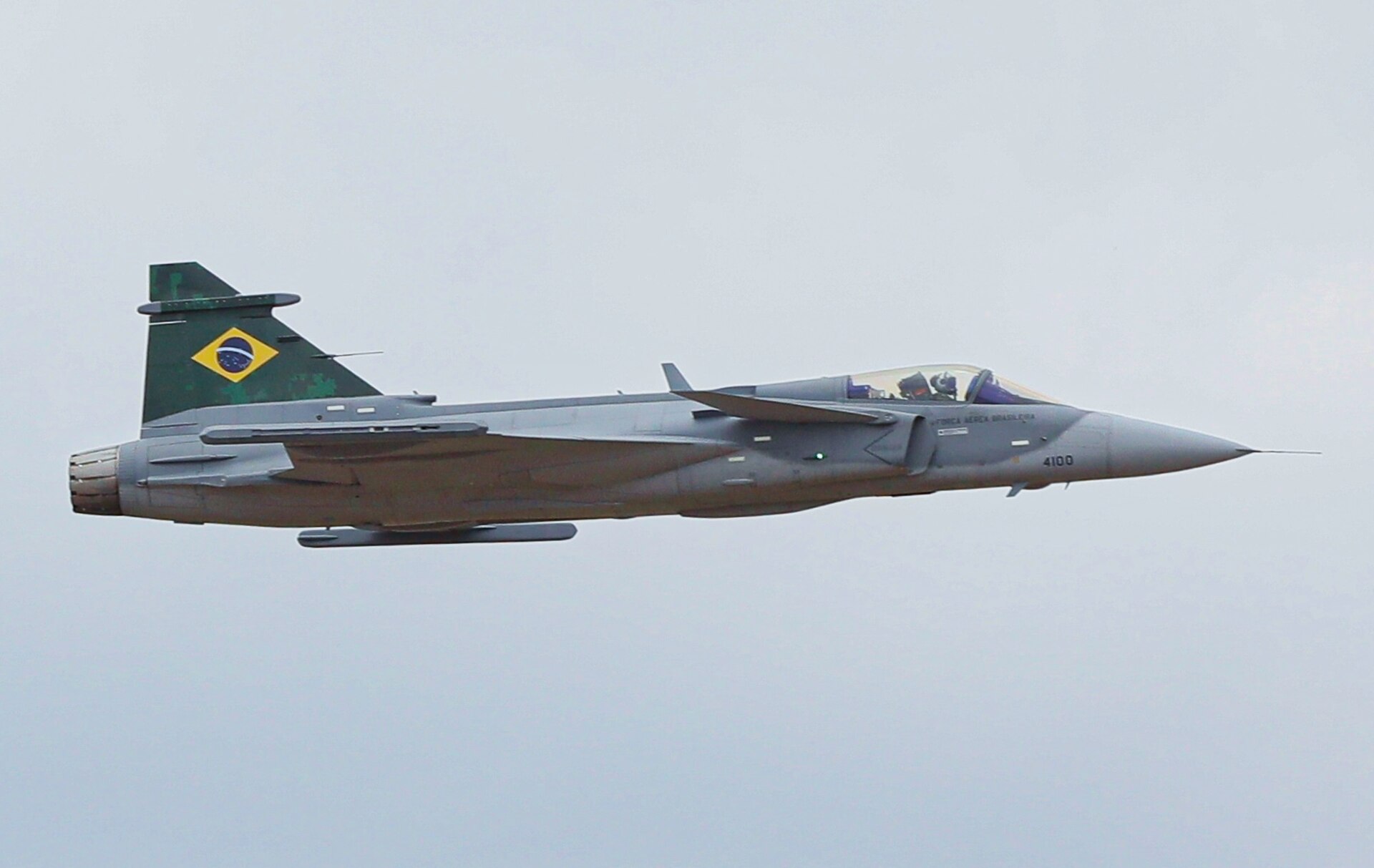
- F-39 Gripen E fighters, now also assembled in Brazil
- PROSUB: four Scorpène-based subs and a nuclear boat
- Embraer KC-390 is a growing export success
Budget and ranking
Brazil spends a little over 1 percent of GDP on defence, a modest share for a country of its size, and most of the budget goes on salaries and pensions rather than new equipment. Even so, Global Firepower ranks Brazil 11th in the world in 2026, the highest of any Latin American country, thanks to its manpower, territory and industrial base.
Manpower
The armed forces have roughly 360,000 active personnel, with the army by far the largest branch. Brazil still uses conscription, though most recruits volunteer. A big part of the army is deployed in the Amazon, where jungle warfare units patrol borders against drug trafficking, illegal mining and smuggling.
Air force: Gripen and KC-390
The Brazilian Air Force is replacing its old F-5s with the Saab Gripen E, known locally as the F-39. The deal includes technology transfer, and in 2026 the first Gripen assembled in Brazil was presented at Embraer’s plant. Embraer’s KC-390 Millennium transport and tanker is now one of the country’s most successful defence exports, chosen by Portugal, Hungary, the Netherlands, Austria, the Czech Republic and South Korea, among others. The A-29 Super Tucano remains the workhorse for light attack and training.
Navy: submarines and frigates
Under the PROSUB programme, Brazil is building four Riachuelo-class submarines based on the French Scorpène, and plans its first nuclear-powered attack submarine, the Álvaro Alberto, which would make Brazil the only non-nuclear-weapons state with such a boat. New Tamandaré-class frigates based on the German MEKO A-100 design are joining the fleet, and the helicopter carrier Atlântico serves as the flagship.
Army: Guarani and ASTROS
The army’s modernisation centres on the locally built Guarani 6×6 armoured vehicle, new 8×8 wheeled tank destroyers and the ASTROS II rocket artillery system, which can also fire the AV-TM 300 cruise missile. Leopard 1 tanks remain in service but are ageing.
Strengths and weaknesses
Brazil’s strengths are its size, a capable aerospace industry led by Embraer and a growing naval programme. Its weaknesses are a low equipment budget, high personnel costs and long delays in flagship projects such as the nuclear submarine. Brazil does not need to fight wars to matter: its industry and its stability already make it the anchor of South American security.
Featured image: Isac Nóbrega / PR / CC BY 2.0, via Wikimedia Commons