Top 10 Jet Trainers and Light Combat Aircraft in 2026
Every fighter pilot starts somewhere, and in 2026 that somewhere is increasingly a modern jet trainer with a glass cockpit, simulated radar and a weapons computer that mimics an F-35. Many of these aircraft also carry real weapons, giving smaller air forces an affordable light fighter. Here are the ten most important jet trainers and light combat aircraft flying today.
- Trainers prepare pilots for fifth-generation fighters
- Many double as cheap light fighters
- FA-50 is the export leader of this class
- Hürjet and L-15 are the newest supersonic entrants
- Turboprops like the PC-21 cut basic training costs
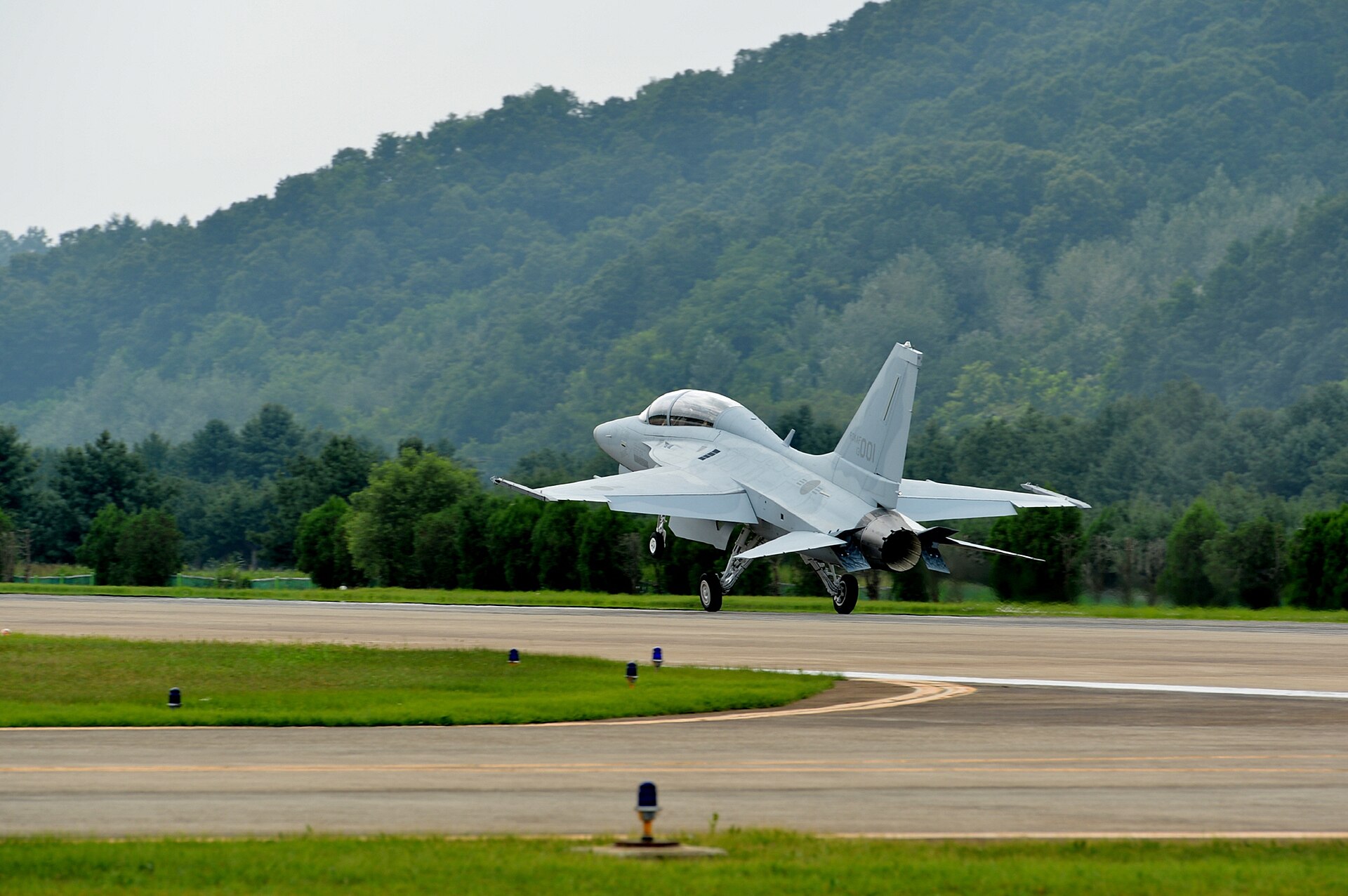
1. KAI FA-50 Fighting Eagle (South Korea)
Developed from the supersonic T-50 Golden Eagle with Lockheed Martin’s help, the FA-50 reaches about Mach 1.5 and carries air-to-air missiles, precision bombs and a radar. It is the export success of the decade, flying with South Korea, the Philippines, Iraq, Poland and Malaysia, while Indonesia and Thailand operate T-50 trainer variants.
2. Boeing-Saab T-7A Red Hawk (United States)
The T-7A will replace the US Air Force’s 1960s-era T-38 Talon, with 351 aircraft planned. Designed digitally from the start, it has a stadium-style tandem cockpit, a single F404 engine and the agility to train pilots for F-35 and F-47 era air combat. Its programme suffered delays, but production is now under way.
3. Leonardo M-346 Master (Italy)
The twin-engine M-346 is one of the most advanced lead-in fighter trainers in the world, used by Italy, Israel, Singapore, Poland, Greece and Qatar. Its embedded tactical training system lets instructors inject virtual threats and wingmen into real flights. A combat-capable M-346FA version is also offered.
4. TAI Hürjet (Türkiye)
Türkiye’s Hürjet first flew in 2023 and is a supersonic jet trainer and light attack aircraft built around the F404 engine. It will train Turkish pilots for the KAAN fighter, and in 2025 Spain chose it as its next advanced trainer, giving Turkish industry a major European export breakthrough.
5. Hongdu L-15 (China)
The L-15 is the People’s Liberation Army Air Force’s advanced trainer, with afterburning versions able to break the sound barrier. An armed variant can carry missiles and bombs. The United Arab Emirates ordered L-15s in 2023, giving China a foothold in the Gulf trainer market.
6. Yakovlev Yak-130 (Russia)
The subsonic twin-engine Yak-130 trains Russian pilots for the Su-30, Su-35 and Su-57, and doubles as a light attack jet. It has been exported to Algeria, Belarus, Bangladesh, Myanmar, Laos and Iran, making it Russia’s main trainer export.
7. BAE Systems Hawk (United Kingdom)
With more than 1,000 built since the 1970s, the Hawk is one of the most successful jet trainers in history. The modern Hawk T2 with a digital cockpit still trains Royal Air Force pilots, and the type remains famous as the aircraft of the Red Arrows display team.
8. Aero L-39NG (Czech Republic)
The L-39NG modernises the legendary Albatros with a Williams FJ44 turbofan, new avionics and weapon pylons. Customers include the Czech Republic, Hungary, Vietnam and Senegal, attracted by low operating costs and a familiar name.
9. Pilatus PC-21 (Switzerland)
The turboprop PC-21 shows that not every trainer needs a jet engine. Its performance and cockpit are close enough to a jet’s that air forces in Switzerland, Australia, France, the UK, Spain, Saudi Arabia and Singapore use it to cut the cost of training hours dramatically.
10. Embraer A-29 Super Tucano (Brazil)
The A-29 is the world’s best-known light attack turboprop. It combines pilot training with counter-insurgency missions, carries guns, rockets and guided bombs, and has been sold to more than 15 countries. Recent orders from Portugal and Uruguay show its appeal is far from over.
Why this class matters
As fifth-generation fighters become more expensive to fly, air forces push more training into cheaper aircraft and simulators. That makes modern trainers and light combat jets one of the busiest and most competitive segments of the global aerospace market.
Featured image: Republic of Korea Air Force, Korea Aerospace Industries / CC BY 2.0, via Wikimedia Commons