What Helicopters Does the UK Military Have? Apache to Chinook
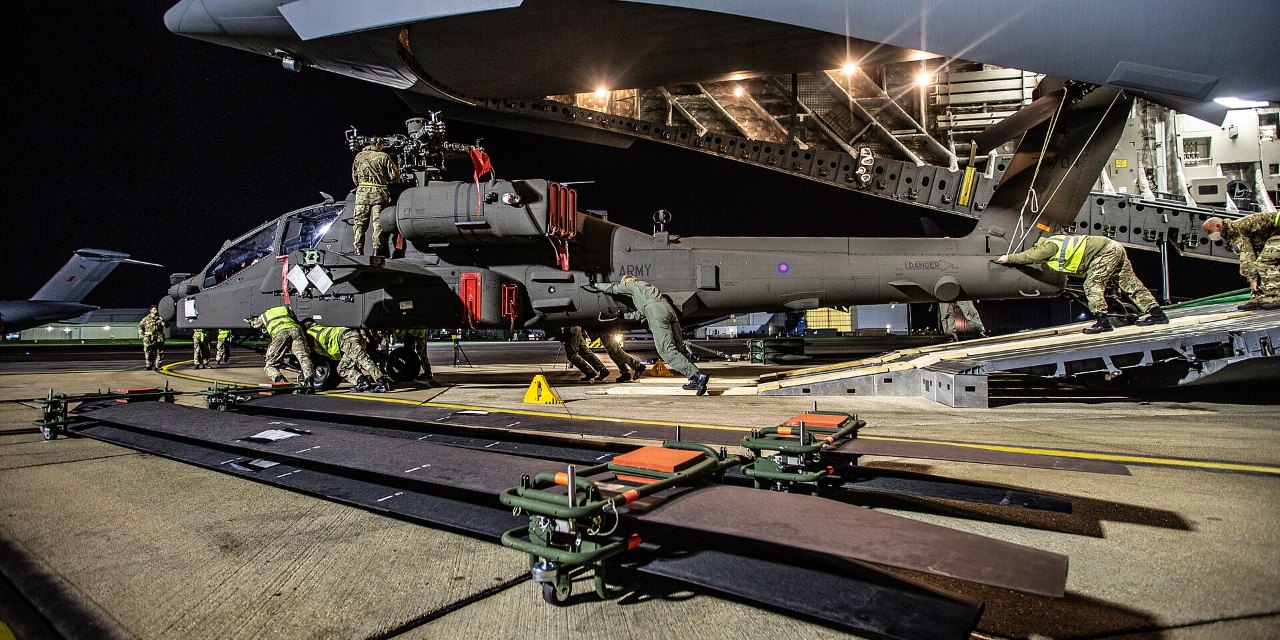
The UK armed forces had 249 helicopters on 1 April 2026, according to the Ministry of Defence: Apache attack helicopters and Wildcats for the Army, Chinooks for the RAF, Merlins and Wildcats for the Royal Navy, and a handful of training and special forces types. The number fell by 27 in a year, mostly because the RAF’s Puma fleet was retired in March 2025, three years early.
This guide covers each type, who flies it and what the 2026 Defence Investment Plan means for the fleet.
What helicopters does the UK military have?
Unlike the United States, Britain does not give each service a large, self-contained helicopter force. Most battlefield helicopters belong to Joint Aviation Command, which places Army, RAF and Navy aircraft under one headquarters. Military search and rescue at home was handed to a civilian contractor in 2015, so the figures below are almost entirely combat, transport and maritime aircraft.
| Helicopter | Service | Approx. number | Role |
|---|---|---|---|
| AH-64E Apache | Army | 50 | Attack and reconnaissance |
| Chinook HC5/HC6/HC6A | RAF | 45 | Heavy lift |
| Wildcat AH1 | Army | 34 | Light utility and reconnaissance |
| Wildcat HMA2 | Royal Navy | 28 | Anti-ship and anti-submarine, from frigates and destroyers |
| Merlin HM2 | Royal Navy | Up to 30 | Anti-submarine warfare and airborne early warning |
| Merlin HC4/4A | Royal Navy | Up to 25 | Commando transport |
| Dauphin AH1 | Army | Small number | Special forces support |
| Juno, Jupiter | RAF/Navy | About 40 | Pilot training; Jupiter HC2 in Cyprus and Brunei |
Apache: the Army’s attack helicopter
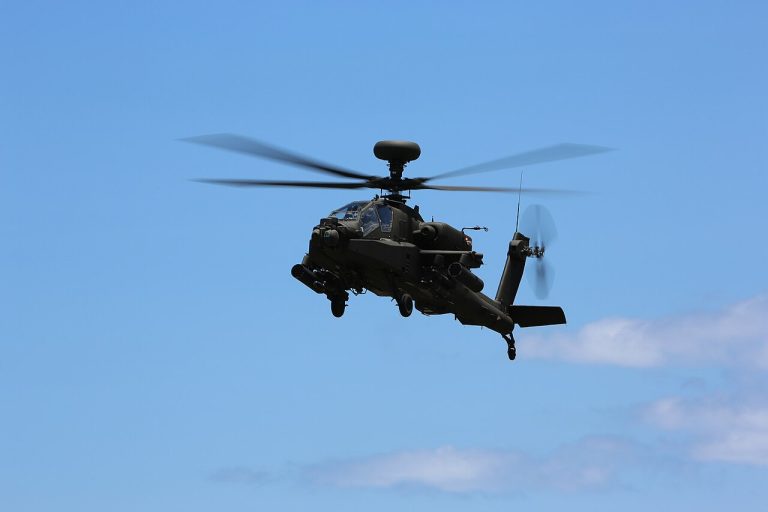
The Army Air Corps flies 50 AH-64E Apaches, bought from Boeing to replace the British-built Apache AH1 that served in Afghanistan and Libya. The last of the 50 was delivered in 2024. The E model has more powerful engines, a newer radar and the ability to control drones from the cockpit. It carries Hellfire missiles, rockets and a 30mm cannon, and is based at Wattisham in Suffolk. From 2027, when the Army’s Wildcats begin to leave service, the Apache will be the Army’s main helicopter, alongside a few Dauphins used by special forces.
Chinook: the RAF’s workhorse
The RAF has 45 Chinooks, the largest heavy-lift helicopter fleet in Europe. They flew throughout the campaigns in Iraq and Afghanistan and carry troops, vehicles and supplies for all three services from RAF Odiham in Hampshire. In 2021 Britain ordered 14 new H-47 extended-range Chinooks in a £1.4 billion deal, with deliveries due to begin in 2026. The extra fuel lets them fly much further without refuelling, which matters for special forces. The oldest Chinooks are being retired as the new ones arrive, and the 2026 plan says Chinooks will also be used to launch drones.
Wildcat and Merlin: the Navy’s helicopters
The Royal Navy flies two types. The Wildcat HMA2 operates from frigates and destroyers, hunting submarines and attacking small boats with Martlet and Sea Venom missiles. The larger Merlin HM2 is the Navy’s main submarine hunter, using a dipping sonar and sonobuoys, and some carry the Crowsnest radar to provide early warning for the carrier group described in our guide to British aircraft carriers. The Merlin HC4 carries Royal Marines ashore. The Merlins were planned to retire around 2030; the decision on how long to extend them is not due until 2027.
The Army’s 34 Wildcat AH1s are the casualty of the 2026 plan. They will start leaving service in 2027, as the Ministry of Defence moves reconnaissance work to drones, a shift explained in our guide to British drones.
The Puma gap and the AW149
The RAF’s Puma HC2s flew their last sortie on 31 March 2025, three years earlier than planned, to save money. That left Britain without a medium transport helicopter. The replacement, the New Medium Helicopter programme, ran into trouble when two of the three bidders withdrew in 2024. Leonardo’s AW149 was selected in February 2026 and a contract worth about £1 billion for 23 aircraft followed in March. They will be built at Yeovil in Somerset and flown by the RAF in support of the Army. Until they arrive, small Jupiter HC2 helicopters cover the bases in Cyprus and Brunei.
How does it compare?
Britain’s helicopter fleet is small next to that of the United States, which operates thousands of aircraft across its services, as our guide to American military helicopters shows. But it is one of the largest in Europe, and its Chinook and Apache crews are among the most experienced in NATO. For the ships the Merlins and Wildcats operate from, see our guide to the Royal Navy fleet.
Frequently asked questions
How many helicopters does the UK military have?
The Ministry of Defence counted 249 military helicopters on 1 April 2026, down from 276 a year earlier.
What attack helicopter does the British Army use?
The AH-64E Apache. The Army Air Corps has 50, all delivered by 2024.
How many Chinooks does the RAF have?
45, according to the April 2026 statistics. Fourteen new extended-range H-47 Chinooks are on order, with deliveries starting in 2026.
Why was the Puma retired?
The RAF retired the Puma HC2 in March 2025, three years early, to save money for other programmes.
What is replacing the Puma?
Leonardo’s AW149, under the New Medium Helicopter programme. Twenty-three were ordered in 2026 for about £1 billion.
What helicopters does the Royal Navy use?
The Merlin HM2 for anti-submarine warfare and early warning, the Merlin HC4 for commando transport and the Wildcat HMA2 on frigates and destroyers.
- UK Ministry of Defence – UK armed forces equipment and formations 2026: gov.uk
- The Aviationist – British Army Wildcat helicopters to retire from next year (June 2026): theaviationist.com
- Calibre Defence – UK awards £1 billion New Medium Helicopter contract to Leonardo: calibredefence.co.uk
- UK Ministry of Defence – £1.4 billion modernised Chinook fleet: gov.uk
- Naval Technology – Business case for Royal Navy Merlin life extension not due until 2027: naval-technology.com