Does Turkey Have Nuclear Weapons? Incirlik, Akkuyu and the NPT
No. Turkey does not own nuclear weapons and has no programme to build them. It does have nuclear weapons on its soil: an estimated 20 to 30 American B61 bombs stored at Incirlik Air Base near Adana. They belong to the United States, are guarded by American personnel and cannot be used without an order from the American president. Turkey has no aircraft certified to carry them.
This guide explains what is at Incirlik, what Turkey has signed, what its leaders have said about a bomb of their own, and how far the country is from being able to make one.
Does Turkey have nuclear weapons?
Turkey is a non-nuclear-weapon state under the Non-Proliferation Treaty. It has never tested a nuclear device and has no facility able to produce the material for one. Its position resembles that of Germany, Italy, Belgium and the Netherlands, NATO members that host American weapons without owning them, with one important difference described below.
| Question | Answer |
|---|---|
| Own nuclear weapons | None |
| US weapons on Turkish soil | An estimated 20–30 B61 bombs at Incirlik |
| Who controls them | The United States |
| Turkish aircraft certified to deliver them | None |
| Non-Proliferation Treaty | Signed 1969, ratified 1980 |
| Comprehensive Test Ban Treaty | Ratified |
| Treaty on the Prohibition of Nuclear Weapons | Not a party |
| Uranium enrichment or reprocessing plants | None |
| Nuclear power reactors | Four under construction at Akkuyu, built by Russia |
What is stored at Incirlik?
Incirlik is a Turkish air base that the United States has used since the 1950s. American nuclear weapons have been kept there for most of that time. The Federation of American Scientists, the standard public source, put the number at about 50 in 2019 and now estimates 20 to 30. Washington does not confirm figures or locations.
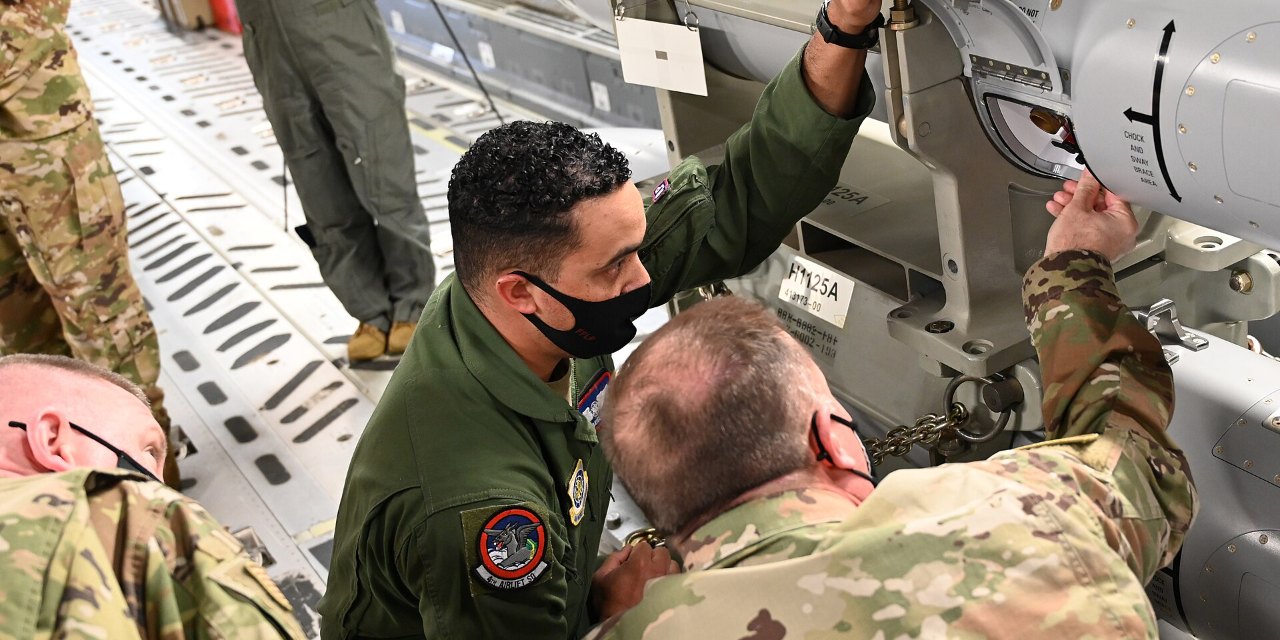
The weapon is the B61, a gravity bomb about 3.6 metres long that weighs around 320 kg and can be set to different explosive yields, from less than one kiloton to several times the power of the Hiroshima bomb. The bombs are kept in vaults built into the floors of aircraft shelters and are guarded by a US Air Force munitions squadron.
Could Turkey use them?
No, for two reasons. The first is technical. Each bomb is locked by a coded device, and the codes are held by the United States. The second is that Turkey no longer has the means of delivery. In Germany, Italy, Belgium and the Netherlands, national air forces keep aircraft and crews trained to drop the B61 in wartime under NATO’s nuclear sharing arrangement. Turkish F-16s once had that role. They no longer do, and no American strike aircraft are permanently based at Incirlik. Analysts describe the arrangement as storage, not sharing.
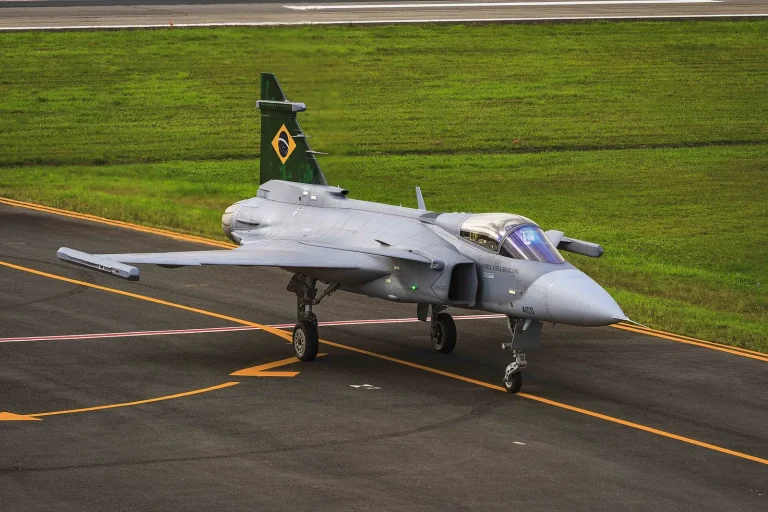
The new B61-12 version is cleared for the F-35A, the aircraft Turkey was removed from buying in 2019. The fleet it flies instead is described in our guide to Turkey’s fighter jets.
Are the weapons safe there?
The question was asked seriously in July 2016, when a faction of the Turkish armed forces attempted a coup. Power to Incirlik was cut for several days and the Turkish officer commanding the base was arrested for his part in the plot. It was asked again in October 2019, when Turkish forces entered northern Syria and relations with Washington broke down. American officials were reported to have reviewed plans to remove the bombs. President Donald Trump, asked whether the weapons were safe, said he was confident. They were not removed.
What have Turkish leaders said?
President Recep Tayyip Erdoğan raised the subject in a speech in September 2019. He said that several countries had missiles with nuclear warheads while Turkey was told it could not, and that he did not accept this. He has returned to the theme since, usually with reference to Israel, which is believed to have nuclear weapons and has never signed the Non-Proliferation Treaty.
No Turkish government has announced a decision to seek nuclear weapons, and none has left the treaty. The statements are best read as a complaint about the unequal rules of the nuclear order, and as a signal that Turkey’s restraint should not be taken for granted.
Could Turkey build a nuclear weapon?
Not quickly. A weapon needs highly enriched uranium or plutonium, and Turkey has neither an enrichment plant nor a reprocessing plant. Its first nuclear power station, Akkuyu on the Mediterranean coast, is being built, owned and operated by Russia’s Rosatom. It will have four reactors of 1,200 megawatts each. Rosatom’s chief said in May 2026 that the first unit must be operating by December. Russia supplies the fuel and takes back the spent fuel, which keeps the material under international safeguards and out of Turkish hands.
What Turkey does have is the other half of a deterrent. It builds ballistic missiles with ranges above 1,000 km and showed a mock-up of an intercontinental missile in 2026, as described in our guide to Turkey’s missiles. A missile programme of that reach makes more military sense with a nuclear warhead than without one, which is why neighbours watch it closely. A comparison with an established arsenal is in our guide to US nuclear weapons.
Would Turkey ever go nuclear?
The barriers are political more than technical. Leaving the treaty would bring sanctions, end nuclear cooperation with Russia and others, and put the alliance with the United States in question. Against that, Turkey sits beside a nuclear-armed Russia, an Israel that is assumed to be nuclear-armed and an Iran whose nuclear programme has been at the heart of its conflict with Israel and the United States. If Iran or Saudi Arabia acquired a weapon, the pressure on Ankara to follow would be strong. For now Turkey relies on NATO’s guarantee and on the bombs at Incirlik, which it hosts but does not control.
Frequently asked questions
Does Turkey have nuclear weapons?
No. Turkey owns none. An estimated 20 to 30 American B61 bombs are stored at Incirlik Air Base under US control.
How many nuclear weapons are at Incirlik?
The Federation of American Scientists estimates 20 to 30 B61 gravity bombs. The United States does not publish official numbers.
Can Turkey use the nuclear bombs at Incirlik?
No. The bombs are locked with codes held by the United States, and Turkey has no aircraft certified to carry them.
Is Turkey in the Non-Proliferation Treaty?
Yes. It signed in 1969 and ratified in 1980 as a non-nuclear-weapon state.
Does Turkey have nuclear power plants?
Its first, Akkuyu, is being built by Russia’s Rosatom with four 1,200 MW reactors. The first unit was due to start by December 2026.
Is Turkey trying to build a nuclear bomb?
There is no evidence of a weapons programme. President Erdoğan has criticised the fact that other states have such weapons while Turkey may not, but no decision to build one has been announced.
- GlobalMilitary – US nuclear weapons in Turkey: base, warheads, NATO sharing (October 2026): globalmilitary.net
- Exchange Monitor – Trump appears to confirm nuclear weapons at air force base in Turkey (October 2019): exchangemonitor.com
- Interfax – Akkuyu unit 1 to be operational by December, says Rosatom (May 2026): interfax.com
- Arms Control Association – Concern grows about US weapons in Turkey: armscontrol.org