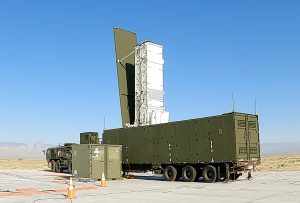

China’s Missile Force Now Outgrows Its Nuclear Warhead Stockpile

China Is Building More Missile Launchers Than It Has Warheads to Fill Them
China’s rocket force has spent the past several years pouring concrete for new missile silos and rolling new launcher types off production lines faster than it has grown its nuclear warhead stockpile, according to a cross-section of open-source assessments from the Pentagon, the Stockholm International Peace Research Institute (SIPRI) and the Federation of American Scientists (FAS) that is now being pulled together in a widely discussed academic analysis. The gap between hardware and warheads, documented separately by each institution over the past year, is reshaping how analysts read Beijing’s nuclear intentions and how India, Japan and the United States plan around it.
The clearest recent synthesis of that evidence came in a October 1, 2026 essay by Dr. Tahir Mahmood Azad published by Small Wars Journal at Arizona State University, titled “The Force We Cannot Count.” The essay does not report new intelligence; instead, it collates figures already published by SIPRI, the U.S. Department of Defense, FAS and the CSIS Missile Threat Center into a single argument: the People’s Liberation Army Rocket Force (PLARF) now has more missiles and launch tubes than it has nuclear warheads to put in them, and that mismatch is itself a deliberate feature of Chinese strategic ambiguity, not an oversight.
What the Numbers Show
SIPRI’s most recent public estimate puts China’s nuclear warhead stockpile at approximately 620 as of January 2026, up from roughly 600 a year earlier. The Pentagon’s 2025 report to Congress projected that figure could exceed 1,000 operational warheads by 2030 and had previously floated 1,500 by 2035, though its most recent report dropped the 2035 figure. FAS’s Nuclear Notebook series, compiled by Hans Kristensen, Matt Korda and colleagues for the Bulletin of the Atomic Scientists, separately assesses that the large majority of Chinese warheads remain in central storage rather than mated to delivery vehicles, consistent with China’s historical no-first-use, de-mated posture.
Against that warhead total, the Pentagon has also documented the construction of roughly 320 new silos for solid-fuel missiles across three desert fields in Gansu and Xinjiang, plus around 30 additional silos for liquid-fuel missiles in mountainous central-eastern China — a combined silo-building effort larger than China’s entire previous ICBM force. Kristensen and Korda’s Nuclear Notebook, published through the Bulletin of the Atomic Scientists in July 2026, documents the PLARF’s underlying brigade structure, including units fielding the DF-17 hypersonic glide-vehicle missile in China’s southeastern provinces. Read together, the silo count and the brigade data support Azad’s central claim: delivery capacity has outpaced the warhead inventory required to fully arm it.
The Missiles Driving the Mismatch
Four systems anchor the discussion:
- DF-17 — A road-mobile medium-range missile carrying a hypersonic glide vehicle, with an estimated range of roughly 1,800 to 2,500 kilometers. It is designed to maneuver during flight to defeat missile defenses and has both conventional and, analysts believe, potential nuclear applications.
- DF-26 — A dual-capable intermediate-range missile with a range near 4,000 kilometers, able to reach U.S. forces on Guam. It is informally known as the “Guam killer” and can reportedly be configured for either nuclear or conventional strike, with “hot-swappable” warheads that analysts say create ambiguity for anyone trying to assess an inbound launch.
- DF-27 — The newest and longest-ranged of the group. The Pentagon’s report to Congress assesses it can strike targets at 5,000 to 8,000 kilometers, making it the first publicly confirmed conventionally-armed intercontinental ballistic missile fielded by any country, with a reported hypersonic glide-vehicle option and both land-attack and anti-ship variants.
- DF-41 — China’s newest heavy ICBM, assessed at 12,000 to 15,000 kilometers and capable of carrying multiple independently targetable re-entry vehicles (MIRVs). It is deployed in both silo-based and road-mobile configurations.
Three of the four — DF-17, DF-26 and DF-27 — are dual-capable, meaning the same missile body can in principle carry either a conventional or a nuclear warhead. Azad’s essay argues this is the crux of the “count” problem: a radar operator tracking a DF-26 in flight cannot determine from trajectory alone whether it carries a nuclear payload, a limitation that complicates both deterrence signaling and crisis decision-making for any state on the receiving end.
A Rocket Force Rebuilding After Its Own Purge
The PLARF’s expansion has coincided with unusual turmoil in its own leadership. Rocket Force commander Li Yuchao was removed in mid-2023, followed by the ouster of Defense Minister Li Shangfu in September 2023 and his predecessor General Wei Fenghe; the Standing Committee of China’s National People’s Congress subsequently stripped nine senior military officials, several tied to the Rocket Force, of their positions in a move widely read as a corruption and procurement-fraud purge. U.S. intelligence reporting from 2024 reportedly identified concrete defects traced to that graft, including missiles filled with water instead of fuel in some silos and malfunctioning silo lids — issues the Pentagon’s subsequent assessments say have since been repaired. The Pentagon’s own conclusion, as cited in Azad’s essay, is that the force “had real defects and is now being made more ready, not less,” rather than permanently degraded.
Why It Matters Beyond China
The regional stakes differ by capital. For India, the DF-26 and DF-27 extend coverage over the entire Indian landmass, a complication for New Delhi’s declared posture of “credible minimum deterrence” against a two-front nuclear environment that already includes Pakistan. For Japan, the DF-17’s maneuverability and the DF-26’s range are cited by analysts as degrading the value of Tokyo’s roughly $300 billion investment in missile defense, while the DF-27’s anti-ship variant extends China’s reach toward the Second Island Chain. For the United States, DF-41’s MIRV capability and the broader silo build-out raise the familiar Cold War concern of “use-or-lose” pressure in a crisis, even as Washington’s own modernizing triad is designed to preserve survivable retaliation regardless of what China fields.
None of this amounts to evidence that China is moving toward a launch-on-warning nuclear posture today. The Pentagon’s own assessment, cited across the SIPRI, FAS and Small Wars Journal material, is that the silo and early-warning infrastructure being built is consistent with a shift toward what Chinese military writings call an “early warning counterstrike” (预警反击) capability — an option under development, not a declared doctrinal change. China’s Ministry of National Defense has not confirmed a shift away from its stated no-first-use policy, and Beijing has historically kept most warheads separated from delivery systems in peacetime.
What Happens Next
The next data points to watch are the Pentagon’s forthcoming annual China Military Power Report, which typically updates silo-loading and warhead-count estimates, and the next edition of the FAS Nuclear Notebook, which tracks PLARF brigade activity through commercial satellite imagery. Analysts including Azad argue that the warhead-to-launcher ratio, not the raw warhead count that dominates headlines, is the figure most likely to signal an actual shift in Chinese nuclear doctrine — and that ratio is currently moving in the direction of more launchers relative to confirmed warheads, not fewer.
FAQ
How many nuclear warheads does China have in 2026?
SIPRI’s most recent public estimate is approximately 620 warheads as of January 2026. The Pentagon has projected the total could exceed 1,000 by 2030, though both figures are open-source estimates rather than Chinese government disclosures, since China does not publish official warhead counts.
What is the difference between the DF-17, DF-26, DF-27 and DF-41?
The DF-17 is a shorter-range hypersonic glide-vehicle missile (roughly 1,800–2,500 km); the DF-26 is a dual-capable intermediate-range missile (about 4,000 km) that can reach Guam; the DF-27 is a longer-range, dual-capable missile (5,000–8,000 km) with anti-ship and land-attack variants and intercontinental reach; and the DF-41 is China’s heaviest MIRV-capable ICBM, with an estimated range of 12,000–15,000 km.
Why does it matter that Chinese missiles are “dual-capable”?
Because the same missile body can carry either a conventional or nuclear warhead, an adversary tracking a launch in flight cannot necessarily tell which type of payload is inbound. Analysts argue this ambiguity complicates both deterrence signaling and real-time military decision-making during a crisis.
Did the 2023 Rocket Force purge weaken China’s nuclear forces?
U.S. intelligence reportedly found maintenance and fueling defects tied to corruption within the force, but subsequent Pentagon assessments conclude those issues have largely been corrected and describe the force as being made more ready, not less, following the leadership shake-up.
Is China moving toward a “launch-on-warning” nuclear posture?
Not according to current public assessments. The silo construction and early-warning systems China is building are consistent with developing that option, but Beijing has not declared a change to its stated no-first-use policy, and most of its warheads are still believed to be stored separately from launch systems in peacetime.
Sources
- Dr. Tahir Mahmood Azad, “The Force We Cannot Count,” Small Wars Journal (Arizona State University), October 1, 2026 — primary synthesis of PLARF force-structure and warhead-launcher disparity arguments. smallwarsjournal.com
- Hans M. Kristensen, Matt Korda, Eliana Johns, Mackenzie Knight-Boyle, “Chinese nuclear weapons, 2026,” Bulletin of the Atomic Scientists, July 2026 — underlying PLARF brigade and missile-system data (DOI 10.1080/00963402.2026.2691662).
- Stockholm International Peace Research Institute (SIPRI), SIPRI Yearbook 2026, Chapter 8: World Nuclear Forces — warhead stockpile estimate of approximately 620 as of January 2026.
- U.S. Department of Defense, Military and Security Developments Involving the People’s Republic of China (annual report to Congress, 2025 edition) — silo construction figures, DF-27 ICBM classification, and warhead projections through 2030.
- USNI News, “Chinese Forces Fielding Intercontinental Anti-Ship Ballistic Missiles Capable of Reaching U.S. West Coast, Pentagon Says,” December 26, 2025 — DF-27 range and anti-ship role, confirming Pentagon report details.
- Arms Control Association, “Chinese Military Purge Said to Show Corruption, Weakness,” 2024 — Rocket Force leadership purge timeline and corruption findings.