Russia’s Military Bases Abroad: Where Russian Forces Are Stationed in 2026
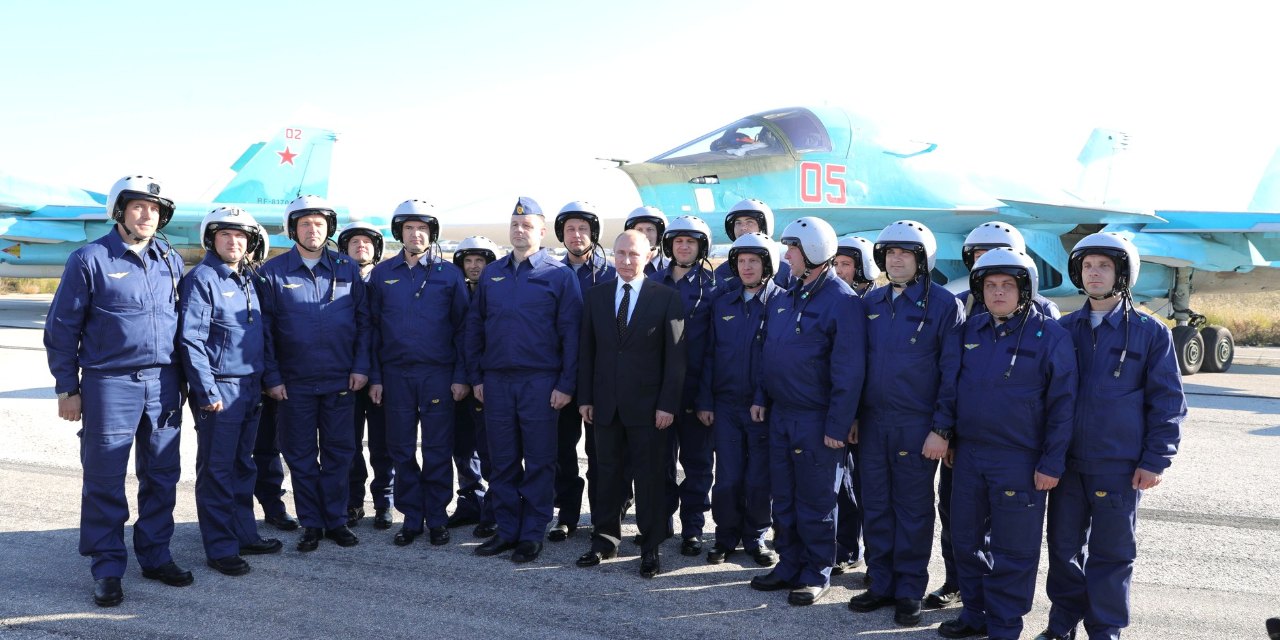
Russia keeps a permanent military presence in about a dozen foreign countries, almost all of them former Soviet republics, plus Syria and a growing footprint in Africa. The network is small beside the roughly 750 overseas sites of the United States, and in 2026 it is changing: the bases in Syria are being converted into joint training centres, Armenia is edging away, and Libya has become the gateway to Russian operations in the Sahel.
This guide lists where Russian forces are stationed, on what legal basis, and what each base is for.
Where Russia has bases
Russian deployments abroad fall into four groups: treaty bases in allied former Soviet states, garrisons in territories that are internationally recognized as belonging to Moldova and Georgia, the two facilities in Syria, and the Africa Corps contingents that replaced the Wagner Group. Crimea and other occupied parts of Ukraine are not counted here.
| Country | Main facility | Role | Status |
|---|---|---|---|
| Belarus | Hantsavichy radar, Vileyka naval communications centre | Early warning, communications, nuclear and missile deployment | Active and expanding |
| Armenia | 102nd Military Base, Gyumri; Erebuni airfield | Ground and air forces | Lease to 2044; relations strained |
| Tajikistan | 201st Military Base, Dushanbe and Bokhtar | Largest ground base abroad | Lease to 2042 |
| Kyrgyzstan | Kant air base | Combat and transport aviation | Active |
| Kazakhstan | Baikonur Cosmodrome, Sary-Shagan range | Space launch, missile testing | Leased to 2050 |
| Moldova (Transnistria) | Operational Group of Russian Forces | About 1,500 troops guarding an arms depot | Without Moldova’s consent |
| Georgia (Abkhazia, South Ossetia) | 7th and 4th Military Bases | Ground forces | In occupied territory |
| Syria | Hmeimim air base, Tartus naval facility | Air and naval access to the Mediterranean | Becoming joint training centres |
| Libya | Several air bases in the east and south | Logistics hub for Africa | Informal arrangements |
| Mali, CAR, Burkina Faso, Niger | Africa Corps contingents | Security support to governments | Deployments, not treaty bases |
Belarus, Armenia and Central Asia
Belarus is the most important host. Besides an early-warning radar and a naval communications station, it has housed Russian tactical nuclear weapons since 2023 and, since December 2025, the intermediate-range missile described in our Oreshnik explainer. The two armies operate as a joint regional force.
In Central Asia the 201st base in Tajikistan, with an authorized strength of about 7,000, anchors the border with Afghanistan, while Kant in Kyrgyzstan hosts combat aircraft and Kazakhstan leases Russia the Baikonur launch site and missile test ranges. Armenia is the uncertain case. The 102nd base at Gyumri has a lease to 2044, but Yerevan froze its participation in the Russian-led Collective Security Treaty Organization in 2024 and had Russian border guards removed from its main airport.
Transnistria, Abkhazia and South Ossetia
Three garrisons sit on territory that the host state does not control. About 1,500 Russian troops remain in Moldova’s breakaway Transnistria region, where they guard the Cobasna ammunition depot; Moldova has asked for their withdrawal for three decades. In Georgia, Russia maintains the 7th base in Abkhazia and the 4th in South Ossetia, regions it recognized as independent after the 2008 war, and has announced plans for a naval base at Ochamchire on the Abkhaz coast.
All three were thinned out to feed the war in Ukraine. Their value to Moscow is political: they block the host countries’ integration with NATO and the European Union.
Syria: Hmeimim and Tartus after the August 2026 deal
Syria was Russia’s only military foothold outside the former Soviet Union for decades. The naval facility at Tartus dates from 1971, and Hmeimim air base was built for the 2015 intervention; a 2017 agreement gave Russia both for 49 years. The fall of Bashar al-Assad in December 2024 put that in doubt, and Russia moved much of its equipment out.
After about 18 months of negotiation, Syria’s foreign ministry announced in August 2026 that the two sides had agreed to convert the Russian bases into joint training centres. The civilian part of Hmeimim airport and a commercial pier at Tartus pass to Syrian civilian control, with a transition period of no more than three months. Russia keeps access, but on Damascus’s terms and without the free hand it had under Assad. For the navy described in our guide to the Russian navy, Tartus remains its only replenishment point in the Mediterranean.
Libya and the Africa Corps
As Syria became less secure, Libya took over part of its function. Russian transport aircraft use several air bases controlled by the eastern Libyan authorities, including a refurbished strip at Maaten al-Sarra near the borders with Chad and Sudan, as staging posts for flights further south.
Those flights supply the Africa Corps, the defense ministry formation that absorbed the Wagner Group’s operations after 2023. The US Congressional Research Service reported in April 2026 that as many as 2,500 Russian personnel were in Mali and about 1,500 in the Central African Republic, with smaller contingents in Burkina Faso, Niger and Equatorial Guinea. A long-discussed naval logistics base at Port Sudan on the Red Sea is on hold, according to Russia’s ambassador there.
What the network shows
Russia’s foreign bases reveal a regional power with selective reach. It has no bases in the Americas or East Asia: the listening station at Lourdes in Cuba closed in 2002 and the naval base at Cam Ranh in Vietnam was given up the same year. Outside the former Soviet space, every position depends on the goodwill of a host government that could change, as Syria showed.
The war in Ukraine has made the network harder to sustain. Troops and air defenses have been withdrawn from several bases, allies such as Armenia and Kazakhstan are hedging, and the fleet lacks the ships to make use of distant ports. The contrast with American global basing is set out in our Russia vs United States comparison.
Frequently asked questions
How many military bases does Russia have abroad?
Russia has a standing military presence in about a dozen countries. Formal treaty bases exist in Belarus, Armenia, Tajikistan, Kyrgyzstan, Kazakhstan and Syria; the rest are garrisons in disputed territories or Africa Corps deployments.
Does Russia still have bases in Syria?
Yes, in reduced form. Under an agreement announced in August 2026, Hmeimim air base and the Tartus naval facility are being converted into joint Russian-Syrian training centres, and civilian parts of both sites return to Syrian control.
Where is Russia’s largest foreign base?
The 201st Military Base in Tajikistan, with an authorized strength of about 7,000 troops, is the largest ground force base outside Russia. Its lease runs to 2042.
Does Russia have military bases in Africa?
It has no formal treaty bases, but Africa Corps personnel are deployed in Mali, the Central African Republic, Burkina Faso, Niger and Libya, where Russia uses several air bases as a logistics hub.
Does Russia have bases in Cuba or Venezuela?
No. Russia closed its signals intelligence station in Cuba in 2002. Russian ships and aircraft visit Cuba and Venezuela periodically, but there is no permanent base in the Americas.
- Meduza – Russia and Syria agree to turn Russian military bases into joint training centers: meduza.io
- The National – Syria and Russia agree to transform military bases into joint training centres: thenationalnews.com
- US Congressional Research Service – Russia’s Security Operations in Africa, April 2026: everycrsreport.com
- ADF Magazine – Africa Corps work at Libyan air bases raises concerns, August 2026: adf-magazine.com
- The New Arab – Syria and Russia reach deal on future of Tartous, Hmeimim bases: newarab.com