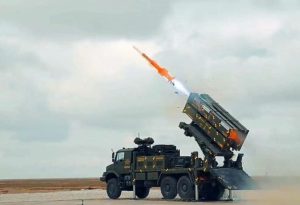

Why the Iron Dome Failed Against Iran’s Massive Drone and Missile Assault

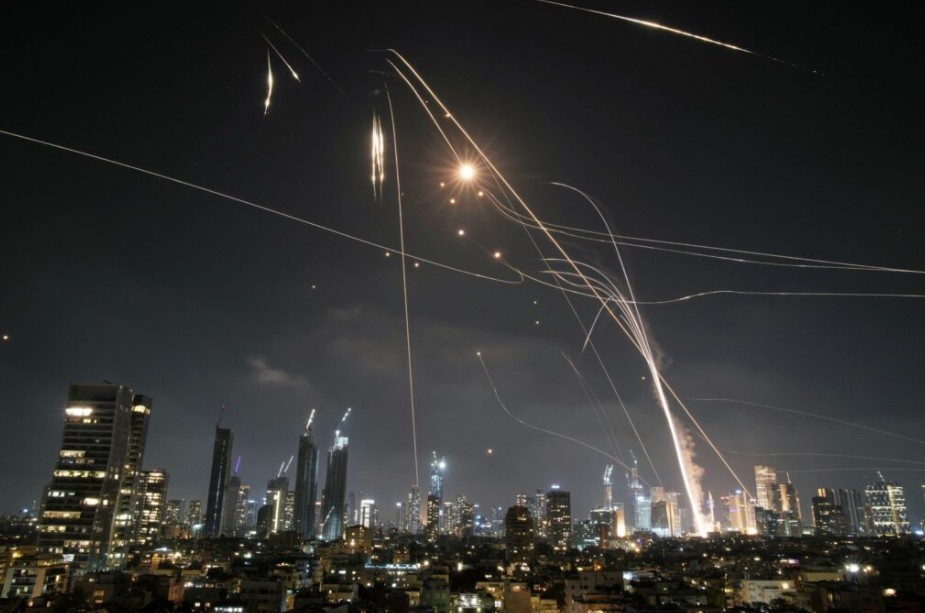

For years, the Iron Dome was synonymous with total aerial dominance. However, the recent coordinated assault by Iranian forces has forced a brutal reassessment of modern air defense doctrine. While the system remains a marvel of engineering, its performance during the latest escalation reveals a fundamental vulnerability: the Saturation Point.
The perceived failure of the Iron Dome was not a result of malfunctioning hardware, but rather the outcome of a sophisticated asymmetric strategy designed to exploit the physical and economic limits of missile defense.
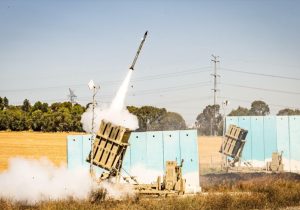
1. The Saturation Point: A Mathematical Certainty
Every air defense system possesses a finite “Saturation Point”—the maximum number of simultaneous targets its radar can track and its Battle Management System (BMS) can prioritize. Iran’s strategy utilized Surgical Saturation.
By launching waves of low-cost “Shahed” loitering munitions, Iranian planners forced the Iron Dome into a logic trap. The system’s sensors were flooded with hundreds of slow-moving decoys, consuming the radar’s processing cycles and depleting the interceptor magazines. When the high-velocity precision missiles followed, the defense was already operating at 100% capacity, leading to significant “target leakage.”
2. The Mismatch: Ballistic vs. Maneuverable Threats
The Iron Dome was originally optimized to intercept short-range, ballistic-trajectory rockets—threats that follow a predictable parabolic arc. The recent Iranian offensive featured a hybrid mix of cruise missiles and maneuverable UAVs that utilize terrain-masking and low-altitude flight paths.
These assets do not follow a predictable arc; they maneuver mid-flight to avoid detection. By pushing the Iron Dome’s sensors out of their optimized operational envelope, Iran increased the complexity of the “Kill Chain,” causing delays in identification that proved fatal for several strategic assets on the ground.

3. The Economic Asymmetry of Attrition
Defense analysts point to a staggering cost-per-kill disparity. A single Tamir interceptor costs approximately $50,000. In contrast, the drones sent to deplete them are manufactured for a fraction of that cost.
Iran effectively used “expendable quantity” to neutralize “expensive quality.” By forcing Israel to expend its limited stockpile of interceptors on low-value targets, the offensive achieved a state of logistical exhaustion. In modern warfare, you cannot win an attrition battle where the shield is ten times more expensive than the sword.
4. Electronic Clutter and Radar Interference
Beyond the physical swarm, the assault was accompanied by advanced Electronic Warfare (EW) aimed at cluttering the radar environment. By creating “ghost targets” and interfering with signal processing, the offensive created a “fog of war” within the digital brain of the Iron Dome. This interference delayed target verification, allowing precision-guided munitions to slip through the gaps created by the electronic noise.
The Conclusion for Modern Defense
The failure of the Iron Dome against high-volume swarms signals the end of the “Invincible Umbrella” era. It proves that legacy missile-based systems are reaching their evolutionary limit against the logic of the swarm.
For the global defense industry, the way forward is shifting toward Directed Energy (Laser) systems and AI-driven threat prioritization. Without a “bottomless magazine” and the ability to process thousands of targets simultaneously, even the most advanced shields will continue to crack under the pressure of asymmetric saturation.
Editor’s Note: This technical report was compiled following the April 2026 kinetic engagements in the Middle East. It serves as a case study for future integrated air defense development.