US-Israel-Iran War: Where Things Stand in October 2026
Almost eight months after the United States and Israel went to war with Iran, the fighting has slowed but the war has not ended. Large-scale air campaigns have been on hold for weeks, yet ships are still being hit and sunk in the Strait of Hormuz, Tehran is threatening the Gulf’s undersea internet cables, and officials in Washington and Jerusalem are openly discussing a return to major combat. On October 19, Iran’s navy said US forces had struck its Konarak naval base, a claim a US official called inaccurate. Here is where the conflict stands, what has been hit and what could come next.
- War began: February 28, 2026, with joint US-Israeli strikes on Iran
- Supreme Leader Ali Khamenei was killed; his son Mojtaba Khamenei succeeded him
- Last confirmed large US strike wave: September 1 (Bandar Abbas, Chabahar, Qeshm Island)
- Two container ships have sunk after missile hits since late September
- Brent crude was trading near $110 a barrel on October 20
How the war got here
The war opened on February 28, when US and Israeli aircraft struck Iran after Tehran refused American demands to end all uranium enrichment. The first wave hit military, nuclear and leadership targets and killed Supreme Leader Ali Khamenei. The Assembly of Experts named his son, Mojtaba Khamenei, as his successor. President Donald Trump set out three aims: destroy Iran’s ballistic missile capability, eliminate its navy and cut its support for proxy forces.
Iran answered with missile and drone salvos against Israel and against US bases in Bahrain, Jordan, Kuwait, Qatar and the United Arab Emirates. It also struck energy and civilian sites in Gulf states, including airports and oil facilities, and effectively closed the Strait of Hormuz, setting off a global energy shock. Washington responded with a naval blockade of Iranian ports.
A two-week ceasefire agreed on April 7 never fully held. On June 14, a Pakistan-brokered memorandum of understanding called for reopening Hormuz, ending the Hezbollah-Israel fighting in Lebanon and a 60-day halt to hostilities. Both sides have accused the other of breaking it ever since.
What has been hit since the summer
Konarak, July 13. US Central Command (CENTCOM) carried out a five-hour operation against military targets in Konarak, on Iran’s Gulf of Oman coast, saying the aim was to reduce Iran’s ability to attack commercial shipping.
Bandar Abbas, Chabahar and Qeshm, September 1. In the last confirmed large US strike wave, American forces spent about six hours hitting Revolutionary Guard (IRGC) sites in southern Iran. CENTCOM said it struck “air defense sites, radar systems, maritime assets and facilities, mine laying capabilities and communications sites.” Trump said the raids answered Iranian attempts to lay more mines in the strait, along with fresh attacks on merchant ships and a ballistic missile strike on a US base in Jordan.
Iran’s missile response. Iran fired back the same day. Jordan’s armed forces said they engaged 13 incoming missiles and shot down ten. Kuwait reported incoming missiles and drones, and the IRGC said it targeted US facilities at the air base in Erbil, northern Iraq. A US official said there were no initial reports of American casualties. Iranian media also reported that a residential building in Kuhestak, near Konarak, was hit during a wedding; the Iranian Red Crescent said five people were killed and about 68 injured. Responsibility for that strike has not been established.
Konarak again, October 19. Iran’s navy said two projectiles fired by US forces hit a 35mm anti-aircraft cannon at the Konarak naval base at around 1 a.m. local time, wounding two personnel. CENTCOM did not confirm the strike, and a US official told CNN the Iranian claim was inaccurate. If confirmed, it would be the first US strike on Iranian soil in seven weeks.
The war at sea: Hormuz is still the front line
Most of the fighting now happens on the water. On September 23, an Antigua and Barbuda-flagged container ship was hit by a missile and later sank. On October 10, CENTCOM disabled a cargo vessel it said was trying to run the US blockade, while a drone struck a tanker off Oman and an unidentified projectile hit another tanker inside the strait. Between October 13 and 14, a Singapore-flagged container ship sank after a missile strike and two more container ships were hit, with minor damage.
On Friday, October 16, the IRGC Navy said an oil tanker had struck a naval mine. CENTCOM disputed that account, saying a container ship had been hit by an Iranian projectile.
The two sides now describe the strait in opposite terms. The IRGC has declared Hormuz “closed,” says it has blacklisted 122 vessels and has set seven conditions for reopening it. CENTCOM commander Adm. Brad Cooper says the waterway “is controlled by the United States and our regional partners” and remains “open for business,” adding that about 400 merchant ships transited in the past week and that US-backed operations have helped Gulf partners move more than 100 million barrels of crude.
New Iranian threats: undersea cables and data centers
Tehran has widened its list of potential targets. IRGC spokesman Brig. Gen. Hossein Mohebi warned Washington against renewed attacks and explicitly threatened the seven undersea internet cables that run through Hormuz, which carry internet, banking and military traffic. Supreme National Security Council secretary Mohsen Rezaei said undersea cables, data centers and AI facilities worth $2 trillion could become targets if the war resumes, and parliament speaker Mohammad Bagher Ghalibaf announced a planned “Persian Gulf Data Authority” without giving details.
The threats are not hypothetical. In early March, Iranian drones damaged Amazon Web Services data centers in the UAE and Bahrain, and on March 31 the IRGC named 18 US technology companies, including Microsoft, Google, Meta, Apple, Oracle and Nvidia, as potential targets.
Is a new round of US-Israeli strikes coming?
The signals point toward escalation. Axios reported that Defense Secretary Pete Hegseth made an unannounced visit to Israel and met Prime Minister Benjamin Netanyahu amid talks on resuming major combat. Netanyahu has reportedly told Trump that they have a job to finish, and he has publicly vowed to bring down Iran’s government. CNN reported on October 15 that the Pentagon is considering using the GBU-43/B, the “mother of all bombs,” against Iranian military sites; the White House declined to comment.
Trump has sent mixed messages. At a rally in Kansas on October 19, he said the United States “could leave Iran now,” insisted Tehran would never get a nuclear weapon and claimed Iran had no navy or air force left. Iran’s foreign minister says Tehran’s offer of a seven-day ceasefire, which Trump rejected last month, is still on the table, but nuclear follow-on talks remain stalled.
Iran is not isolated. Russian Foreign Minister Sergei Lavrov visited Tehran for the first time since the war began and called the US-Israeli attacks illegal, while Iranian state media said China’s premier had voiced support for Iran.
What it means for oil and air travel
Markets are pricing in a long standoff. On October 20, Brent crude traded near $109.8 a barrel and WTI at about $98.7. Iraq says its exports have climbed above 3.4 million barrels a day this month, moving through Hormuz, Turkey’s Ceyhan port and trucks crossing Syria. Gulf aviation is also feeling the strain, worsened by Houthi attacks on Saudi Arabia: Etihad has cancelled its Abu Dhabi flights to Dammam, Riyadh and Jeddah through October 24.
Outlook
The next few weeks will decide whether the uneasy pause holds. The core disputes, Iran’s nuclear program, control of Hormuz and sanctions relief, are unresolved, and every new ship sunk or base hit raises the pressure on Washington to choose between a negotiated ceasefire and a return to full-scale strikes. With Israel pushing to finish the job and Iran threatening the region’s digital backbone, the risk of a wider second phase of the war is rising.
Sources
- Council on Foreign Relations, Global Conflict Tracker, “Conflict With Iran” (updated October 2026)
- Gulf News, “US-Israel-Iran war: Lull nears ‘breaking point’,” October 20, 2026
- Al-Monitor, “US airstrikes target Iran’s Bandar Abbas, Qeshm Island,” September 2026
- Iran International, “US and Israel threaten renewed Iran strikes, Tehran warns of response,” October 19, 2026
- EconoTimes / CNN, “U.S. official denies Iran’s claim of strike on Konarak naval base,” October 20, 2026
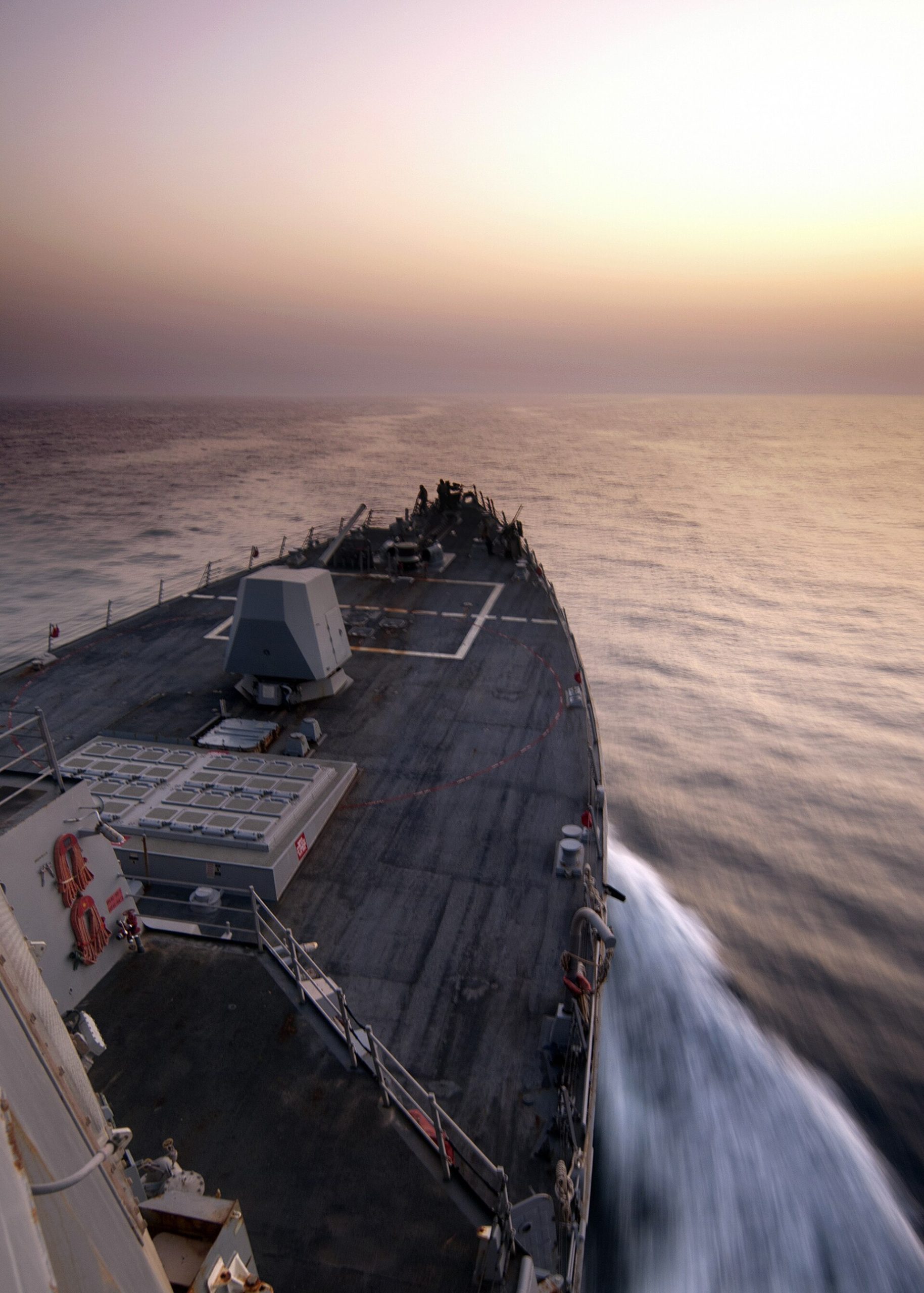
Featured image: USS James E. Williams transits the Strait of Hormuz. Photo: U.S. Navy, MC3 Daniel J. Meshel (public domain).