Top 10 Amphibious Assault Ships in the World (2026)
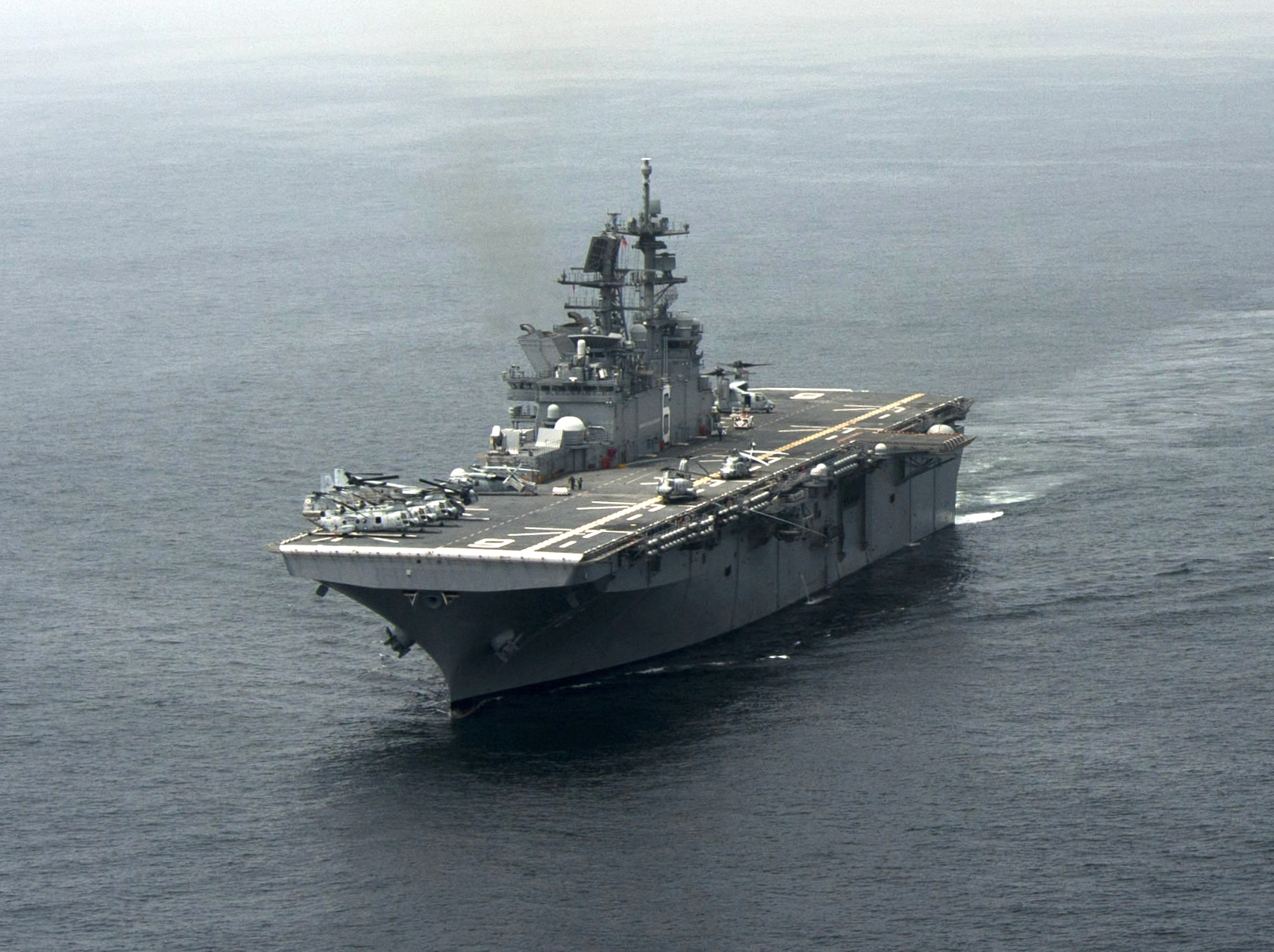
Amphibious assault ships look like small aircraft carriers, and in many navies that is exactly what they are. They carry marines, helicopters, landing craft and, increasingly, F-35B fighters and drones. Here are the ten most capable classes in service or nearing service in 2026, ranked by size, air wing and overall capability.
- Big-deck amphibious ships act as light aircraft carriers
- The US operates the largest fleet by far
- China’s Type 076 adds an electromagnetic catapult
- Several can operate F-35B jump jets
- Türkiye’s Anadolu is built around armed drones
1. America class (United States)
At about 45,000 tonnes full load, the America class is the largest amphibious ship in the world. Designed to operate F-35B Lightning IIs and MV-22 Ospreys, it can serve as a “lightning carrier” with up to around 20 stealth fighters, a capability no other navy can match.
2. Wasp class (United States)
The Wasp-class ships, at around 41,000 tonnes, remain the backbone of US Marine Corps expeditionary forces. They combine a full well deck for landing craft with a flight deck for helicopters, Ospreys and F-35Bs.
3. Type 076 (China)
China’s first Type 076, Sichuan, was launched in December 2024 and is larger than 40,000 tonnes. It is the first amphibious ship fitted with an electromagnetic catapult, allowing it to launch fixed-wing drones and potentially other aircraft, a clear sign of where Beijing sees naval aviation going.
4. Type 075 (China)
The Type 075 class, of roughly 36,000 to 40,000 tonnes, gave the PLA Navy a large helicopter assault capability in only a few years. Several ships are now in service and would play a central role in any cross-strait landing scenario.
5. Trieste (Italy)
Commissioned in 2024, Italy’s Trieste is a 38,000-tonne landing helicopter dock with a ski-jump and the ability to operate F-35Bs. It is the largest warship Italy has built since the Second World War.
6. Juan Carlos I (Spain)
Spain’s Juan Carlos I, at about 27,000 tonnes, operates Harrier jump jets and helicopters and has a well deck for landing craft. Its design proved so successful that it became the basis for ships in Australia and Türkiye.
7. Canberra class (Australia)
Australia’s two Canberra-class ships, HMAS Canberra and HMAS Adelaide, are based on the Juan Carlos I. They give Australia the ability to deploy a battalion-sized landing force and helicopters across the Pacific and support disaster relief missions.
8. TCG Anadolu (Türkiye)
Also derived from Juan Carlos I, TCG Anadolu was commissioned in 2023. After Türkiye was removed from the F-35 programme, the navy turned it into a drone carrier, planning to operate Bayraktar TB3 drones and, in future, jet-powered unmanned aircraft.
9. Mistral class (France)
The 21,000-tonne Mistral class serves France as a command ship, helicopter carrier and hospital ship. Three are in French service and two more fly the Egyptian flag after a cancelled contract with Russia.
10. Dokdo class (South Korea)
South Korea’s Dokdo and Marado, at around 19,000 tonnes full load, carry helicopters, landing craft and marines. Seoul has studied converting future ships into light carriers, showing how the line between amphibious ships and carriers keeps blurring.
Why amphibious ships matter
From Pacific island chains to crisis evacuations, these ships give navies flexible power that full-size carriers cannot always provide. With drones and F-35Bs on board, they are becoming small carriers in their own right.
Featured image: MC2 Ryan Riley / Public domain, via Wikimedia Commons