
THE EUROFIGHTER TYPHOON: A STRATEGIC ANALYSIS OF EUROPE’S PREMIER MULTI-ROLE FIGHTER

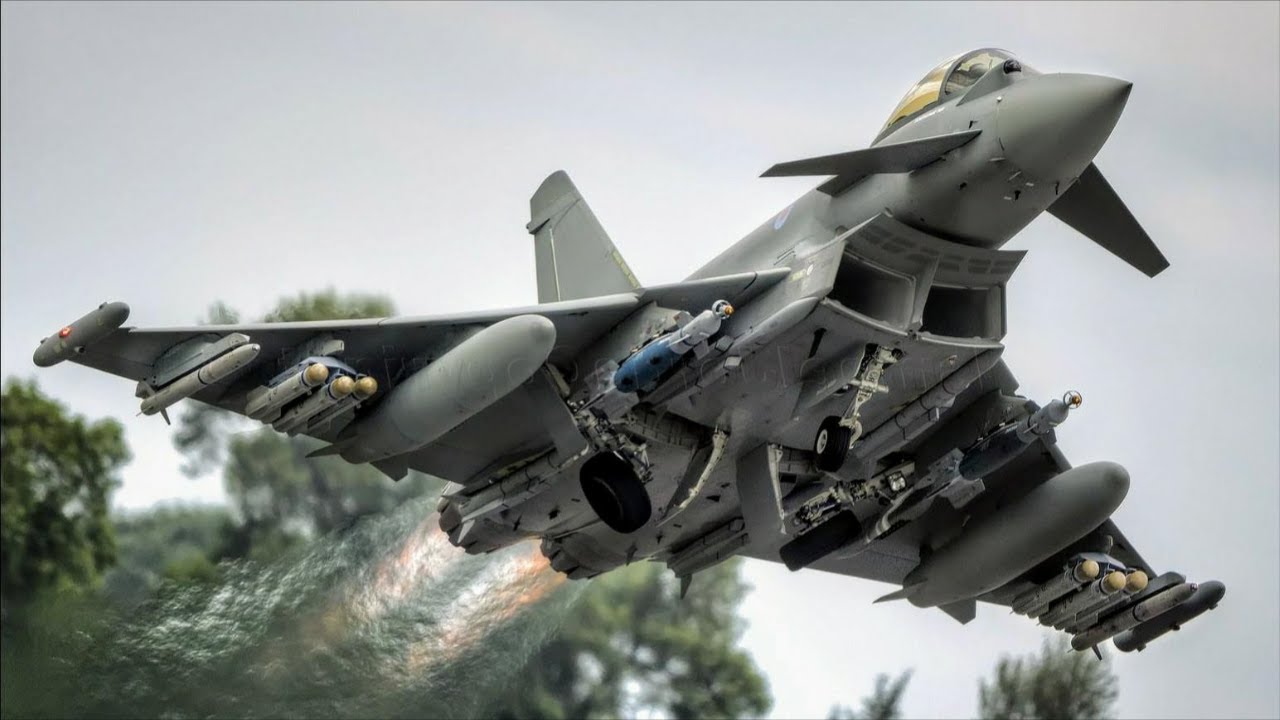

GLOBAL STRATEGIC ANALYSIS — In the rapidly evolving airspace of 2026, where the lines between fourth and fifth-generation capabilities continue to blur, the Eurofighter Typhoon stands as a testament to European collaborative engineering. Once dismissed by critics as a relic of the Cold War, the Typhoon has reinvented itself through the Phase 4 Enhancement (P4E) and the Long Term Evolution (LTE) programs. Today, it is not merely a fighter; it is a networked sensor node and a formidable bridge to the sixth-generation Future Combat Air System (FCAS).
Evolutionary Origins: From Cold War to 2026
The Eurofighter program was born from the 1980s FEFA (Future European Fighter Aircraft) requirement, a collaboration between the United Kingdom, Germany, Italy, and Spain. Despite the departure of France to develop the Rafale, the consortium successfully delivered a platform optimized for “Air Superiority” in an era dominated by the threat of high-performance Soviet interceptors. Since its first flight in 1994 and entry into service in 2003, the Typhoon has transitioned from a pure air-to-air interceptor to a “swing-role” powerhouse, capable of switching between air-to-air and precision strike profiles mid-mission.
Technical DNA: Aerodynamics and Propulsion
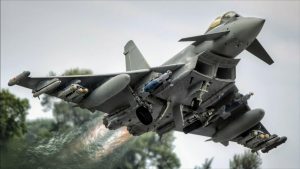
The Typhoon’s distinct silhouette—the delta-canard configuration—is designed for intentional aerodynamic instability. This characteristic provides exceptional maneuverability at both subsonic and supersonic speeds. Powering this airframe are two Eurojet EJ200 turbofans, which allow the Typhoon to achieve Supercruise—sustained supersonic flight without the use of fuel-heavy afterburners.
As of 2026, the introduction of the Aerodynamic Modification Kit (AMK) has further refined the platform. By incorporating modified fuselage strakes and leading-edge root extensions (LERX), the AMK has increased the maximum lift by approximately 25%. This translates to a significantly tighter turning radius and improved “nose-pointing” capability in high-G dogfights, ensuring the Typhoon remains one of the most lethal close-combat platforms in existence.
The physics of its performance can be summarized by its exceptional thrust-to-weight ratio:
With a combat-ready TWR often exceeding 1.15, the Typhoon possesses a vertical climb rate that few aircraft in history can match.
Sensor Fusion and the E-Scan Revolution
The modern Typhoon’s primary advantage lies in its “Digital Heart.” The transition from the mechanically scanned Captor-M to the Captor-E (ECRS Mk2) Active Electronically Scanned Array (AESA) radar has redefined its situational awareness. Unlike traditional radars, the ECRS Mk2 features a repositionable “swashplate” array, offering a field of regard roughly 50% wider than fixed-plate systems.
This radar works in tandem with the PIRATE (Passive Infra-Red Airborne Track Equipment) sensor, allowing the pilot to track multiple targets stealthily without emitting a radar signal. When fused with the Striker II Digital Helmet-Mounted Display, the pilot effectively “sees through” the airframe, gaining a 360-degree tactical picture that is essential for surviving the high-threat environments of the mid-2020s.
Tactical Analysis: Strengths and Strategic Limitations
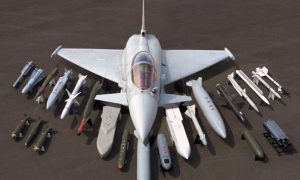
The Typhoon’s superiority is found in its Kinetic Energy and Weapons Loadout. It is the primary platform for the Meteor Beyond Visual Range Air-to-Air Missile (BVRAAM), widely considered the most capable long-range interceptor in the NATO inventory due to its ramjet propulsion.
However, the platform is not without its challenges. While it utilizes carbon-fiber composites to reduce its Radar Cross Section (RCS), the Typhoon is not a stealth aircraft. In a “Day One” conflict against sophisticated Integrated Air Defense Systems (IADS), it lacks the low-observable characteristics of the F-35. Furthermore, the complexity of its twin-engine design and advanced avionics results in a high flight-hour cost—a logistical burden that requires a robust and well-funded maintenance tail.
The Global Footprint and the 2026 Expansion
The Eurofighter user group is a strategic alliance in itself. Beyond the core partners (UK, Germany, Italy, Spain), the aircraft has found significant success in the Middle East with Saudi Arabia, Oman, Kuwait, and Qatar.
A major milestone was reached in March 2026 with the formalization of the UK-Türkiye agreement. This deal, involving the procurement of 20 Eurofighter Typhoons for the Turkish Air Force, marks a significant shift in the Eastern Mediterranean security architecture. For Türkiye, the Typhoon provides a sophisticated “swing-role” capability and a high-altitude interceptor that complements its indigenous Kaan fighter program.
Final Word: The Bridge to 2060
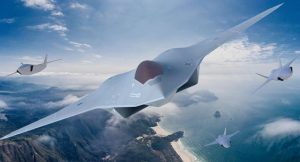
As the global fleet passes the one million flying hour mark, the Eurofighter Typhoon is entering its “Long Term Evolution” (LTE) phase. This upgrade path ensures the aircraft remains digitally relevant through the 2040s and 2050s, serving as a loyal wingman and command platform for uncrewed collaborative combat aircraft (UCCA). For the defense community, the Typhoon remains a masterclass in how a mature platform can be continuously reborn through technological infusion.