Scorpène Submarine: Specs, Weapons and Operators from India and Brazil to Indonesia
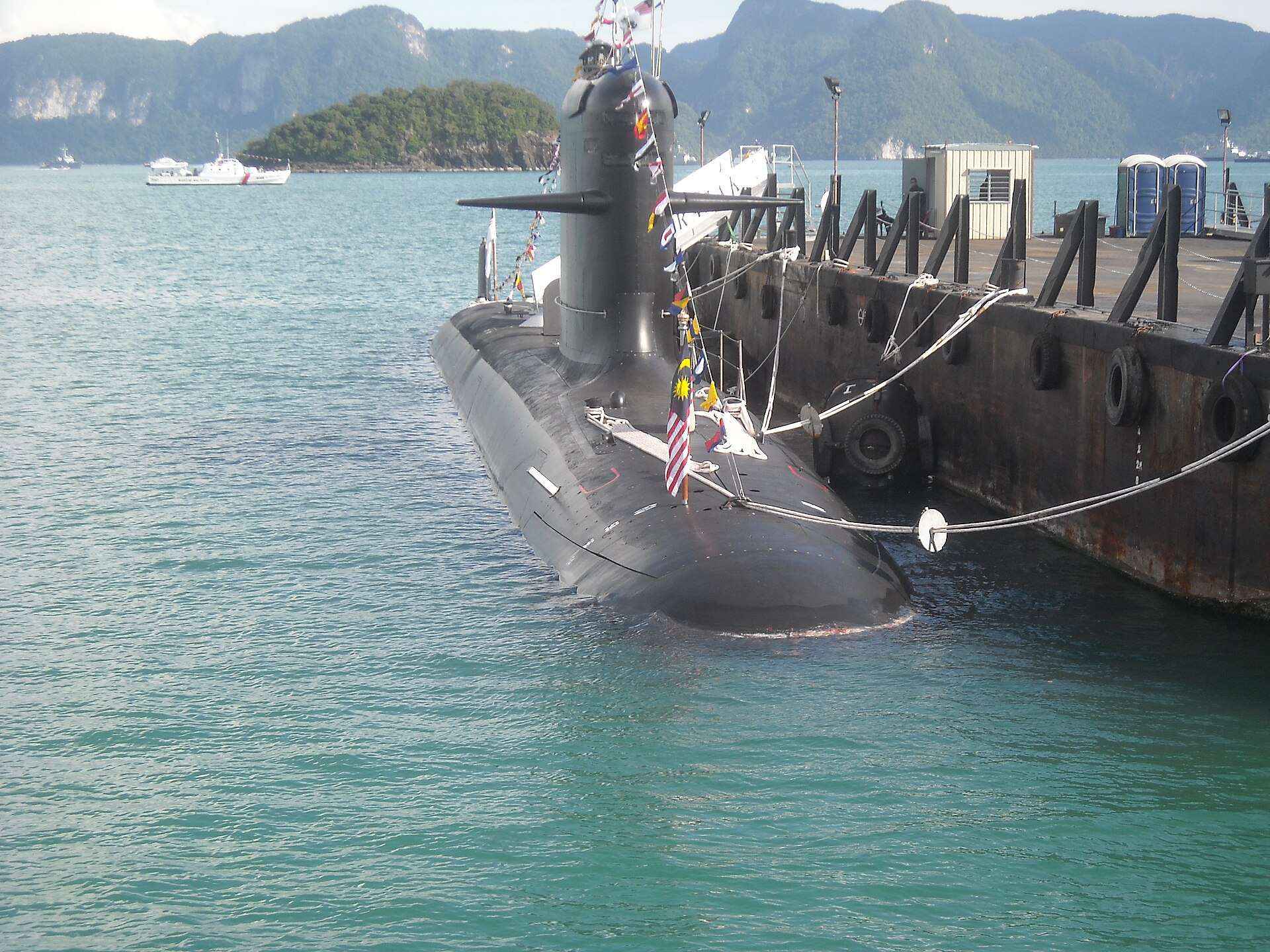
The Scorpène is France’s best-selling export submarine, a compact diesel-electric design built by Naval Group and operated by navies from India and Brazil to Chile and Malaysia. With a new lithium-ion version on order for Indonesia, it remains one of the main rivals to Germany’s Type 214 in the global market for conventional submarines.
- Builder: Naval Group (France)
- Displacement: ~1,600–2,000 tonnes; crew ~31
- Weapons: 6 x 533 mm tubes, F21 torpedoes, SM39 Exocet, mines
- Operators: Chile, Malaysia, India (Kalvari), Brazil (Riachuelo)
- On order: Indonesia (lithium-ion Scorpène Evolved)
Design and specs
The Scorpène was developed by France’s DCN, now Naval Group, originally with Spain’s Navantia. Depending on the version, it is about 66 to 75 meters long and displaces roughly 1,600 to 2,000 tonnes submerged. Its high level of automation means a crew of only about 31, and it was designed with the quieting and combat system technology of French nuclear submarines in a smaller, cheaper package.
Weapons
The Scorpène has six 533 mm torpedo tubes and can carry up to 18 weapons: heavyweight torpedoes such as the F21, SM39 Exocet anti-ship missiles launched from underwater, and mines. India’s boats have been integrated with Indian weapons and sensors.
Propulsion options
Standard Scorpènes are diesel-electric. Some designs offered an air-independent propulsion (AIP) section to extend submerged endurance. The newest “Scorpène Evolved Full LiB” replaces lead-acid batteries with lithium-ion cells, giving much more underwater endurance and faster recharge, an approach Japan has also adopted.
Who operates it?
Chile was the first customer, followed by Malaysia. India built six boats locally as the Kalvari class at Mazagon Dock in Mumbai, the last commissioned in early 2025. Brazil built four Riachuelo-class boats at home under its PROSUB program, which is also helping Brazil develop its first nuclear-powered submarine. In 2024 Indonesia ordered two Scorpène Evolved boats to be built by PT PAL, making it the first customer for the lithium-ion version.
Strengths and weaknesses
The Scorpène’s strengths are its quietness, modern combat system and proven record in several navies, and Naval Group’s willingness to transfer technology for local construction. Its weaknesses are a limited weapons load compared to larger designs and, in the older versions, limited submerged endurance without AIP.
Why it matters
Conventional submarines are in high demand across Asia and Latin America as navies try to counter growing fleets and protect sea lanes. The Scorpène’s success shows how technology transfer and local production have become as important as the submarine itself in winning export contracts.
Featured image: Rizuan / CC BY-SA 3.0, via Wikimedia Commons