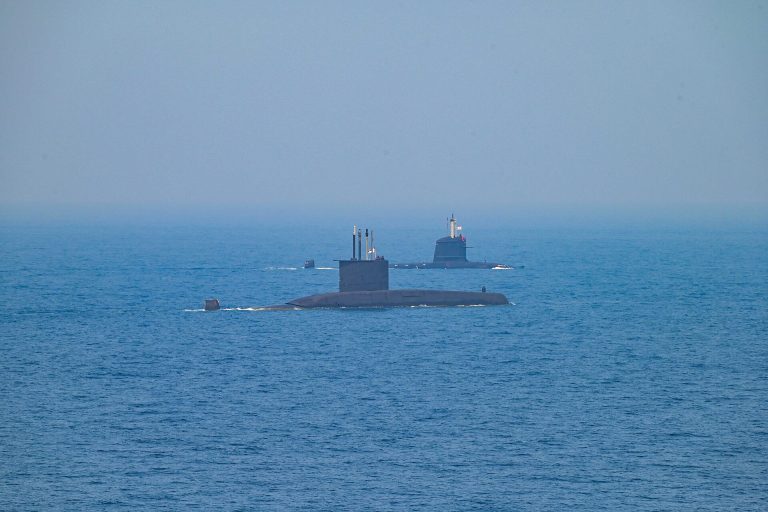
UK Pays MBDA £1.86 Million to Study Firing Aster 30 From Mk 41 Launchers
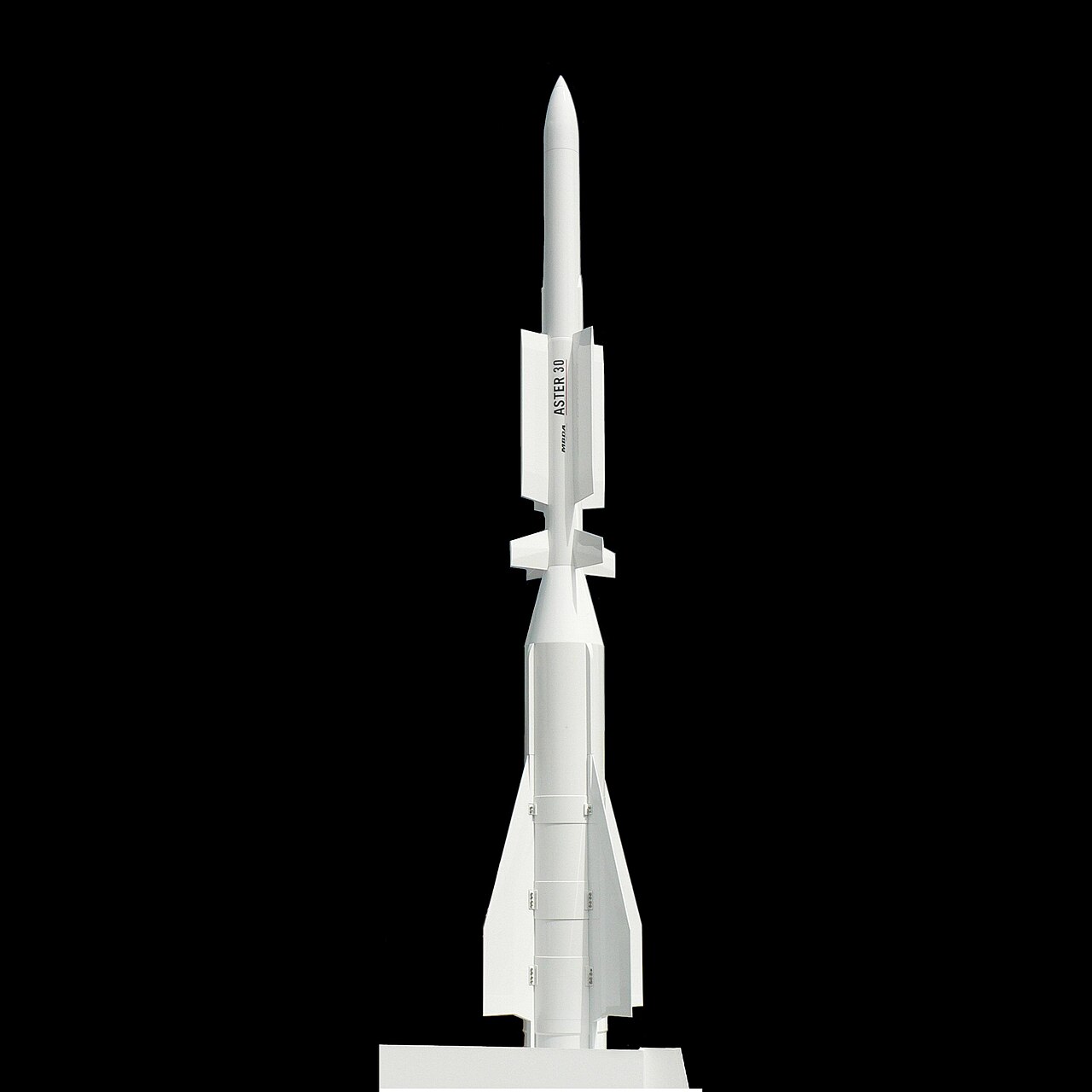
The UK Ministry of Defence has signed a £1.86 million contract with MBDA UK to study whether the Aster 30 surface-to-air missile can be fired from the Lockheed Martin Mk 41 vertical launching system. The contract was signed on October 30, 2026, according to a contract details notice the MoD published on November 3, and was first reported by Naval News on November 9.
The customer is the Ministry of Defence and the contractor is MBDA UK Limited, which received the work as a direct award without competition. The deliverable is a report on the viability of integrating Aster 30 with Mk 41, the launcher the Royal Navy is fitting to its new Type 26 and Type 31 frigates.
UK MoD Aster 30 and Mk 41 Study Contract
| Item | Detail |
|---|---|
| Customer | UK Ministry of Defence |
| Contractor | MBDA UK Limited |
| Value | £1,860,855 excluding VAT (£2,233,026 including VAT) |
| Scope | A report on the viability of integrating the Aster 30 missile with the Mk 41 vertical launching system |
| Award route | Direct award under section 41 of the Procurement Act 2023, single supplier for technical reasons |
| Signed | October 30, 2026 |
| Contract period | November 1, 2026 to August 31, 2027 |
| Notice | Contract details notice 2026/S 000-104123, published November 3, 2026 |
The MoD justified the single-source award on two grounds. MBDA UK is the original equipment manufacturer of Aster and has the technical knowledge to judge whether the missile can be married to a new launcher, the notice says. MBDA also “has contractual rights to use the technical data of Lockheed Martin,” which builds Mk 41.
The MoD said the findings “will inform strategic decisions on future capability development and operational flexibility to reduce the need for separate launcher solutions for different missile types.”
From January Notice to October Signature
On January 30, 2026, the MoD published a transparency notice and an award notice for the same procurement, giving an estimated value of £2 million including VAT, or about £1.67 million before tax, and a one-year study due to start on February 16, 2026.
The signed contract differs on both counts. It is worth about £194,000 more before VAT than the January estimate, and it runs for 10 months from November 1 rather than a year from February. The notices do not explain the delay of more than eight months between the planned and actual start.
Why Aster 30 Only Fires From SYLVER Today
Aster 30 is the long-range missile of the Sea Viper system on the Royal Navy’s six Type 45 destroyers, which carry a 48-cell SYLVER A50 launcher from Naval Group. Sea Viper is the UK version of PAAMS, developed with France and Italy. According to Naval News, Aster 30 and the shorter-range Aster 15 are qualified only for launch from SYLVER.
The question is not new. Naval News reports that Aster integration in Mk 41 was considered in the early 1990s, but the PAAMS partners chose SYLVER as a common subsystem instead.
SYLVER A50 vs Mk 41 Launcher
| Feature | SYLVER A50 | Mk 41 |
|---|---|---|
| Manufacturer | Naval Group | Lockheed Martin |
| Cells per module | 8 | 8, in two rows of four |
| Module weight | About 8.0 tonnes | About 12.2 tonnes (Self Defense) to 15 tonnes (Strike) |
| Aster 15 / Aster 30 | Qualified, one missile per cell | Not qualified; subject of the MBDA study |
| Other missile examples | Aster family only | Standard Missile family, ESSM, CAMM family, Tomahawk, VL-ASROC |
| Royal Navy ships | Six Type 45 destroyers, 48 cells each | Eight Type 26 frigates, 24 cells each; planned for five Type 31 frigates |
| Operators | 11 navies across the SYLVER family | 16 countries |
The practical attraction of Mk 41 is its weapon range. A Mk 41 ship can, in principle, draw air defence, land-attack and anti-submarine missiles from one magazine, while a Royal Navy ship that wants Aster 30 today needs SYLVER.
Royal Navy Shift to Mk 41 on Type 26 and Type 31
The Royal Navy plans to standardise on Mk 41 for future crewed surface ships, Naval News reports. The eight Type 26 frigates are configured with a 24-cell Mk 41 installation from build, and the June 2026 Defence Investment Plan confirmed plans to fit Mk 41 to the five Type 31 frigates.
MBDA’s own next-generation strike weapons are already being designed with both launchers in mind. The Future Cruise/Anti-Ship Weapon family, named Stratus, is intended to be compatible with Mk 41 and SYLVER. It includes Stratus LO, a subsonic low-observable cruise missile, and Stratus RS, a ramjet-powered high-supersonic missile. For a wider picture of shipboard air defence, see our explainer on naval air defence layers from SM-6 to close-in guns.
MBDA Company Profile
| Item | Detail |
|---|---|
| Headquarters | Le Plessis-Robinson, near Paris, France |
| Founded | December 2001, from the merger of Airbus, BAE Systems and Leonardo missile activities |
| Shareholders | Airbus 37.5%, BAE Systems 37.5%, Leonardo 25% |
| Employees | More than 20,000 (2025) |
| Revenue | €5.8 billion (2025); order backlog €44.4 billion |
| CEO | Éric Béranger |
| Product lines | Deep Strike, Tactical Strike, Battlefield, Area Protection, Force Protection, Air Dominance |
| Known programmes | Aster, CAMM, Meteor, Storm Shadow/SCALP, Brimstone, SPEAR |
MBDA plans to double Aster output in 2026, chief executive Éric Béranger said in March. The company is also branching out, as with the airborne laser demonstrator ordered by Germany.
What the Aster Mk 41 Study Does Not Decide
This is a paper study, not a development or production contract. When the requirement was first advertised in January, UK Defence Journal reported the MoD as saying the work “does not constitute a decision to procure or install Mk41 launchers on Royal Navy vessels.” No follow-on work, platform or timeline has been named.
A favourable finding would give the Royal Navy a route to carry its main area air defence missile on Mk 41 ships, rather than adding SYLVER cells or depending only on US missiles for that role. That reading is analysis, not an MoD or MBDA claim.
Aster 30 and Mk 41 Study FAQ
Who awarded the Aster 30 Mk 41 study?
The UK Ministry of Defence, as a direct award to MBDA UK Limited.
How much is the contract worth?
£1,860,855 excluding VAT, or £2,233,026 including VAT, according to the MoD contract details notice.
Can Aster 30 be fired from Mk 41 today?
No. According to Naval News, Aster 30 and Aster 15 are currently qualified only for the SYLVER launcher.
Does this mean the Royal Navy will buy Aster for Type 26?
No decision has been made. The study is meant to inform future choices and does not commit the MoD to any configuration.
- Naval News – “MBDA on contract to study Aster 30 missile integration in MK 41 VLS” (November 9, 2026): navalnews.com
- UK Find a Tender Service – “Mk41 Integration Study” contract details notice 2026/S 000-104123 (November 3, 2026): find-tender.service.gov.uk
- UK Find a Tender Service – transparency notice 2026/S 000-008652 and award notice 2026/S 000-008668 (January 30, 2026)
- UK Defence Journal – “UK to study Aster 30 integration for Mk41 missile launcher” (January 31, 2026)
- Defense News – “MBDA to double Aster air defense missile output in 2026” (March 26, 2026); Breaking Defense – MBDA investment plan (March 27, 2026)
- Wikipedia – SYLVER; Mark 41 Vertical Launching System; MBDA (technical and company data)