
Hypersonic Hegemony: The Physics and Politics of the 5-Minute Strike

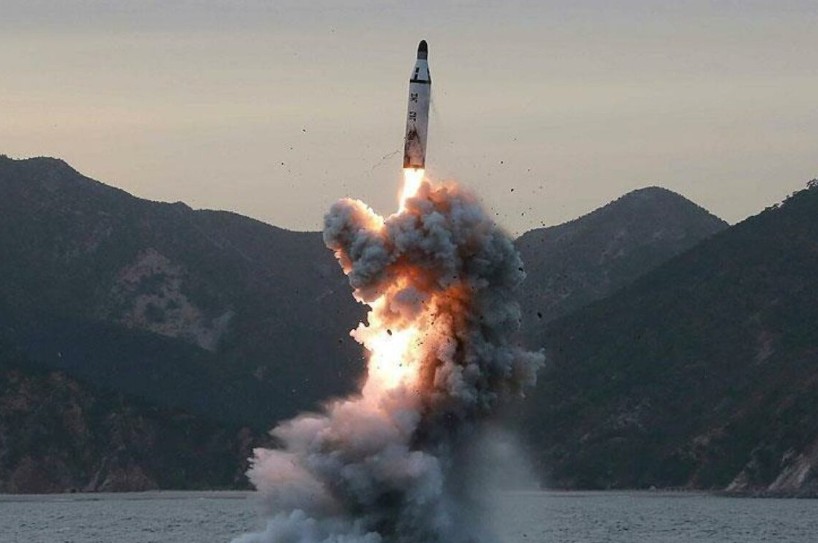

STRATEGIC INTELLIGENCE REPORT – In the history of warfare, speed has always been an advantage. But today, speed is becoming an absolute. We are entering the era of the 5-minute strike, where a missile launched from a thousand miles away can decapitate a command structure before a single diplomatic phone call can be made.
As defense news outlets track the rapid development of Mach 5+ systems in the US, Russia, China, and India, the world is facing a new reality: the death of distance and the evaporation of decision-making time.
The Physics: Defying Air and Heat
A “hypersonic” weapon is defined by two characteristics: it travels at Mach 5 (approximately 3,800 mph) or faster, and it can maneuver. Unlike a traditional Intercontinental Ballistic Missile (ICBM) which follows a predictable arc, a hypersonic glide vehicle (HGV) skips along the upper atmosphere like a stone on water.
The engineering challenge is immense. At these speeds, the air around the missile turns into plasma, creating a communication-blocking shield and generating heat that would melt most aerospace metals. The mastery of scramjet technology—engines that breathe air at supersonic speeds—is the “Holy Grail” of modern defense engineering.
The Global Arms Race: Who Leads in 2026?
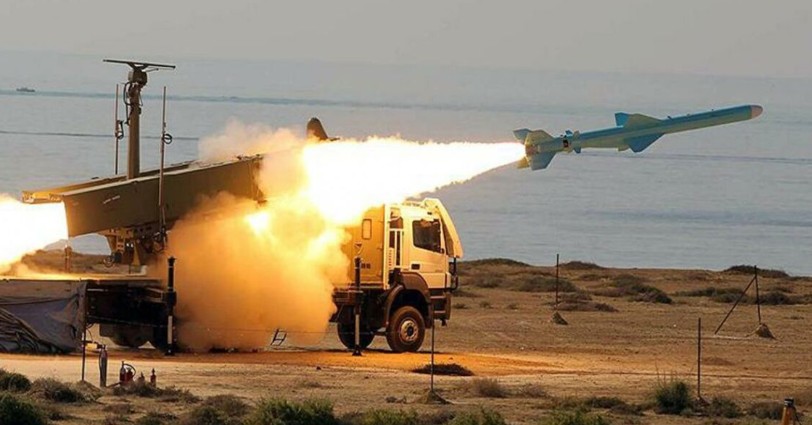
The race for hypersonic hegemony is no longer a two-way street. It is a multi-polar sprint:
-
The United States: After early setbacks, programs like the Dark Eagle (LRHW) and the HACM (Hypersonic Attack Cruise Missile) have moved into serialized production. The US focus is on conventional “Conventional Prompt Global Strike” (CPGS) capabilities.
-
China: With the DF-17 already in service and rumors of an orbital hypersonic system, Beijing has integrated these weapons into its “Anti-Access/Area Denial” (A2/AD) strategy to push carrier groups away from its shores.
-
Russia: Moscow’s Zircon and Avangard systems are already central to its strategic rhetoric, often used as a counterbalance to Western missile defense shields.
-
India: In collaboration with Russia, the BrahMos-II is set to become the world’s fastest cruise missile. India is also independently testing its HSTDV (Hypersonic Technology Demonstrator Vehicle), marking its entry into the elite club.
The Politics: The Shrinking Window of Diplomacy
The most dangerous aspect of hypersonic weapons is not their destructive power, but their ambiguity. Because these missiles can carry either conventional or nükleer (nuclear) warheads and follow unpredictable paths, an adversary cannot know the target or the payload until impact.
In the world of defense news, this is referred to as “Strategic Instability.” During the Cold War, leaders had roughly 30 minutes to confirm a launch and decide on a response. With hypersonic systems, that window shrinks to 5 minutes or less. This “compressed timeline” increases the risk of accidental nuclear war, as AI-driven defense systems may be given the authority to launch a counter-strike without human intervention.
Strategic Verdict: A Shieldless World?
Can hypersonic missiles be stopped? Current missile defense systems, like the Patriot or S-400, are designed to hit targets moving in predictable patterns. Intercepting a maneuvering Mach 8 target is like “hitting a bullet with another bullet while both are in a hurricane.”
For the global defense community, the 2030s will be defined by the search for a counter-hypersonic shield—likely involving space-based sensors and directed-energy (laser) weapons. Until then, the nation that masters the 5-minute strike holds the ultimate geopolitical lever. Distance is no longer a defense; speed is the only security.
Editor’s Note: This analysis incorporates 2026 testing data and procurement budgets from the Pentagon and the Indian Ministry of Defence. Defense & Tech will continue to monitor the upcoming flight tests of the BrahMos-II prototype.