HISAR A+ Autonomous Hits Target With IIR-Seeker Missile, SSB Says
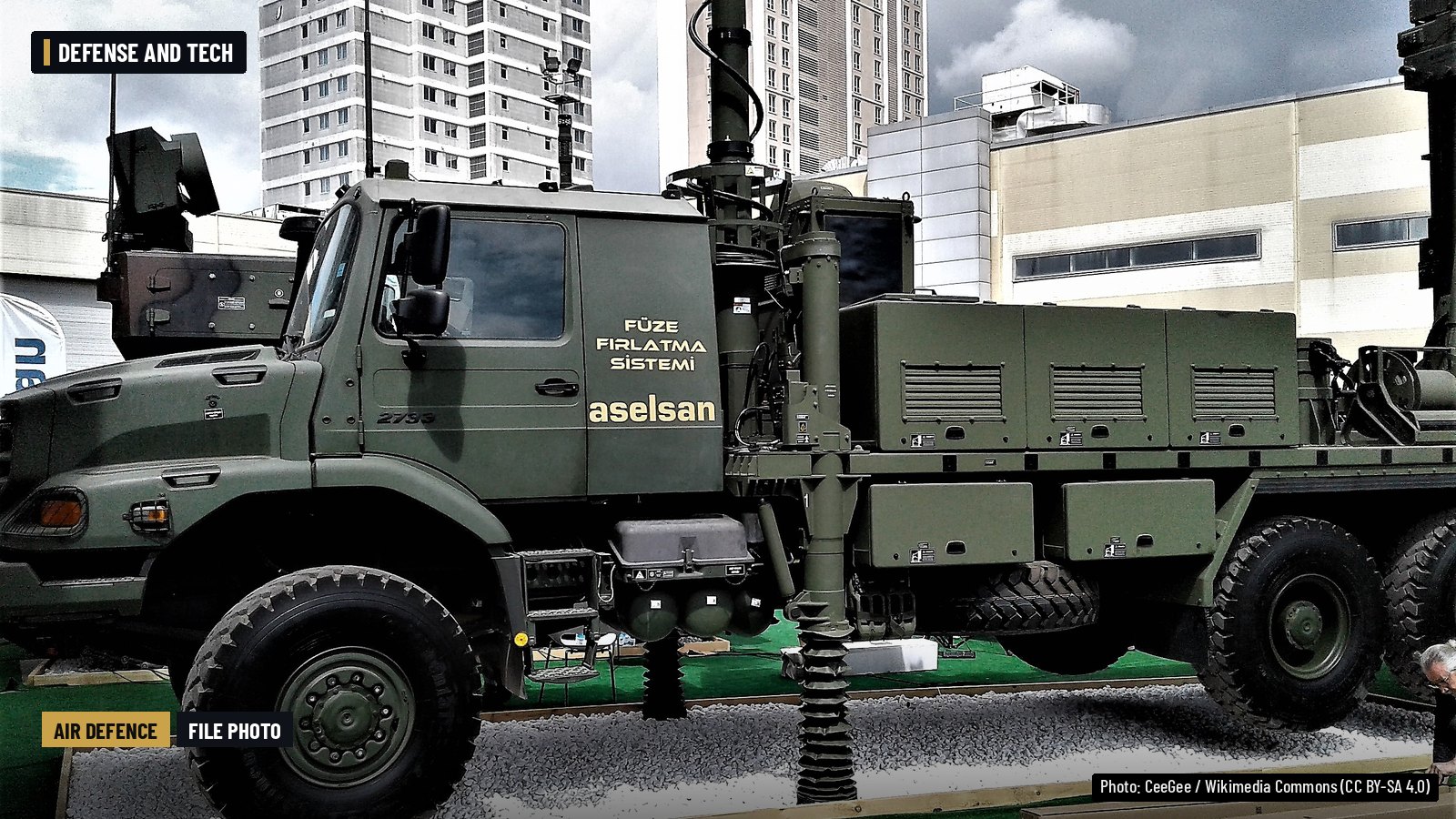
The Presidency of Defence Industries (SSB) said on Saturday 7 November 2026 that the HISAR A+ Autonomous air-defence system hit its target with a missile fitted with an imaging infrared (IIR) seeker. SSB President Prof. Dr Haluk Görgün made the announcement on the agency’s 41st anniversary. ASELSAN and ROKETSAN, the project’s prime contractors, each confirmed a successful live-fire test the same day.
- SSB President Haluk Görgün said on 7 November 2026 that HISAR A+ Autonomous hit its target with an imaging infrared (IIR) seeker missile
- The announcement was posted at 11:03 Istanbul time on the Presidency of Defence Industries’ 41st anniversary
- Görgün said the system is in the inventory of Turkish forces, was developed with more than 200 domestic firms, and combines its components on a single vehicle
- ROKETSAN said its HISAR-A IIR missile, fired from the autonomous vehicle, scored a direct hit; ASELSAN called it a successful live-fire test of the highly mobile HISAR A system “with enhanced capabilities”
- Anadolu Agency reported that the target was jet-powered; the official X posts did not name the target type
- Not disclosed: test location, number of rounds fired, the range or altitude of this engagement, or whether it was a qualification or routine inventory firing
What officials announced
Görgün published the statement on his official X account at 11:03 Istanbul time (08:03 UTC) and attached a video (Haluk Görgün). “In our presidency’s 41st year of pride, the autonomous will of our Sky Homeland, HISAR A+ Autonomous, successfully hit its target,” he wrote. He added that the system “once again proved its effectiveness in the field” with the IIR-seeker missile it fired.
According to Görgün, the system is already in the inventory of Turkish forces and was developed with the contribution of more than 200 domestic companies. He said it brings all of its components together on a single vehicle and thereby strengthens air-defence capability. He framed the firing as part of Türkiye’s aim of a fully independent defence industry, thanked the engineers, technicians and partners involved, and tagged ASELSAN and ROKETSAN.
ROKETSAN quoted that post at 11:45 Istanbul time (ROKETSAN). The company said its HISAR-A IIR air-defence missile, “fired from the autonomous vehicle”, scored a direct hit in a test firing, and described the weapon as one of the important elements of Türkiye’s low-altitude air defence. ASELSAN followed at 12:18 Istanbul time with a bilingual statement (ASELSAN). It said the highly mobile HISAR A system, developed toward “full independence in air and missile defence”, had “achieved another significant milestone in a successful live-fire test, demonstrating its enhanced capabilities”, and that the firing marked another step in strengthening Türkiye’s layered air-defence architecture.
Anadolu Agency reported the same day that the missile struck a jet-powered target. That detail does not appear in the Görgün, ASELSAN or ROKETSAN posts. The three official statements also do not give the test range, the location, how many missiles were fired, or the range and altitude of the engagement.
What HISAR A+ Autonomous is
HISAR is a family of surface-to-air missiles intended to protect military bases, ports, facilities and units against fixed- and rotary-wing aircraft, cruise missiles, air-to-ground missiles and unmanned aircraft, according to ROKETSAN’s HISAR A+ product page. The manufacturer lists HISAR-A and HISAR-O as modular members of the same family, designed to work with different platform integrations and fire-control and command-and-control arrangements. For how the family sits alongside SİPER, the S-400 and KORKUT, see our guide to Türkiye’s air-defence systems.
Anadolu Agency, in background to Saturday’s announcement, described two HISAR-A configurations. In the missile-launch-system version, detection, identification, tracking, firing and command-and-control are handled by a separate fire-control unit. The autonomous version, it said, can perform all of those functions on its own. That description matches Görgün’s remark that the system unites its components on a single vehicle, but the agency did not publish a new official specification sheet with the test notice.
ROKETSAN’s published figures for the HISAR A+ missile — which are catalogue data, not measurements from this firing — are a range of more than 15 kilometres, an altitude of more than 10 kilometres, a length of 3.67 metres and a diameter of 234 millimetres. Mid-course guidance is given as inertial navigation with a data link; terminal guidance is an infrared seeker with what the company calls optimal navigation algorithms. The listed warhead is a high-explosive fragmentation type. Anadolu Agency attributes the seeker, radar, electro-optical suite and command-and-control equipment to ASELSAN, the missile to ROKETSAN and the warhead to TÜBİTAK SAGE, and says the missile has a dual-pulse solid-fuel motor and a vertical-launch capability. None of those breakdowns was repeated in Saturday’s X posts.
Previous developments
Görgün’s wording (“once again proved”) and ASELSAN’s (“another significant milestone”) present Saturday’s shot as a further demonstration of a system already in service, not as a first firing. The official statements do not say how many earlier HISAR A+ Autonomous firings have been conducted or when the system entered the inventory.
The test sits inside a broader Turkish layered-air-defence programme. On 25 October 2026 ROKETSAN said the longer-range SİPER 2 missile destroyed a target that was changed in flight. On 2 November we reported remarks pointing to serial production of SİPER 2 in 2027. On 3 November ASELSAN disclosed a $1.1 billion air-defence export contract with an unnamed customer. Anadolu Agency noted that SSB was established on 7 November 1985 under Law 3238; Saturday’s firing was timed to that anniversary.
Industry context
An autonomous short-range battery that carries its own radar, electro-optical sensors and missiles on one vehicle is meant to move with armour and mechanised units, or to cover a fixed site without waiting for a separate fire-control vehicle. An IIR seeker home on the target’s heat signature in the last stage of flight; manufacturers present that as useful against aircraft and some cruise missiles and unmanned aircraft, particularly where radio-frequency jamming is expected. Those are design purposes described by the companies and by Anadolu Agency, not results measured in this test.
What Saturday’s statements do not settle is equally clear. They do not say whether the IIR missile is a new production standard now being issued to units, how it differs from earlier HISAR-A seekers already in service, or whether the firing was part of a formal qualification series. Until SSB or the two companies publish those details, the confirmed facts remain the ones they stated: a live-fire test on 7 November 2026, an IIR-seeker missile, a hit, and three matching official confirmations from the SSB president and both prime contractors.
Sources: Haluk Görgün, official X account, 7 November 2026, 11:03 Istanbul; ASELSAN official X account, 7 November 2026, 12:18 Istanbul; ROKETSAN official X account, 7 November 2026, 11:45 Istanbul; Anadolu Agency, 7 November 2026; ROKETSAN HISAR A+ product page.