
F-47 and Its Drone Wingmen: How Collaborative Combat Aircraft Will Work
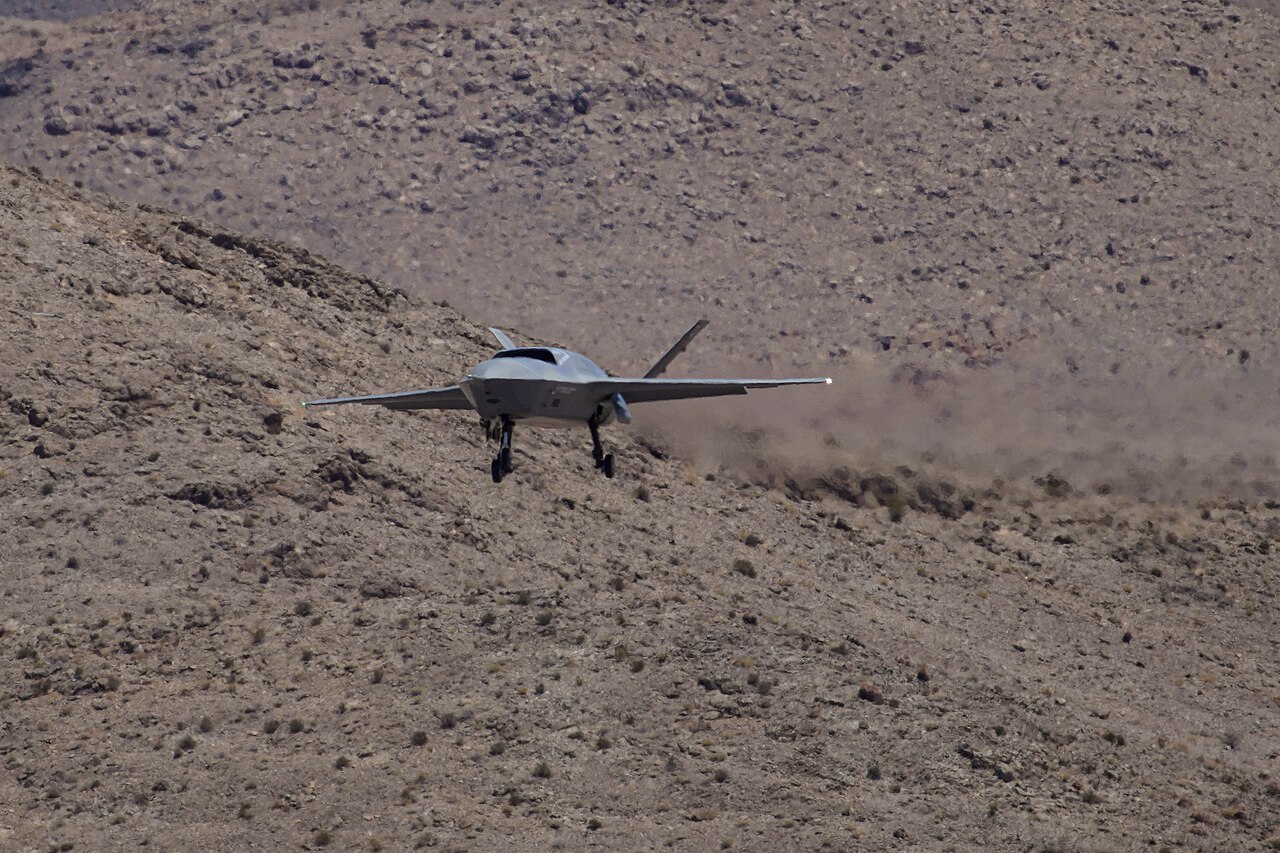
The F-47 is the first American fighter designed from the start to command other aircraft: uncrewed jets the Air Force calls Collaborative Combat Aircraft, or CCA. Two designs, the General Atomics FQ-42A and the Anduril FQ-44A, won production contracts in June 2026, and the service wants about 150 combat-capable drones by the end of the decade and roughly 1,000 over time.
The idea is simple and the execution is not. This article explains what the drones are, how a single pilot is meant to direct them, and which parts of the concept have yet to be proved.
Why the F-47 needs drones
The Air Force plans to buy at least 185 F-47s, as we explain in how many F-47s will be built. That is too few to cover the Pacific by themselves, and each one will be too valuable to risk casually. Collaborative Combat Aircraft are the answer to both problems: cheaper aircraft that add missiles and sensors to a formation and can be sent where a crewed jet would not go.
This is why the Air Force describes Next Generation Air Dominance as a family of systems. The F-47 is the part with a pilot. The CCAs are the part that provides mass. For the fighter itself, see what the F-47 is.
The two drones
| FQ-42A | FQ-44A Fury | |
|---|---|---|
| Maker | General Atomics | Anduril |
| First flight | 27 August 2025 | 31 October 2025 |
| Production contract | June 2026 | June 2026 |
| Engine | One turbofan | One turbofan |
| Combat radius | 700+ nm (Air Force figure for CCA) | 700+ nm (Air Force figure for CCA) |
| Weapons | Internal bay for air-to-air missiles | External air-to-air missiles shown in tests |
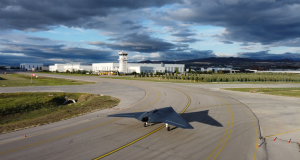
Both began as prototypes designated YFQ-42A and YFQ-44A, the first American aircraft to carry the FQ prefix for an uncrewed fighter. The Air Force awarded production contracts to both companies on 18 June 2026, without disclosing values or quantities. A second increment, with different capabilities, has been in development since fiscal 2026.
How a pilot controls them
The drones are not flown remotely in the way a Reaper is. They fly themselves, using autonomy software, and the pilot gives them tasks: go there, search that area, engage that target, return. The Air Force calls this human-on-the-loop control. The decision to use a weapon stays with a person.
The software is being bought separately from the airframes. Six companies hold mission-autonomy contracts, and the Air Force has said it will choose a primary provider in summer 2027. Keeping the brain independent of the body is meant to let any CCA work with any crewed aircraft, including the F-35 and, later, the F-47.
What the cockpit interface looks like has not been shown. Tests so far have used tablets and modified displays in F-22s, F-35s and F-16s. The workload is the open question: a single pilot in a single-seat fighter has to manage the drones while fighting.
What the drones will do
Four roles are discussed most often. As missile carriers, they extend the number of shots a formation has, which matters given the limits of internal bays described in what weapons the F-47 will carry. As sensors, they fly ahead and use their radars so the crewed fighter can stay silent, part of the approach we cover in F-47 stealth explained. As jammers and decoys, they complicate the enemy’s picture. And as expendable scouts, they can be sent into the most dangerous airspace first.
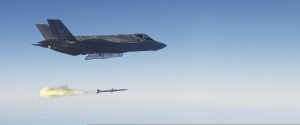
The first increment is focused on the air-to-air role. An Anduril prototype was reported in 2026 to have fired an inert AMRAAM in testing.
Numbers and cost
The Air Force’s planning assumption has been two CCAs for every F-47 and for about 300 F-35As, which is where the figure of 1,000 came from. Officials have said the ratio could rise as the software improves. The nearer target is about 150 combat-capable aircraft by the end of the decade.
Price is the point. The Air Force has aimed for a unit cost of roughly $20 million to $28 million, a quarter to a third of an F-35. If the drones cost much more than that, the logic of treating them as attritable breaks down.
What is unproven
Three problems stand out. The first is range. The Air Force lists the CCAs at a radius of more than 700 nautical miles, against more than 1,000 for the F-47, as we note in our article on F-47 range. Drones that cannot go as far as the fighter must be based closer or refuelled.
The second is communications. The concept depends on datalinks that work under heavy jamming without giving away the formation’s position. The third is trust. Autonomy that performs well on a test range has to perform in combat, alongside pilots who have never fought this way. None of these is a reason the concept will fail. All of them are reasons it may arrive later, or in a more modest form, than the plans suggest.
Frequently asked questions
What drones will fly with the F-47?
Collaborative Combat Aircraft. The first two types are the General Atomics FQ-42A and the Anduril FQ-44A, both awarded production contracts in June 2026.
How many drones can one F-47 control?
The Air Force has planned on two per crewed fighter and has said the number could grow. No limit for the F-47 has been published.
Are the drones flown by the F-47 pilot?
No. They fly autonomously. The pilot assigns tasks and approves weapon use but does not steer them.
Are CCAs armed?
Yes. The first increment is designed to carry air-to-air missiles such as the AIM-120 AMRAAM.
How much does a CCA cost?
The Air Force has targeted roughly $20 million to $28 million per aircraft for the first increment. Contract values have not been disclosed.
Can CCAs work with other fighters?
Yes. They are being tested with the F-22, F-35 and F-16 and are intended to work with any crewed aircraft fitted with the control software.
- The Aviationist – U.S. Air Force Awards CCA Production Contracts: theaviationist.com
- Defense News – US Air Force awards first CCA production contracts to General Atomics, Anduril: defensenews.com
- The War Zone – First F-47 6th Generation Fighter Now Being Built: twz.com