
How Many F-47s Will the Air Force Buy? The 185-Plus Plan Explained
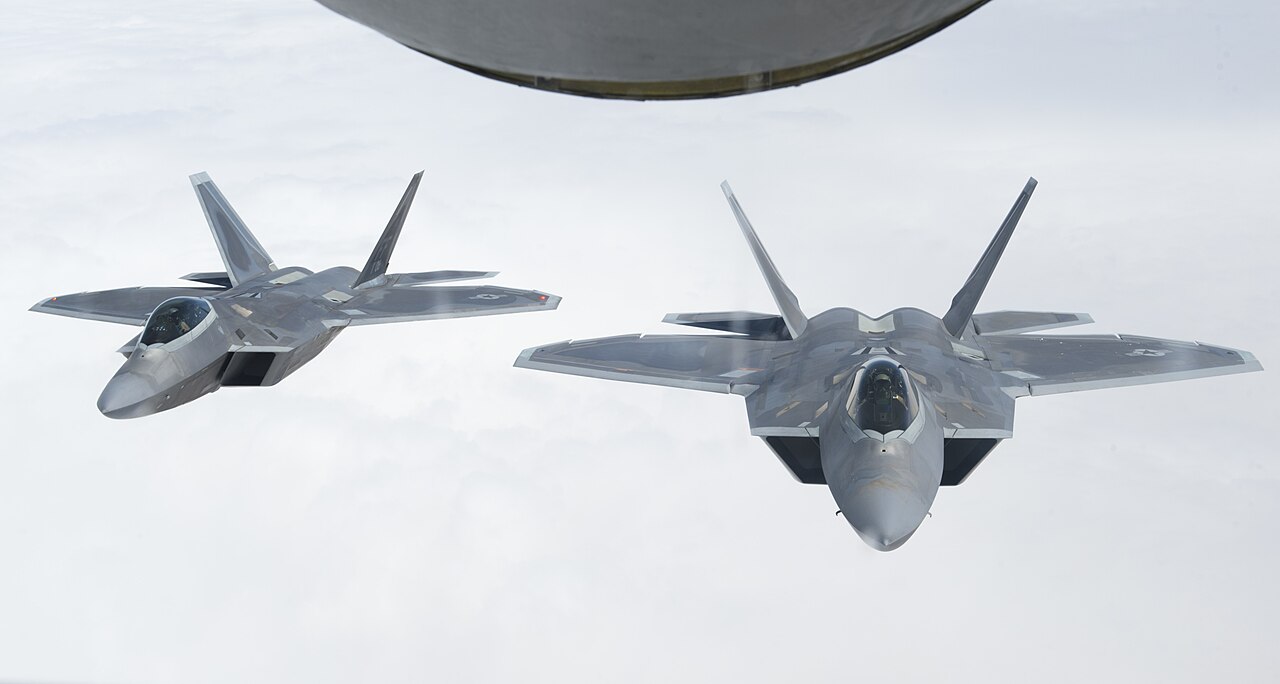
The US Air Force plans to buy at least 185 F-47s, a figure it has written as “185+” and that matches almost exactly the number of F-22s in its inventory today. Officials have said the total could grow, and the aircraft will be joined by more than 1,000 drone wingmen.
History suggests caution in both directions. The F-22 was meant to be a fleet of 750 and ended at 187. This article explains what the F-47 number means and what will decide whether it rises or falls.
The official number
The figure comes from the graphic released in May 2025 by Gen. David Allvin, then Air Force chief of staff, which listed the planned F-47 inventory as 185+. Earlier planning documents for the Next Generation Air Dominance programme had spoken of roughly 200 aircraft.
On the day of the contract award Allvin said the service would have more F-47s than F-22s. In September 2026 Brig. Gen. Timothy Helfrich, the senior officer for fighter acquisition, again described 185 as a minimum. President Trump has said only that “a lot” have been ordered. No contract for production aircraft has yet been announced.
How 185 compares
| Aircraft | Number | Status |
|---|---|---|
| F-47 | 185+ | Planned |
| F-22 Raptor | 187 built; about 185 in inventory | Production ended in 2011 |
| F-35A (US Air Force) | 1,763 | Planned total; deliveries continuing |
| Collaborative Combat Aircraft | 1,000+ | Planned |
| J-20 (China) | 300 to 500 | Open-source estimates |
Of the F-22s in the inventory only about 143 are assigned to combat units. The rest are used for training and testing or held in reserve. If the F-47 fleet is split in the same way, 185 aircraft would support perhaps five or six frontline squadrons. For how the two types compare in the air, see F-47 vs F-22.
Why 185?
The simplest reading is that the F-47 replaces the F-22 one for one. The Raptor fleet sets the size of the Air Force’s dedicated air-superiority force, with its squadrons, bases and pilots, and the new aircraft slots into that structure.
Cost is the other constraint. With outside estimates of $180 million to $300 million per aircraft, as we explain in how much the F-47 will cost, each additional squadron is a multi-billion-dollar decision. The Air Force is also paying for the B-21 bomber, the Sentinel missile and continued F-35 purchases at the same time.
The drones change the arithmetic
The Air Force’s answer to the small fleet is to surround each fighter with uncrewed aircraft. Its planning figure of more than 1,000 Collaborative Combat Aircraft was derived from two drones for each F-47 and for a portion of the F-35A fleet.
Each drone is meant to cost a fraction of a crewed fighter and to carry its own missiles and sensors. If the concept works, 185 F-47s could put several times that number of aircraft into a fight. If it does not, 185 is a thin force for a war across the Pacific.
The F-22 warning
The F-22 programme began with a requirement for 750 aircraft. That was cut to 648, then 339, and production was finally capped at 187 operational jets in 2009, when the Pentagon judged that no rival fighter justified more. The line closed in 2011, and restarting it was later judged too expensive.
The result was a fleet too small to cover its commitments and very costly to keep flying, because fixed costs were spread across so few aircraft. The F-47 starts at the number where the F-22 ended, which leaves little room for cuts.
Could the number change?
Yes, in either direction. The case for more rests on China, which is building J-20s at an estimated 120 a year and is flight-testing two newer designs. The case for fewer rests on money, and on the possibility that drones or a cheaper follow-on version take over part of the mission. Officials have talked about developing the F-47 in increments, which could mean later batches differ from the first.
Nothing will be settled until production contracts are signed. Those are unlikely before the aircraft flies, which is planned for 2028.
Frequently asked questions
How many F-47s will be built?
The US Air Force plans to buy at least 185. Officials have said the number could increase, but no production contract has been announced.
Why is the Air Force buying only 185 F-47s?
The figure mirrors today’s F-22 fleet, which the F-47 replaces, and reflects the aircraft’s high cost. The Air Force plans to add more than 1,000 drone wingmen to make up numbers.
How many F-22s does the Air Force have?
About 185 are in the inventory, of which roughly 143 are assigned to combat units. A total of 187 operational aircraft were built.
Will the F-47 be built in larger numbers than the F-22?
Air Force leaders have said so, and 185 is described as a minimum. Whether that happens depends on future budgets.
How many drones will fly with each F-47?
The planning assumption has been two Collaborative Combat Aircraft per crewed fighter, though the Air Force has said the ratio could be higher.
When will F-47 production start?
The first aircraft is already being built for testing. Full production is not expected until after the first flight planned for 2028.