Switchblade 300 and 600 Specs, Range, Warhead and Operators
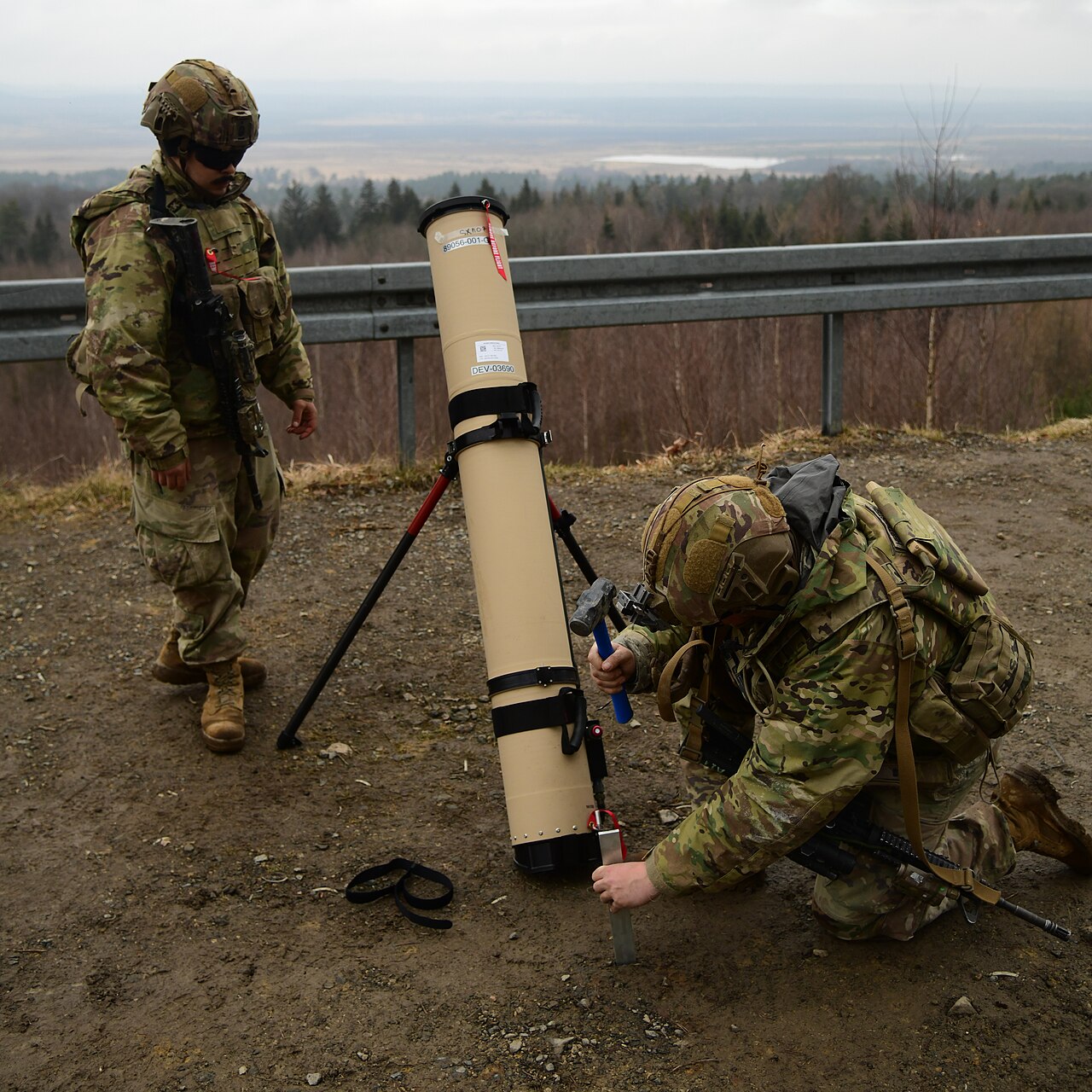
The AeroVironment Switchblade 300 weighs about 2.5 kg and reaches roughly 10 km, while the larger Switchblade 600 carries an anti-armor warhead to about 40 km, making them the best-known tube-launched loitering munitions in the West. Both are built by US firm AeroVironment and sold to the US military and allies.
What is the Switchblade drone
The Switchblade is a family of small loitering munitions, sometimes called kamikaze drones, that are launched from a tube, fly to a target area, and dive onto a target with an explosive warhead. The operator watches live video and can abort the attack and re-target, which differs from a one-way cruise missile. The design is explained in our guide to loitering munitions.
AeroVironment developed the original Switchblade 300 in the late 2000s for special operations forces. It entered US service around 2011 and was followed by the heavier Switchblade 600, which was designed to attack armored vehicles. The firm is described in our AeroVironment company profile.
Switchblade 300 vs 600 specifications
| Parameter | Switchblade 300 | Switchblade 600 |
|---|---|---|
| Launch weight | About 2.5 kg | About 23 kg including tube |
| Range | About 10 km (later blocks longer) | About 40 km |
| Endurance | About 15 to 20 min | About 40 min |
| Warhead | Small fragmentation warhead | Anti-armor warhead, Javelin-class |
| Dash speed | Around 100 km/h | Around 115 mph, manufacturer figure |
| Launch | Tube, man-portable | Tube, vehicle or ground launch |
| Guidance | Operator-guided with electro-optical and infrared camera | Operator-guided with electro-optical and infrared camera |
| Target types | People, soft vehicles | Armored vehicles, bunkers |
How does the Switchblade work
A soldier loads the drone in a launch tube, which takes only a few minutes to set up. A compressed-gas launcher ejects the drone, its wings flip out, and an electric motor drives a propeller. The operator controls it through a tablet, sees video from an electro-optical camera with an infrared option and selects the target. In the final dive, the warhead detonates on impact. The larger 600 can also loiter for longer periods and strike armored vehicles, while the 300 is aimed at people and soft targets.
A key selling point is the wave-off function. If the operator sees a civilian or a change in the situation, the drone can be guided away and flown again, which limits collateral damage and reduces waste compared to fire-and-forget weapons.
Compared with other designs, the Switchblade sits in the middle on price and capability. Larger loitering munitions carry bigger warheads but need vehicles to launch, while cheap first-person-view drones cost far less but have shorter range and less reliable guidance. The Switchblade 300 suits small units that need a precision option they can carry in a backpack, and the 600 gives company-level commanders a way to reach armor without calling for aircraft or artillery. Newer blocks are described by the maker as adding better datalinks and resistance to jamming.
Who uses the Switchblade
The US Army and Marine Corps are the main operators, along with special operations forces. Several allied countries have also acquired the system, including Australia, Taiwan and some European states. Taiwan was approved for a large purchase of both variants in 2024, according to US notifications. The US Army has been running competitions to select a longer-term loitering munition, and the Switchblade 600 is often named as a leading candidate. Readers can see how the type ranks in our top 10 loitering munitions.
| Operator | Variant | Notes |
|---|---|---|
| United States | 300 and 600 | Army, Marine Corps, special operations |
| Ukraine | 300 and 600 | Donated from US stocks, reported |
| Taiwan | 300 and 600 | Approved for sale in 2024, reported |
| Australia | 300 | Acquired for army trials and use, reported |
Switchblade in Ukraine
The United States sent hundreds of Switchblade 300s to Ukraine in 2022, with reports of 700 in total, and later provided the 600. Ukrainian operators praised the ability to hit targets beyond a trench line, but reported problems with jamming and with the small warhead of the 300 against armor. Operator-reported accounts say electronic warfare reduced effectiveness in some sectors, which led AeroVironment to develop hardened versions. Cheap first-person-view drones have also taken much of the role, since they cost far less.
Switchblade frequently asked questions
What is the range of the Switchblade 300?
About 10 km, with later blocks offering somewhat longer reach.
What is the range of the Switchblade 600?
About 40 km, according to the manufacturer.
How much does a Switchblade cost?
Public estimates put the 300 in the range of tens of thousands of dollars and the 600 higher, but prices vary by contract.
Can a Switchblade be recalled?
Yes. The operator can wave off the attack and fly the drone again if a target is wrong.
Who makes the Switchblade?
AeroVironment, a US company, makes both the 300 and the 600.
- AeroVironment Switchblade product literature (manufacturer figures)
- US Department of Defense and State Department announcements
- Wikipedia – AeroVironment Switchblade (accessed October 2026)
- Defence & Tech reporting