3D Printing in Defense Explained, From Spare Parts to Rocket Engines
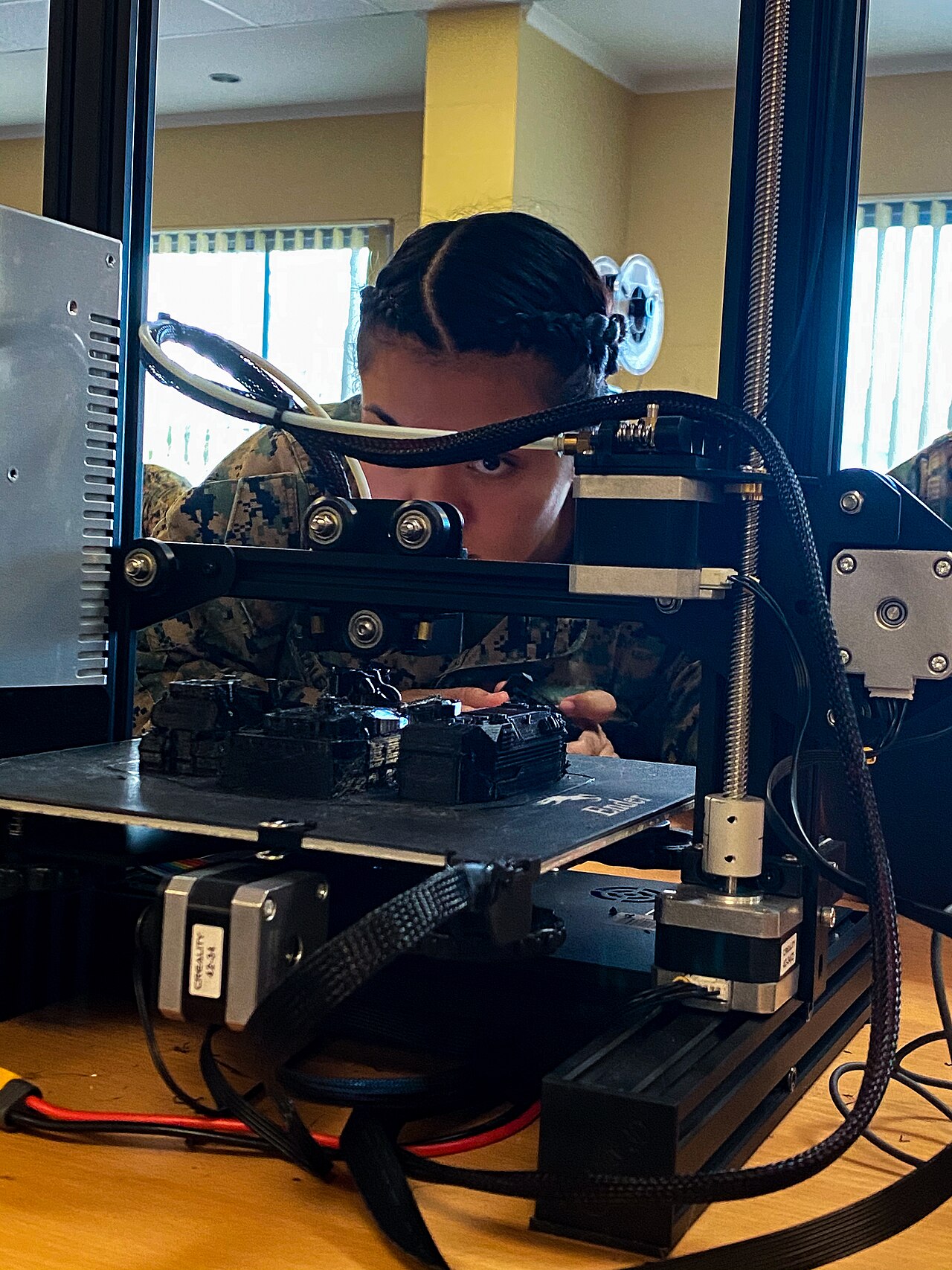
3D printing in defense, formally additive manufacturing, builds parts layer by layer from metal, polymer or concrete, and it is already cutting lead times for components that once took months to forge or cast. Militaries now use it for spares, rocket engines, drone airframes and even barracks, and the next question is how much of the industrial base it can safely absorb.
What is 3D printing in defense
Additive manufacturing is the industrial version of the desktop 3D printer: a digital design is sliced into thin layers, and a machine deposits or fuses material one layer at a time. In defense, the attraction is not novelty but logistics. A part that can be printed near the point of use removes the need to stock thousands of slow-moving spares.
The approach is also a hedge against a strained supply chain. Castings and forgings for legacy platforms often come from a handful of suppliers, and some tooling no longer exists. A digital file does not need tooling, which is why navies and air forces have been among the most active adopters.
How does additive manufacturing work
| Process | How it works | Typical defense use |
|---|---|---|
| Laser powder bed fusion | A laser melts metal powder in thin layers | Complex titanium and nickel parts, engine components |
| Directed energy deposition | A nozzle feeds powder or wire into a melt pool | Repairing worn parts, large structures |
| Binder jetting | Glue binds powder, then the part is sintered | Cost-efficient small metal parts |
| Polymer extrusion and resin | Plastic is extruded or cured in layers | Drone airframes, tooling, housings |
| Concrete printing | A robotic arm extrudes cement mix | Barracks, shelters, barriers |
Powder bed fusion dominates high-value metal work because it can make internal channels and lattices that machining cannot. Every printed part still needs inspection, heat treatment and certification, and that qualification step, not the printing itself, usually sets the schedule.
Military uses of 3D printing
| Area | Example | Why it helps |
|---|---|---|
| Naval sustainment | Printed copper-nickel deck drain on a Virginia-class submarine, reported by HII | Shortens lead time for low-volume ship parts |
| Aerospace | Printed titanium and nickel parts reported across modern fighters and engines | Lighter parts, fewer assemblies |
| Expeditionary forces | Field printers making drone parts and tooling | Repairs close to the front |
| Construction | Printed concrete barracks tests by the US Marine Corps | Fast shelters with fewer workers |
| Uncrewed systems | Polymer airframes for small drones in Ukraine and elsewhere | Cheap, rapidly iterated designs |
Shipbuilder HII has reported printing and installing qualified parts for US nuclear submarines, and the Navy runs a dedicated additive manufacturing center of excellence. Ukrainian workshops, by their own reports, print grenade fins, drone mounts and spare parts on commercial machines, a fast-moving practice that is hard to audit from the outside.
3D printed rocket engines and missiles
Propulsion is where additive manufacturing has made the largest mark. Start-ups such as Ursa Major, profiled in our Ursa Major company profile, print rocket engine chambers and injectors to cut part counts and lead time, while aerospace primes use printed components in missile airframes and hypersonic test vehicles.
The same logic applies to the munitions bottleneck described in our solid rocket motor shortage explainer. Printed cases, nozzles and tooling could speed ramp-up, though energetic materials still require conventional, slow and tightly regulated processes.
Limits of 3D printing in defense
Printed metal can carry hidden defects such as porosity, and aircraft or ship parts must pass strict qualification regimes. Machines are expensive, powders require careful handling, and skilled operators remain scarce. There is also a security angle, because digital design files become targets for theft or tampering.
In practice, additive manufacturing complements forging and casting rather than replacing them. It wins where volumes are low, geometry is complex or the legacy supply chain has broken.
A final consideration is cost. Printing is cheap for a single complex bracket but rarely beats mass production for thousands of identical items. Procurement offices therefore ask two questions: is the part needed fast, and is its geometry difficult to make any other way. Where the answer to either is yes, additive manufacturing tends to win.
3D printing in defense frequently asked questions
What is additive manufacturing in the military?
It is the use of 3D printing to produce parts, tools and structures from digital files, often for spares and low-volume items.
Can you 3D print a missile?
Parts such as airframes, cases and engine components can be printed, but explosives and propellants still need conventional production.
Does the US Navy use 3D printed parts?
Yes, the Navy and its shipbuilders have reported installing qualified printed parts on ships and submarines.
Is 3D printing used in Ukraine?
Ukrainian units and workshops report printing drone components, mounts and munition accessories, though the scale is hard to verify.
What are the risks of 3D printed military parts?
Hidden defects, difficult certification and the theft of digital design files.
- US Navy and HII public statements on additive manufacturing
- Industry references on additive process families
- Wikipedia – 3D printing (accessed October 2026)
- Defence & Tech reporting