

MGM-140 ATACMS Specs, Variants, Range and Combat Record
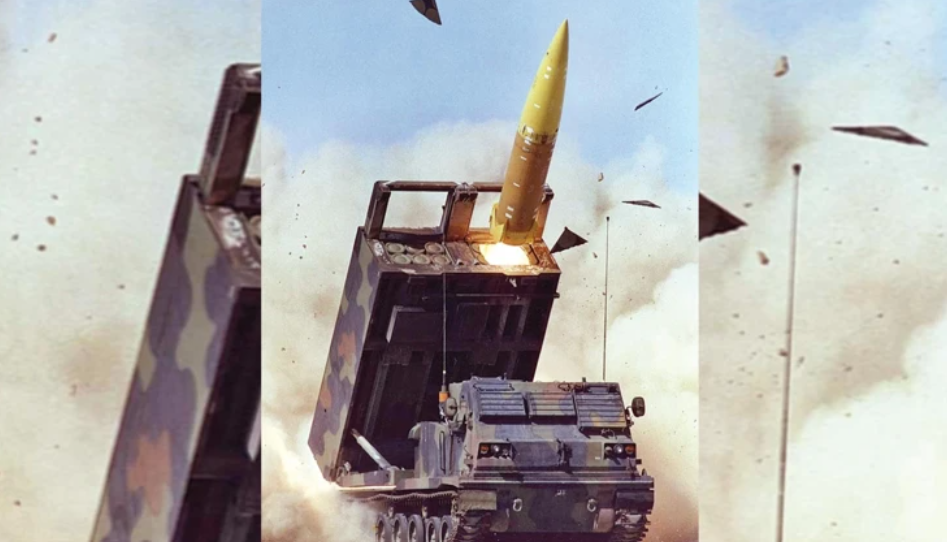
The MGM-140 ATACMS is the US Army’s 300-kilometer tactical ballistic missile, a Lockheed Martin weapon fired from MLRS and HIMARS launchers that has been in service since 1991 and in Ukrainian hands since 2023. Now giving way to the Precision Strike Missile, it remains the deepest-reaching round in most Western rocket-artillery arsenals.
What is the MGM-140 ATACMS
The Army Tactical Missile System was conceived in the 1980s to strike Warsaw Pact follow-on forces, airfields and air defenses far behind the front line. Lockheed Martin builds the missile, which flies from the same M270 MLRS pods as standard rockets, one missile replacing six rockets per pod, and from the single-pod M142 HIMARS. A launcher carrying ATACMS looks identical to one carrying rockets, a deliberate piece of battlefield deception.
Thirty-two missiles were fired in the 1991 Gulf War within weeks of the type entering service, and hundreds more in Iraq in 2003. Production for the US ended as the Army pivoted to PrSM, but the line was kept warm by foreign orders and by refurbishment of older rounds.
ATACMS specifications and range
| Item | Detail |
|---|---|
| Type | Short-range tactical ballistic missile |
| Manufacturer | Lockheed Martin Missiles and Fire Control |
| Length | About 4 m |
| Diameter | 610 mm |
| Launch weight | Roughly 1,300 to 1,670 kg depending on variant |
| Propulsion | Single-stage solid rocket motor |
| Guidance | Inertial, GPS-aided from Block IA onward |
| Range | 128 km (M39) to about 300 km (M39A1, M48, M57) |
| Warhead | M74 bomblets (early blocks) or 500-lb class unitary (M48/M57) |
| Launchers | M270 MLRS (2 missiles), M142 HIMARS (1 missile) |
ATACMS variants explained
| Variant | Warhead | Range |
|---|---|---|
| M39 (Block I) | 950 M74 anti-personnel/anti-materiel bomblets | About 128–165 km, inertial only |
| M39A1 (Block IA) | 300 M74 bomblets | About 300 km, GPS-aided |
| M48 (QRU) | WDU-18/B 500-lb unitary penetrating blast | About 300 km |
| M57 (TACMS 2000) | 500-lb unitary | About 300 km |
| M57E1 | Remanufactured M39/M39A1 with unitary warhead | About 300 km |
The family’s arc mirrors Western targeting doctrine, early rounds saturated area targets with bomblets, later rounds traded submunitions for GPS accuracy and a single warhead. The retired cluster rounds found a second life when Washington began transferring them to Kyiv rather than demilitarizing them.
Which countries operate ATACMS
Beyond the US Army, operators and confirmed buyers include South Korea, Greece, Turkey, Bahrain, Qatar, the UAE, Romania, Poland, Morocco, Estonia, Lithuania, Australia, Taiwan and Ukraine. Many bought ATACMS as the deep-strike round for new HIMARS fleets in the 2020s, and several of those orders will transition to PrSM as it becomes exportable at scale.
South Korea has been the most consequential foreign operator, fielding ATACMS opposite North Korean artillery since the early 2000s and using the experience to develop its own KTSSM and Hyunmoo-series successors. For most other buyers the missile functions as a strategic signal as much as a weapon, a 300-kilometer round that turns a truck-mounted rocket launcher into a deterrent neighboring capitals must account for.
ATACMS in Ukraine combat record
Ukraine fired its first ATACMS, cluster-warhead M39s delivered covertly, on 17 October 2023 against airfields in occupied Berdyansk and Luhansk; operator-reported results included more than a dozen Russian helicopters destroyed or damaged, among the most consequential single strikes of the war. Longer-range 300-kilometer rounds followed in 2024 and were used, per operator-reported accounts, against S-400 batteries, airfields and logistics in Crimea and other occupied areas.
The campaign has been a live-fire study in ballistic missile employment against dense air defenses. Russian officials claim high interception rates against ATACMS; those figures are not independently verified, and Ukrainian operator-reported accounts credit the missile’s speed and submunition footprint for continued effectiveness against parked aircraft and radars, targets its Russian counterpart Iskander-M hunts on the other side of the line.
ATACMS frequently asked questions
What is the range of ATACMS?
Early M39 rounds reach roughly 128–165 kilometers; GPS-aided M39A1, M48 and M57 variants reach about 300 kilometers.
What launchers fire ATACMS?
The tracked M270 MLRS carries two missiles and the wheeled M142 HIMARS carries one, in pods outwardly identical to rocket pods.
When did Ukraine first use ATACMS?
On 17 October 2023, with cluster-warhead M39s against airfields at Berdyansk and Luhansk; results are operator-reported.
Is ATACMS still in production?
New-build production has wound down as the US Army transitions to the Precision Strike Missile, though refurbishment and foreign deliveries continued into the 2020s.
How much does an ATACMS missile cost?
Roughly $1.3–1.5 million per round in recent US budget documents, depending on variant and lot.
- US Army budget and program documents
- Lockheed Martin product literature
- Wikipedia – MGM-140 ATACMS (accessed October 2026)
- Operator-reported accounts of ATACMS employment in Ukraine
- Defence & Tech reporting on long-range fires