

AGM-158C LRASM, the Stealth Missile Built to Sink Navies
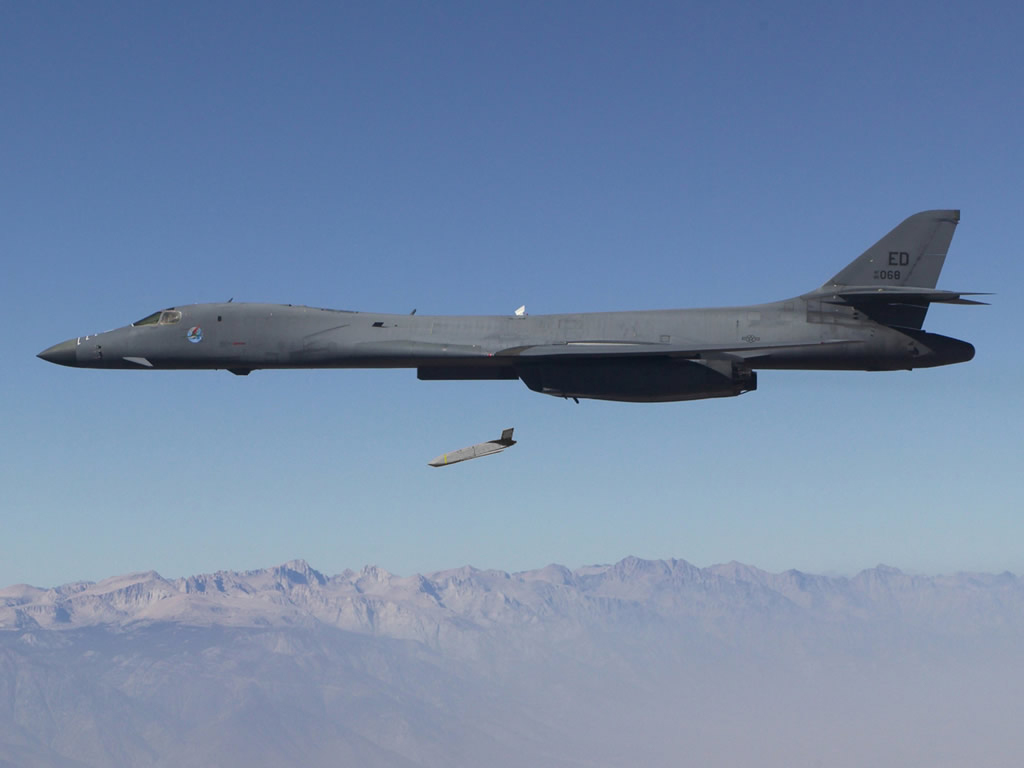
The AGM-158C LRASM is the US military’s stealth anti-ship missile, officially credited with more than 370 kilometers of range and the intelligence to find a warship on its own after every datalink is jammed. Built on the JASSM-ER airframe, it exists because China’s navy outgrew the aging Harpoon, and it has become the Pacific’s benchmark ship-killer.
AGM-158C LRASM specifications
| Specification | Value |
|---|---|
| Type | Low-observable air-launched anti-ship cruise missile |
| Manufacturer | Lockheed Martin, from a DARPA/Navy program |
| Basis | AGM-158B JASSM-ER airframe and turbofan |
| Range | More than 200 nautical miles (370+ km) officially; independent estimates run to 500+ km |
| Warhead | About 450 kg (1,000 lb) penetrating blast-fragmentation |
| Speed | High subsonic |
| Guidance | GPS/INS, datalink, passive RF sensing and imaging infrared terminal seeker, autonomous target discrimination |
| Status | In production alongside JASSM at Troy, Alabama |
How LRASM hunts ships without GPS
The problem with shooting a ship 400 kilometers away is that it moves, and the cheap answer, a datalink feeding updates, is exactly what a peer enemy will jam. LRASM’s answer is autonomy. Launched toward a search area, the missile navigates on jam-resistant GPS/INS while it can, then goes quiet, listening with a passive RF sensor for the radars of the target group, classifying emitters against a threat library, and routing itself around escorts it identifies as dangerous. In the terminal phase an imaging infrared seeker picks the designated ship out of the formation and aims for a specific point on the hull.
Because the sensing is passive, the missile radiates little for defenders to detect, and the stealthy JASSM airframe keeps radar returns small. A salvo can coordinate timing so multiple missiles arrive together from different bearings, the classic method of saturating a warship’s defenses, as our guide to the Aegis combat system explains from the defender’s side.
LRASM vs Harpoon and other anti-ship missiles
| Missile | Range | Signature | Targeting |
|---|---|---|---|
| AGM-158C LRASM | 370+ km official | Stealthy | Autonomous passive RF plus imaging IR |
| AGM-84 Harpoon | Roughly 120-240 km by variant | Conventional | Active radar seeker |
| Naval Strike Missile | 185+ km | Low-observable | Passive imaging IR |
| Maritime Strike Tomahawk | Very long, over 1,600 km class | Conventional | Multi-mode with datalink updates |
| YJ-18 (China) | About 540 km per Chinese state media claims | Conventional, supersonic sprint | Active radar |
Against the venerable Tomahawk family, LRASM trades raw reach for stealth and autonomy; against the Harpoon it is simply a generation ahead in both range and survivability. Its closest Western peer in philosophy is Kongsberg’s smaller NSM, which shares the passive-seeker, low-signature approach.
Which platforms launch LRASM
The B-1B bomber, certified in 2018, remains the heavyweight carrier with up to 24 missiles, a single aircraft theoretically able to empty a squadron’s worth of anti-ship firepower in one pass. The Navy’s F/A-18E/F followed in 2019 with two missiles each, P-8A Poseidon integration has been pursued, and F-35 external carriage is in work. A vertical-launch variant for Mk 41 cells has been offered, which would spread the seeker across surface combatants, though the Navy has so far preferred Maritime Strike Tomahawk and SM-6 for that magazine.
LRASM operators and what comes next
The US Navy and Air Force anchor the program, and Australia became the first export customer with a State Department-approved package of up to 200 missiles for its Super Hornets. Japan has weighed the weapon among its standoff options. Production shares the Troy, Alabama line with JASSM under multi-year contracts pushing the combined family above a thousand missiles annually, built by Lockheed Martin. Development focus has shifted to an extended-range C-3 configuration, reported to roughly double reach toward the 1,000 km class, and to seeker updates that keep pace with Chinese electronic warfare.
AGM-158C LRASM frequently asked questions
What is the range of the LRASM missile?
Officially more than 200 nautical miles, about 370 km; independent estimates credit it with 500 km or more, and an extended-range C-3 version is in development.
How is LRASM different from JASSM?
It uses the same stealth airframe but adds a passive RF sensor, maritime target discrimination and autonomous routing to hit moving warships instead of fixed land targets.
Which aircraft carry LRASM?
The B-1B (up to 24) and F/A-18E/F (two each) are operational; P-8A and F-35 integration have been pursued, and a Mk 41 ship-launched variant has been offered.
Who operates LRASM besides the US?
Australia, whose purchase of up to 200 missiles for its Super Hornet fleet was approved in 2020, with deliveries following.
Has LRASM been used in combat?
No combat use has been publicly confirmed; the missile’s record rests on test shots and exercises.
- US Navy and Air Force program disclosures
- Lockheed Martin product literature
- Wikipedia – AGM-158C LRASM (accessed October 2026)
- Defence & Tech reporting on Pacific strike inventories