
IRST Explained, How Fighters Hunt Without Radar
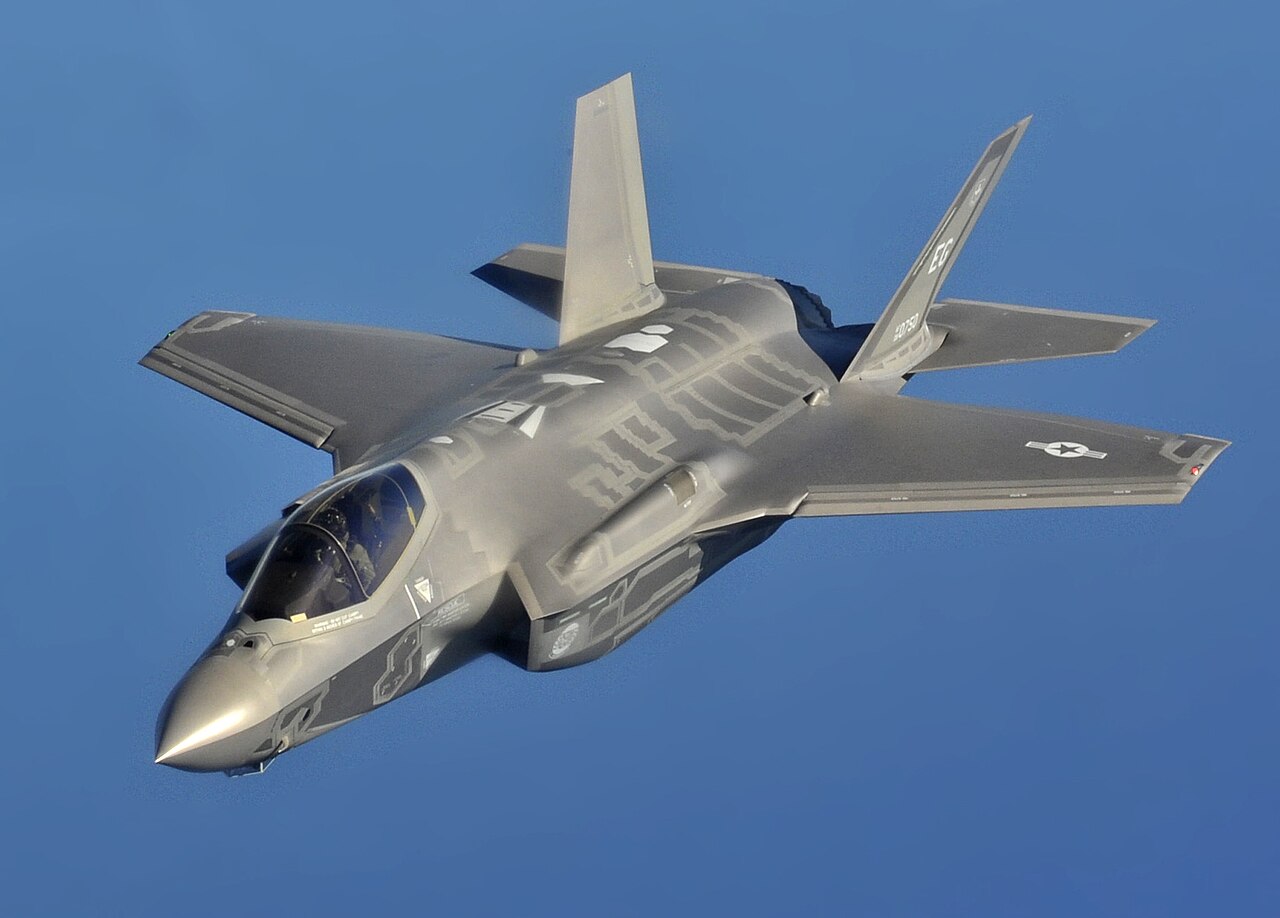
IRST is how fighters hunt without saying a word: passive infrared sensors that spot the heat of an enemy jet from beyond visual range while giving the hunter’s own position away to no one. Dormant for decades in Western cockpits, the technology is back at the center of air combat because of one word, stealth, whose radar-evading shapes do far less against a sensor that watches heat instead of echoes.
What is IRST and how it works
An infrared search and track system is a telescope-grade thermal camera with fire-control software: it scans the sky for the infrared signature of engines, exhaust plumes and skin heated by air friction, then tracks what it finds precisely enough to cue weapons. Unlike radar it emits nothing, so a target’s warning receivers stay silent, and because infrared wavelengths are far shorter than radar’s, its angular accuracy within range is superb. Modern implementations split into scanning sensors, the classic turret ahead of the canopy, and staring architectures like the F-35’s Distributed Aperture System, six fixed cameras watching every direction at once.
Why IRST is back, the stealth problem
Stealth shaping and coatings are optimized against radar bands; they do little about the heat a fighter cannot help making, and nothing about friction warming a supersonic airframe. As fifth-generation fleets spread, air forces rediscovered the sensor stealth ignores: Russian designs never abandoned it, China’s J-20 carries IRST plus its own distributed apertures, and the US Navy is podding IRST21 onto Super Hornets specifically for the counter-stealth hunt. In the same logic, radar-quiet tactics, fighting with emissions off to survive modern AESA-versus-jammer duels, make a passive tracker valuable even against non-stealth opponents.
Strengths and hard limits
| Strength | Limit |
|---|---|
| Fully passive, no warning to the target | No native range data; needs laser ranging, kinematic ranging or triangulation for a full firing solution |
| Effective against radar-stealth aircraft | Attenuated by cloud, rain and humidity far more than radar |
| Excellent angular resolution for ID and tracking | Detection range swings hugely with aspect: tailpipe-on at long range, head-on much shorter |
| Immune to radar jamming and chaff | Vulnerable to IR-band countermeasures and background clutter |
| Enables silent, surprise engagements | Identification range runs roughly two-thirds of detection range |
The systems that matter
| System | Platform |
|---|---|
| PIRATE | Eurofighter Typhoon |
| OSF | Dassault Rafale |
| IRST21 / Legion Pod | US Navy F/A-18E/F, US F-15/F-16 pods |
| EOTS + DAS | F-35, combined targeting and 360-degree staring IR |
| OLS-35 / OLS-50 | Su-35 and Su-57 |
| EORD-31 | China’s J-20 |
| Skyward-G | Gripen E, see our Gripen guide |
A history of eclipse and return
IRST is a comeback story. Early sets flew on 1950s interceptors, and Soviet doctrine kept faith through the MiG-29 and Su-27’s prominent sensor balls while the West, confident in radar and BVR missiles, let the technology lapse from most fighters after the F-14’s early sets. The revival began in Europe, PIRATE for the Typhoon and OSF for the Rafale entering service in the 2000s, accelerated as focal-plane arrays matured, and went mainstream when stealth proliferation gave passive detection a mission money could not refuse. Today the direction is distributed staring sensors fused by software, with the F-35’s DAS as the template every sixth-generation program copies.
IRST plus radar, the real doctrine
No serious air force treats IRST as a radar replacement; the craft is fusion. A passive track from IRST can cue a single, narrow AESA burst for ranging, or feed a wingman’s radar via datalink so the shooter never emits, or ride a laser rangefinder into a full silent solution. Networked formations take it further, two dispersed IRSTs triangulating range without anyone transmitting. That interplay, sensor fusion rather than sensor rivalry, is why every new fighter program, from F-35 onward, budgets for infrared as a first-class sensor rather than an accessory.
Frequently asked questions
What does IRST stand for?
Infrared search and track, a passive thermal sensor that detects and tracks aircraft by their heat.
Can IRST detect stealth aircraft?
Within its range limits, yes; stealth shaping targets radar, not the infrared signature of engines and friction-heated skin.
What is the range of IRST?
Heavily dependent on aspect, altitude and weather; open literature cites tens of kilometers head-on to well beyond against afterburning targets, with identification at roughly two-thirds of detection.
Why doesn’t IRST replace radar?
It measures angles superbly but not range, and weather degrades it; doctrine fuses it with radar, lasers and datalinks.
Which fighters carry IRST today?
Typhoon, Rafale, Gripen E, Su-35, Su-57, J-20, F-35 via EOTS and DAS, and US teens through pods like Legion.
- Wikipedia – Infrared search and track (accessed October 2026)
- Program documentation for PIRATE, OSF, IRST21, EOTS/DAS and OLS family
- Defence & Tech fighter and sensor coverage