India Signs ₹811 Crore Deal for 160 SAT-SAAW Glide Bombs
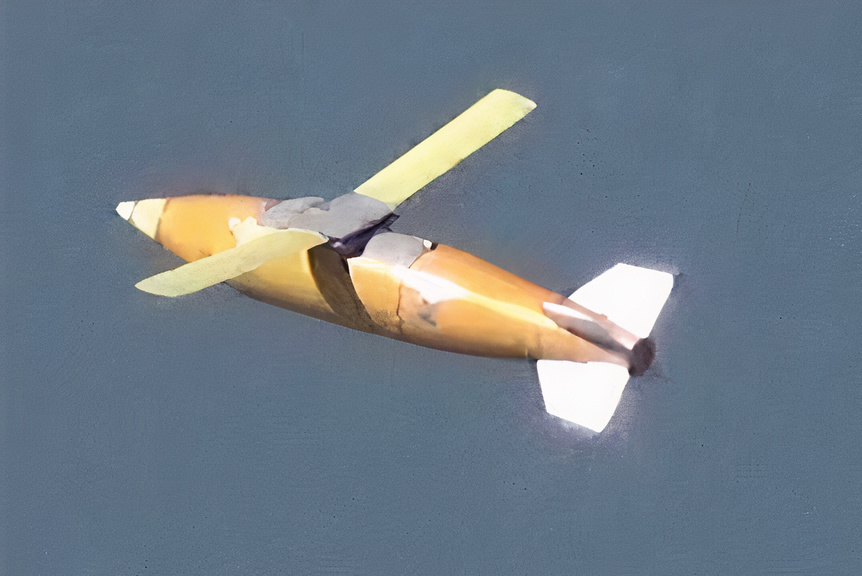
India’s Ministry of Defence signed a ₹810.79 crore (roughly $92 million) contract with state-run Bharat Dynamics Limited (BDL) on September 23, 2026, for 160 Satellite Smart Anti-Airfield Weapons (SAT-SAAW) for the Indian Air Force. The deal, concluded in New Delhi in the presence of Defence Secretary Rajesh Kumar Singh, was placed under the “Buy (Indian-Indigenously Designed, Developed and Manufactured)” category, and covers an upgraded, satellite-guided version of a glide bomb that the IAF has already fired in combat.
What Happened
The Ministry of Defence’s Department of Defence Production described the order as a boost to “Aatmanirbhar Bharat” (self-reliant India), the government’s indigenization drive for military hardware. BDL will supply 160 SAT-SAAW rounds along with associated ground and test equipment, with deliveries scheduled in two tranches between 2027-28 and 2028-29. The contract follows a string of BDL awards this year, including a separate ₹2,960 crore deal for Medium-Range Surface-to-Air Missiles for the Indian Navy, underscoring the company’s growing role as a systems integrator for weapons designed by the Defence Research and Development Organisation (DRDO).
The Product/System
SAT-SAAW is a satellite-aided derivative of the baseline Smart Anti-Airfield Weapon (SAAW), an air-to-ground precision glide bomb designed by DRDO’s Research Centre Imarat in Hyderabad. The 125-kilogram, 1.85-metre weapon has no engine; it glides toward its target after release, using inertial navigation fused with multi-constellation GNSS for mid-course guidance. BDL states the satellite-guided variant achieves an accuracy of better than 7 metres on INS/GPS alone and better than 3 metres when cued by its terminal seeker, out to a stand-off range of 90 to 100 kilometres depending on release altitude and speed. The weapon is built to penetrate and crater runways, taxiways, bunkers, radars and other hardened or semi-hardened airfield infrastructure from outside the reach of most short- and medium-range air defenses.
According to the Ministry, the new production batch will carry roughly 60 percent indigenous content, with several subsystems indigenized for the first time, including the Initial Measurement Unit, the Long Impact Delay Fuse, and the Twin Store Carrier that lets a single aircraft hardpoint release two weapons. The SAAW family was cleared for procurement by the Indian Air Force and Navy in September 2020, after DRDO ran a series of flight tests between 2016 and 2018 from Jaguar and Su-30MKI aircraft that validated ranges beyond 70 kilometres; full-rate production tooling was handed to industry in December 2021.
Who Uses It
The Indian Air Force is the confirmed and, to date, only operator of the SAAW family. The Ministry and Indian military officials have stated that the IAF employed baseline SAAW rounds operationally for the first time during Operation Sindoor in May 2025, the brief but intense exchange with Pakistan that followed a terror attack in Pahalgam, striking airfield infrastructure at Pakistani air bases. Independent battle-damage confirmation of individual strikes has not been published, and claims about specific targets destroyed during that operation should be treated as government statements rather than independently verified fact. BDL’s SAT-SAAW variant covered by this contract is intended for the same service and has not previously been exported.
Export/Procurement History
DRDO’s SAAW project was sanctioned in 2013 with an initial development budget of ₹56.58 crore. First flight tests came in May 2016 from a Jaguar DARIN II, followed by a December 2016 test from a Su-30MKI, which can carry a large number of the weapons on its Smart Quad/Multi Rack. HAL and BDL were named as co-production agencies, and both have since delivered baseline SAAW rounds to the Air Force. This week’s ₹811 crore order is the first dedicated contract specifically for the satellite-guided SAT-SAAW configuration, following the same pattern DRDO and its production partners have used on other systems, such as the naval mine and laser-guidance technology recently transferred to industry at VIMARSH 2026 and DRDO’s broader push to hand precision-guidance know-how to private manufacturers.
Global Competitors
SAT-SAAW sits in a crowded international category of powered-glide, precision stand-off munitions built to hold airfields and hardened infrastructure at risk without exposing the launch aircraft to point-defense fire. The closest Western equivalent is the U.S. JDAM-ER tail kit, which converts unguided bombs into glide weapons with ranges exceeding 100 kilometres from altitude and costs in the $20,000-$40,000 range per kit; Israel’s SPICE and France’s HAMMER occupy a similar niche and are already integrated on IAF aircraft. Pakistan fields its own stand-off options, including the domestically developed H-4 SOW, credited with a roughly 120-kilometre range, and the Azb REK, alongside the Chinese-supplied LS-6 glide bomb carried by JF-17 fighters. India has also flight-tested a second, larger glide bomb, the roughly 1,000-kilogram Gaurav, aimed at deeper, more heavily defended targets, positioning DRDO to field a family of stand-off weapons rather than a single design.
Why It Matters
The contract signals that India intends to scale up its only combat-proven indigenous anti-airfield weapon rather than lean more heavily on imported PGMs such as JDAM-ER and SPICE, both already in IAF service. Locking in 60 percent local content and indigenizing the fuze, guidance and carriage hardware also reduces exposure to export-control restrictions that can accompany foreign-sourced precision munitions, a consideration that has repeatedly shaped Indian procurement since sanctions periods in the 1990s and 2000s. For BDL, the award adds to a growing order book for DRDO-designed precision weapons and reinforces its position as the government’s preferred integrator for guided munitions produced under the Buy (Indian-IDDM) route.
What Happens Next
DRDO is already working on follow-on variants: an imaging-infrared seeker version, EO-SAAW, completed trials in August 2023, and a turbojet-powered, extended-range derivative is in development, with officials describing a target range beyond 200 kilometres. Deliveries of the current SAT-SAAW batch to the Air Force are due to begin in the 2027-28 financial year and conclude in 2028-29; a formal induction ceremony or squadron-level integration announcement would be the next concrete milestone to watch for, alongside any move to offer the weapon for export following DRDO’s recent export push for other indigenous systems.
FAQ
What is SAT-SAAW?
SAT-SAAW is a satellite-guided version of DRDO’s Smart Anti-Airfield Weapon, a 125-kilogram precision glide bomb built to strike runways, taxiways and other airfield infrastructure from a stand-off range of up to 100 kilometres.
How is SAT-SAAW different from the original SAAW?
SAT-SAAW adds indigenized navigation and carriage hardware, including a new Initial Measurement Unit, Long Impact Delay Fuse and Twin Store Carrier, raising indigenous content to roughly 60 percent while retaining the same 90-100 kilometre glide range and sub-3-metre terminal accuracy of earlier SAAW rounds.
Which aircraft can carry the SAT-SAAW?
The SAAW family has been cleared for the Jaguar, Su-30MKI, Mirage 2000, MiG-29, HAL Tejas and BAE Hawk-i, with the Su-30MKI able to carry the largest load via its multi-weapon smart rack.
Has India used the SAAW in combat before?
Indian officials say the Air Force fired baseline SAAW rounds operationally for the first time during Operation Sindoor in May 2025 against airfield targets in Pakistan; independent verification of individual strike outcomes has not been published.
When will the Indian Air Force receive the new SAT-SAAW weapons?
Bharat Dynamics Limited is contracted to deliver all 160 units in two tranches between the 2027-28 and 2028-29 financial years.
Sources
- ANI, “Defence Ministry Signs Rs 811 Crore Contract With BDL For 160 Satellite Smart Anti Airfield Weapons For IAF,” September 23, 2026 — contract announcement and figures.
- ETV Bharat, “Defence Ministry Signs Contract With BDL For 160 Satellite Smart Anti-Airfield Weapons,” September 2026 — official contract details and indigenous-content figures.
- Business Today, “IAF’s big firepower boost: 160 indigenous anti-airfield weapons coming by 2028-29,” September 23, 2026 — delivery schedule confirmation.
- Bharat Dynamics Limited, official SAAW product page — technical specifications for weight, range and accuracy.
- Wikipedia, “DRDO Smart Anti-Airfield Weapon” — development timeline, platform integration and Operation Sindoor combat-use reference, cross-checked against contemporaneous Indian defense reporting.
- Army Recognition, “India’s New Gaurav Glide Bomb Dropped from a Su-30MKI Fighter Confirms Long-Range Strike Capabilities,” 2025 — context on India’s wider glide-bomb family.
- The Week, “Smart bombs for IAF: How does US JDAM differ from Israeli SPICE, French HAMMER?” — comparative context on IAF’s imported precision-guided munitions.