

Pentagon Takes 19.9% Elmet Stake in $450M Tungsten Push

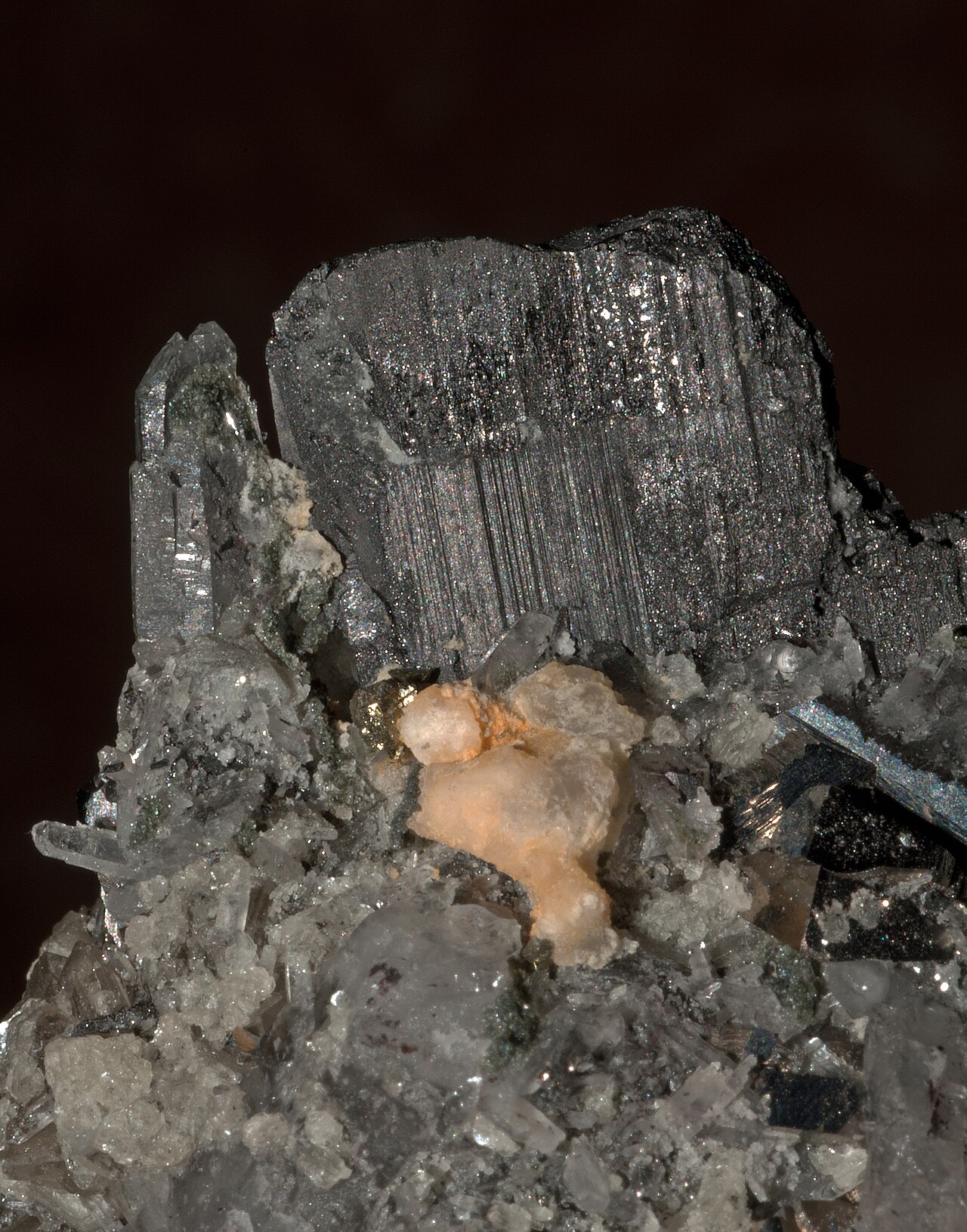
The US Department of War has committed $450 million to The Elmet Group and will take an equity position of up to 19.9 percent in the company, an intervention aimed at rebuilding a domestic tungsten supply chain that Washington now treats as a single point of failure in its munitions industrial base.
The investment, announced on 14 September, is structured as redeemable preferred equity plus warrants, with $200 million drawn at closing and further tranches to follow. The department will appoint one independent director to Elmet’s board and place a non-voting observer alongside.
Elmet, listed on Nasdaq as ELMT, describes itself as the only US-owned, vertically integrated tungsten producer serving the full breadth of critical end markets. Its material goes into Patriot, Javelin, AEGIS, Trident II and THAAD, into Phalanx and JDAM, into the F-35, and into Virginia- and Columbia-class submarines.
Where the Money Goes
More than $165 million is allocated to US manufacturing plants in Lewiston, Maine; Coldwater, Michigan; and Euclid, Ohio. About $150 million goes to a joint venture with Blue Moon at the Springer Tungsten Complex near Imlay, Nevada — one of the few permitted tungsten resources in the United States. The remainder funds mining and processing partnerships in the United States, Australia and Spain.
Separately, Elmet holds an indefinite-delivery, indefinite-quantity contract worth up to $2 billion with the Defense Logistics Agency to support the National Defense Stockpile.
Chief executive Peter V. Anania called the investment “an important step toward securing resilient tungsten supply critical to America’s defense and economic future.”
The deal is the first major transaction of the department’s newly created Economic Defense Unit, set up to coordinate direct state investment in industrial capacity rather than simply buying finished goods. Its director, George K. Kollitides II, said the department was “proud to invest in Elmet Technologies to bring tungsten-processing capacity home.”
Why Tungsten
Tungsten is not a substitutable material. It has the highest melting point of any metal at 3,422°C and a density close to gold’s, which makes it the default choice for two very different military applications: anything that must survive extreme heat, such as rocket nozzles and re-entry structures, and anything that must penetrate armour through sheer kinetic energy.
Tungsten heavy alloy penetrators are the Western alternative to depleted uranium in tank ammunition, and tungsten carbide is the working edge of the machine tools that produce almost everything else in the defence industrial base. A shortage does not degrade one programme; it degrades the machinery that makes the programmes.
The United States has not mined tungsten commercially in any meaningful quantity since the 1990s. Processing capacity followed the mines abroad, and the result is a dependency that is unusually concentrated even by critical-minerals standards.
The Chinese Lever
China accounts for more than 80 percent of global tungsten output and holds over half of known reserves. In February 2025 Beijing placed tungsten on an export control list alongside tellurium, bismuth, indium and molybdenum, requiring case-by-case licences from the Ministry of Commerce rather than banning exports outright.
The restrictions extended beyond the metal itself to the technology used to process and refine it — the more consequential half of the measure, since a country with ore but no processing knowledge still has a dependency.
The market responded as expected. Chinese tungsten product exports for the first nine months of 2025 fell by nearly 14 percent year on year, and prices rose sharply through 2025 and into 2026. By late 2025 Beijing had narrowed the field of licensed exporters to 15 companies for the 2026–2027 period.
For Washington, the sequence demonstrated something that had been theoretical: that a supplier holding four-fifths of a market can adjust prices and availability without violating any trade rule, and that the effect reaches munitions production within a year.
A Change in Method
What distinguishes this announcement from previous critical-minerals initiatives is the equity stake. Washington has for years funded mineral projects through grants, loans and Defense Production Act Title III awards. Taking preferred shares, warrants and a board seat is a different posture — the government as shareholder rather than customer.
The approach has precedent in the current administration’s handling of MP Materials, the rare-earth producer in which the Pentagon took a substantial position in 2025 along with a price floor arrangement. The logic in both cases is that the underlying problem is not a lack of capital but a lack of price certainty: no private investor will build a tungsten refinery that a Chinese producer can undercut at will, so the state must absorb that risk or the capacity will not exist.
Whether it works is a question of years, not quarters. Mine permitting in the United States routinely runs beyond a decade, and the Springer complex — though already permitted, which is why it was chosen — still requires construction and qualification before its output reaches a defence programme.
The alternative, as Washington now frames it, is to keep building Patriot interceptors and submarine components from a metal whose supply another government can throttle at a month’s notice.
Sources
- The Elmet Group, “Department of War Makes Landmark $450 Million Committed Investment in The Elmet Group to Secure America’s Tungsten Supply Chain,” 14 September 2026
- Statements by Elmet CEO Peter V. Anania and Economic Defense Unit Director George K. Kollitides II
- Bloomberg, “US Takes $450 Million Stake in Tungsten Firm to Counter China,” 14 September 2026
- China Ministry of Commerce export control announcement on tungsten, tellurium, bismuth, indium and molybdenum, 4 February 2025
- US Geological Survey, Mineral Commodity Summaries: Tungsten




[…] Earlier this month the department took a 19.9% stake in tungsten producer Elmet as part of a $450 million tungsten push. Batteries are a similar pressure point for the drone industry, where cell supply has often traced […]
[…] weapons, who produces it and why one country dominates. For the terms of the deal itself, see our news report on the Pentagon’s Elmet stake. Elmet describes itself as the only US-owned, fully integrated tungsten producer, according to […]