
UK Activates ‘Borealis’ Space Defense System Early to Shield Satellites from Orbital Threats

Recognizing space as a rapidly contested military domain, the UK Ministry of Defence has activated its new orbital surveillance software, “Borealis,” six months ahead of schedule. Designed to monitor hostile adversary maneuvers and dangerous orbital debris, the system provides the National Space Operations Centre with an unprecedented tactical picture. Concurrently, Britain released the first images from its indigenous military space telescope, Noctis-1. How will this £65 million space shield secure the satellites that underpin both national security and the global economy?
The Borealis Architecture: A Faster Operational Picture
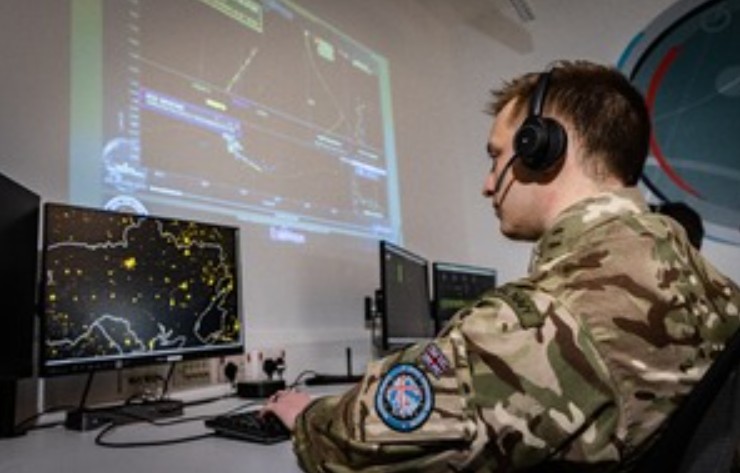
Developed under a £65 million, five-year contract with CGI UK, the Borealis system represents a quantum leap in Britain’s Space Domain Awareness (SDA). The software is engineered to rapidly compile, fuse, and analyze massive streams of data from multiple sensors.
By integrating these complex datasets, Borealis delivers a highly accurate, real-time operational picture to military commanders. This capability is critical for identifying suspicious movements by foreign spacecraft operating in sensitive orbital corridors or calculating precise collision trajectories for the tens of thousands of pieces of space debris currently circling the planet.
Noctis-1: Britain’s Indigenous Eye in Orbit
The activation of Borealis coincides with the declassification of the first imagery captured by Noctis-1 (formerly known as Nyx-Alpha), the UK’s dedicated military space telescope.
Rather than relying entirely on allied tracking networks, Noctis-1 provides sovereign, precise position data on objects in Earth’s orbit. The newly released imagery successfully captured targets including the International Space Station (ISS), foreign orbital assets, and the UK’s own SKYNET military communications satellites. The raw visual and telemetry data from Noctis-1 is fed directly into the Borealis system, continuously sharpening its threat-detection algorithms.
The Strategic Reality: Space as a Contested Domain
The urgency behind bringing Borealis online ahead of schedule underscores a stark geopolitical reality: disabling satellites is now a primary objective in modern warfare.
| Threat Vector | Potential Impact on UK Infrastructure | Mitigation via Borealis |
| Adversary Anti-Satellite (ASAT) Activity | Paralysis of military communications, intelligence gathering, and global navigation. | Early warning of hostile orbital maneuvers, enabling defensive repositioning. |
| Orbital Debris / Kessler Syndrome | Physical destruction of multi-million-pound assets from hypervelocity impacts. | High-fidelity tracking and collision avoidance calculations. |
| Economic Disruption | Disruption of global banking transfers, weather forecasting, and logistics. | Safeguarding the infrastructure that supports roughly 20% of the UK’s GDP. |
Minister for Defence Readiness and Industry, Luke Pollard, explicitly framed the deployment within this new threat landscape: “Space is now a contested domain. Protecting our satellites from adversaries keeps our economy moving and keeps us all safe.”
As orbital congestion worsens with the deployment of massive commercial mega-constellations like Starlink, the combination of the Noctis-1 telescope and the Borealis software ensures the UK maintains the sovereign intelligence required to defend its critical assets in the ultimate high ground.