

Why Biological Weapons Are the 21st Century’s Greatest Asymmetric Threat


 React
React
GENEVA — While global superpowers continue to pour trillions of dollars into hypersonic missiles, stealth aircraft, and AI-driven combat systems, defense intelligence agencies are increasingly focused on a far more insidious danger. The greatest threat to modern global security may not be falling from the sky, but incubating in a microscopic test tube.
Biological weapons (BWs) are fundamentally altering the rules of engagement. By weaponizing nature itself, these invisible arsenals offer destructive potential that rivals—and in some scenarios exceeds—nuclear and chemical capabilities, cementing their status as the ultimate tool of asymmetric warfare.
The Anatomy of a Biological Threat
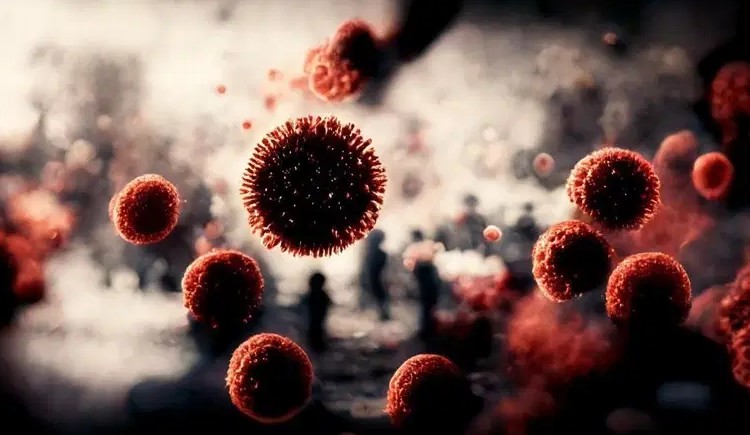
At their core, biological weapons are microorganisms—such as bacteria, viruses, fungi, or naturally derived toxins—that are intentionally released to cause widespread disease or death in humans, animals, or agricultural crops.
Unlike conventional or nuclear weapons, biological agents do not destroy physical infrastructure. Their sole objective is to collapse healthcare networks, paralyze economies, and trigger mass societal panic.
Global health and security organizations categorize these agents based on their lethality and transmission potential. The highest alarm is reserved for Category A agents, which include:
-
Anthrax (Bacillus anthracis): Highly lethal when inhaled, its spores can survive in harsh environmental conditions for decades. It is odorless, colorless, and practically undetectable during an initial release.
-
Smallpox (Variola major): Though eradicated globally through vaccination, weaponized laboratory strains exist. Because modern populations possess virtually zero immunity, a deliberate release could result in catastrophic global casualties.
-
Botulinum Toxin: Recognized as one of the most lethal poisons known to science, requiring only a microscopic amount to contaminate food or water supplies.
-
Viral Hemorrhagic Fevers: Pathogens like Ebola and Marburg are highly contagious, causing severe internal bleeding and carrying exceptionally high mortality rates.
The Apex of Asymmetric Warfare
In military doctrine, asymmetric warfare involves a weaker power utilizing unconventional tactics to exploit a stronger adversary’s vulnerabilities. Biological weapons represent the absolute apex of this strategy for several critical reasons:
The “Poor Man’s Nuke” Developing a nuclear arsenal requires vast uranium enrichment facilities, reactors, and billions of dollars, making covert development nearly impossible. In stark contrast, producing a deadly biological agent requires only a small, well-equipped laboratory, basic microbiological expertise, and a fraction of the funding.
The Shield of Plausible Deniability When a ballistic missile is launched, radar and satellite systems immediately trace its origin. However, when a viral outbreak occurs, it can take months—or even years—to determine whether the pathogen was a naturally occurring zoonotic mutation or a deliberate act of state-sponsored bioterrorism. This “plausible deniability” provides perpetrators with a profound diplomatic and military shield.
The Dual-Use Dilemma The equipment and knowledge required to manufacture biological weapons are identical to those needed for legitimate biomedical research and vaccine development. For international inspectors, distinguishing between a pharmaceutical facility producing life-saving medicine and a covert laboratory weaponizing pathogens is an ongoing logistical nightmare.
The CRISPR Era and Synthetic Biology
The most alarming development in modern biodefense is not the naturally occurring pathogens, but the rapid revolution in biotechnology. Gene-editing tools, most notably CRISPR-Cas9, allow scientists to rewrite DNA with the same precision a programmer uses to write computer code.
In the wrong hands, this technology opens the door to “designer pathogens”—synthetic biological weapons explicitly engineered to resist existing antibiotics, bypass current vaccines, or even target specific genetic traits within a population.
Biological warfare is no longer relegated to Cold War science fiction. Traditional defense mechanisms like missile interceptors and border walls offer zero protection against a microscopic threat carried by the wind or an infected traveler. As the threat matrix evolves, the battlefields of the future will increasingly rely on advanced biosurveillance networks, early warning detection grids, and rapid-response biomedical defense.
React