

Ukraine War Latest: Fatalities Rise in Dnipro as Russia Executes Massive 640-Target Saturation Attack


 React
React
KYIV — The Ukraine Russia war witnessed a significant escalation overnight into Saturday, April 25, 2026, as Russian forces executed a sprawling, combined-arms aerial bombardment across eight Ukrainian regions. Utilizing a textbook “saturation attack” strategy designed to exhaust interceptor stockpiles, the assault targeted both civilian infrastructure and strategic logistical hubs.
Here is the factual, objective breakdown of the attack, addressing the critical intelligence parameters (Who, What, When, Where, Why, and How).
The 5Ws and 1H: Tactical Overview
-
Who: The Armed Forces of the Russian Federation (launching the assault) and the Ukrainian Air Defense Forces (intercepting).
-
What: A massive, coordinated aerial assault utilizing 647 total projectiles.
-
When: Overnight, from the evening of Friday, April 24, into the early hours of Saturday, April 25, 2026.
-
Where: Eight regions across Ukraine, with the most severe kinetic impacts reported in Dnipro, Odesa, Chernihiv, and Kherson.
-
Why: To systematically overwhelm and “saturate” Ukrainian air defense batteries, force the expenditure of highly expensive Western surface-to-air missiles, and cripple regional energy and port infrastructure.
-
How: By launching over 600 kamikaze drones (including cheap decoys to confuse radar) layered with 47 cruise and ballistic missiles.
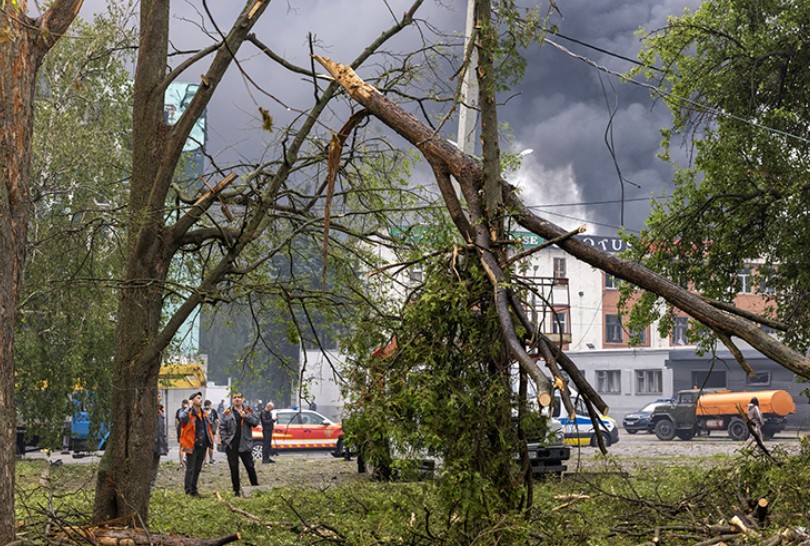
Casualties and Ground Impact Despite a remarkably high interception rate, several munitions bypassed the defensive net, resulting in significant civilian casualties and infrastructure damage.
-
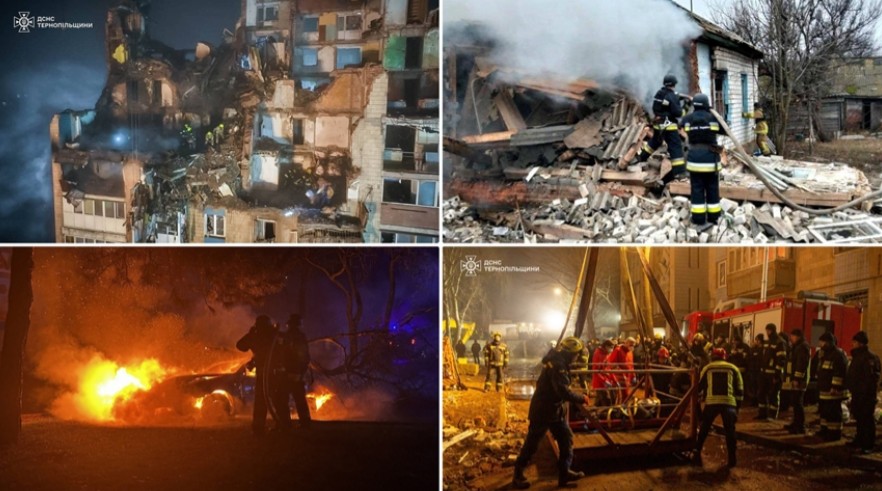
Dnipro (Dnipropetrovsk Region): This central logistical hub suffered the heaviest human toll. According to regional authorities, at least four people were killed when a residential building was destroyed. Search and rescue operations are ongoing, with 21 people reported wounded and up to five individuals still believed to be trapped under the rubble. Several businesses and apartments caught fire.
-
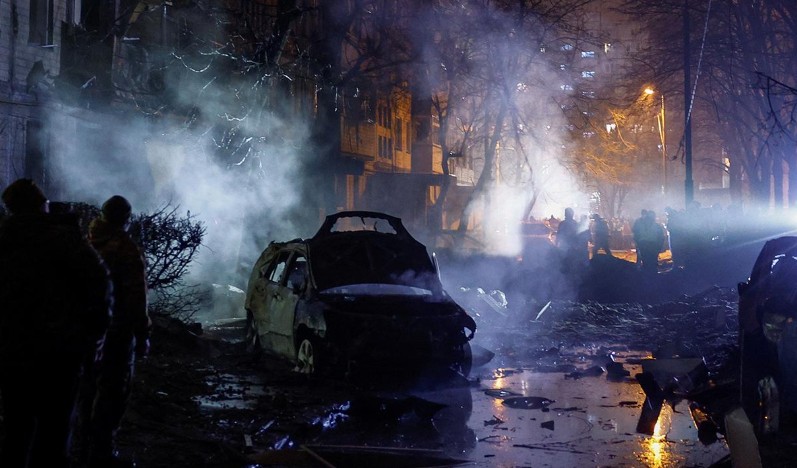
Odesa Region: In the south, drone strikes penetrated the port city’s defenses. Two individuals were injured, and significant damage was reported to residential buildings, vehicles, and critical maritime port infrastructure.
-
Chernihiv and Kherson Regions: Regional officials confirmed two people were killed and seven injured in a combined strike in Chernihiv. Meanwhile, ongoing artillery and air strikes in the southern Kherson region left four civilians dead and 17 injured over the past 24 hours.
Air Defense Performance: The Numbers From a defense analysis perspective, the overnight barrage was a severe stress test for Ukraine’s integrated air defense network.
According to the Ukrainian Air Force, defense nodes successfully neutralized 610 out of the 647 incoming aerial targets. Specifically, operators shot down or electronically suppressed 580 out of the 600 drones, alongside 30 of the 47 incoming missiles. This reflects a highly effective integration of kinetic interceptors (like Patriot and IRIS-T systems) and broad-spectrum Electronic Warfare (EW) jamming, which forces navigation-reliant drones to crash before reaching their targets.
The Broader Frontline Context The sheer volume of this attack underscores the evolving nature of the Ukraine war, heavily defined by industrial attrition and deep-strike capabilities. Notably, the overnight assault coincided with reports that Ukrainian long-range drones successfully crossed a record distance to strike targets in Russia’s Ural Mountains for the first time, signaling that both nations are increasingly relying on unmanned systems to bypass static frontline trenches and strike deep into enemy territory.
React