
Breaking: US Assembles 3-Carrier Armada in Middle East Amid


 React
React
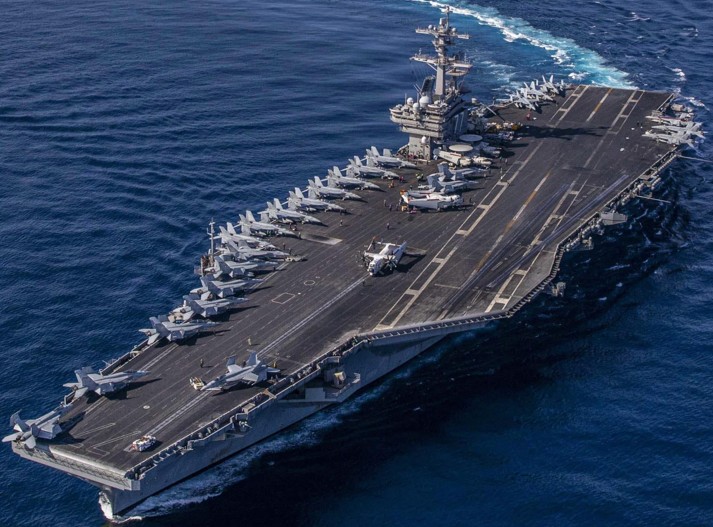
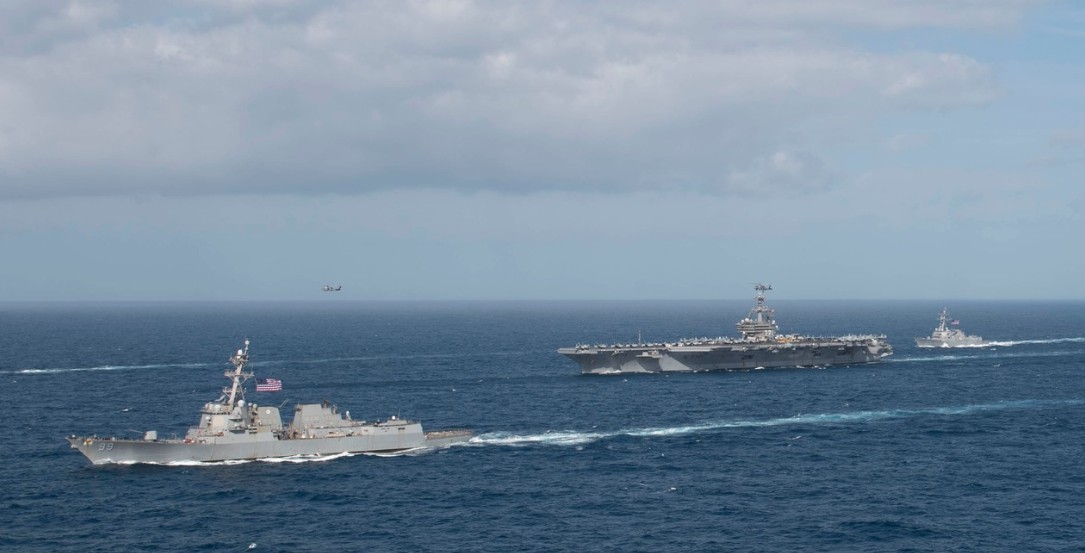
WASHINGTON / CENTCOM HQ — The geopolitical temperature in the Middle East has just reached a boiling point. The US Central Command (CENTCOM) has officially confirmed the arrival of the USS George H.W. Bush Carrier Strike Group into its area of operations.
This deployment is not a routine rotation. The Bush joins the USS Abraham Lincoln and the USS Gerald R. Ford, marking the first time since the 2003 invasion of Iraq that the United States has positioned three nuclear-powered aircraft carriers simultaneously in the region.
While Washington maintains that this unprecedented buildup is purely “defensive” as US-Iran negotiations hang by a thread, intelligence analysts warn of a much darker strategic reality operating in the shadows.
The Total Force: A Blueprint for Regime Change?
The naval armada is only the tip of the spear. The Pentagon has quietly assembled a total force posture capable of executing an immediate, full-scale theater war.
Alongside the three Carrier Strike Groups (bringing nearly 250 combat aircraft to the theater), the US has deployed heavily armed Marine Expeditionary Units (MEUs) for rapid amphibious assaults. Furthermore, elements of the 82nd Airborne Division stand on high alert as a rapid reaction force. This is not merely a deterrence posture; it is a fully loaded gun pointed directly at Tehran, giving the White House absolute military flexibility ranging from surgical infrastructure strikes to a massive ground invasion.
The Historical Trap: Missiles During Meetings
Why assemble an invasion force while diplomats are ostensibly talking? History provides a grim answer.
On at least two previous occasions over the past decade, delicate US-Iran diplomatic windows were violently shattered by sudden, unexplained kinetic escalations in the Persian Gulf. In both instances, just as a framework for de-escalation was taking shape, commercial shipping was attacked or proxy militias launched unprovoked rocket barrages. These “coincidental” clashes instantly collapsed the negotiations, forcing the US military into a retaliatory cycle.
The İsrael – Factor: Covert Sabotage and “False Flag” Operations
This brings defense analysts to the most volatile variable in the current crisis: third-party sabotage.
It is an open secret in the intelligence community that certain regional allies—most notably Israel—view any diplomatic detente between Washington and Tehran as an existential threat. For years, Israeli intelligence (Mossad) has engaged in a relentless “shadow war” against Iran, encompassing assassinations and cyber-attacks.
Now, with a massive, highly sensitive US armada floating in the Gulf, the risk of a “False Flag” operation is critical. A false flag involves a covert attack deliberately disguised to look like it was perpetrated by the enemy. If a rogue drone or an unidentified fast-attack craft strikes a US destroyer or an allied oil tanker today, the political pressure in Washington to unleash the 3-carrier armada against Iran would be unstoppable.
As the negotiations drag on, the true danger in the Middle East may not be an official order from Tehran or Washington, but a single, untraceable spark designed by a third party to set the entire region ablaze.
React