

What is a Laser-Guided Missile? The Optics Behind the Perfect Strike

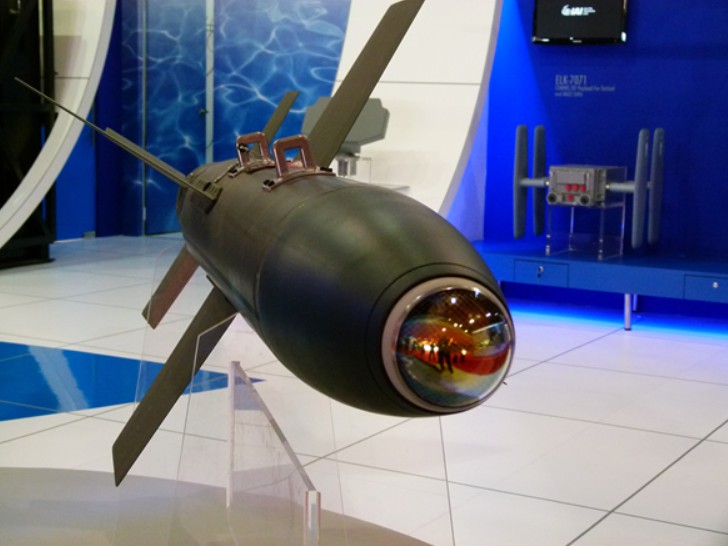

In the modern theater of war, minimizing collateral damage while neutralizing High-Value Targets (HVTs) with absolute certainty is the paramount objective. The technology that makes these “surgical strikes” possible is the Laser-Guided Missile. Capable of flying through a specific window or hitting a moving vehicle from miles away, these munitions rely on a fundamentally different principle than GPS or radar-guided systems.
How exactly does a high-speed projectile hunt down an invisible beam of light?
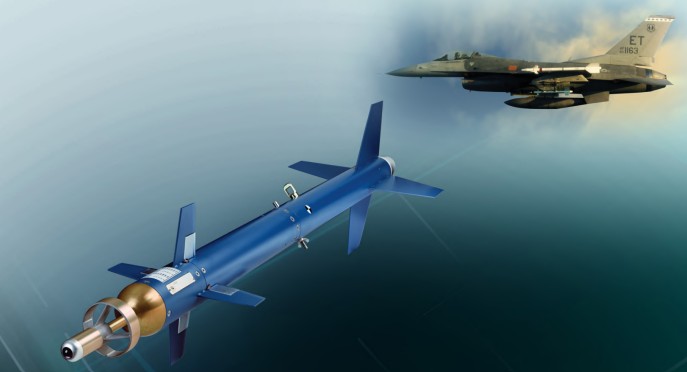
The Core Principle: Semi-Active Laser Homing (SALH)
The vast majority of laser-guided missiles and smart munitions (such as the AGM-114 Hellfire or the MAM-L) utilize a system known as Semi-Active Laser Homing (SALH). The system is deemed “semi-active” because the missile itself does not emit the laser beam; it merely features a passive optical sensor (a seeker) designed to look for a specific light source originating from elsewhere.
Executing a flawless strike requires the completion of a three-step optical chain:
1. The Designator (Target Illumination): Before a missile is fired, the target must be “painted.” An operator—whether a Special Operations JTAC on the ground, a loitering UAV, or a fighter jet targeting pod—projects an invisible, infrared laser beam directly onto the target. To prevent the missile from chasing the wrong laser (or enemy interference), this beam is encoded with a specific, encrypted Pulse Repetition Frequency (PRF).
2. The Scatter (The Laser Basket): When this coded laser hits the target, the energy scatters and reflects outward, much like shining a flashlight against a wall in a dark room. This cone of reflected optical energy is known in military terminology as the “laser basket.”
3. The Seeker (Detection and Intercept): Once launched, the missile’s nose-mounted optical seeker activates. It acts as an electronic eye, tuned exclusively to see the exact PRF code of the designator. As soon as the seeker detects the reflected laser basket, the missile’s internal flight computer takes over. It calculates the center of the optical reflection and sends hundreds of micro-adjustments per second to its aerodynamic control fins, riding the laser reflection directly to the point of impact.
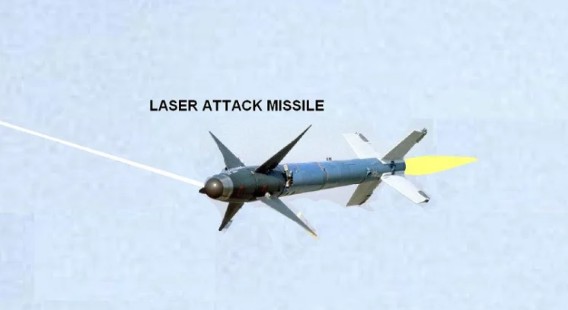
Tactical Advantages and Vulnerabilities
The primary advantage of laser guidance is absolute, terminal precision. While a GPS coordinate marks a static spot on the earth, a laser designator can track a moving target seamlessly, ensuring the missile follows the vehicle until impact.
However, the system possesses well-documented tactical vulnerabilities. Because laser guidance is an optical system, it strictly requires an unobstructed Line of Sight (LoS).
-
Adverse Weather: Heavy fog, low cloud cover, torrential rain, or severe sandstorms can refract, scatter, or completely absorb the laser energy, rendering the missile “blind.”
-
Smoke Countermeasures: Modern armored vehicles are equipped with Laser Warning Receivers (LWR). Once they detect they are being painted, they automatically deploy specialized multi-spectral smoke grenades. This chemical smoke instantly blocks and absorbs the laser beam, breaking the lock and causing the incoming missile to veer off course.
Despite these environmental limitations, laser-guided munitions remain the most trusted and lethal tool in the arsenal of modern militaries for asymmetric warfare and precision targeting.