
Rocket vs. Missile: What is the Difference? A Complete Defense Tech Guide
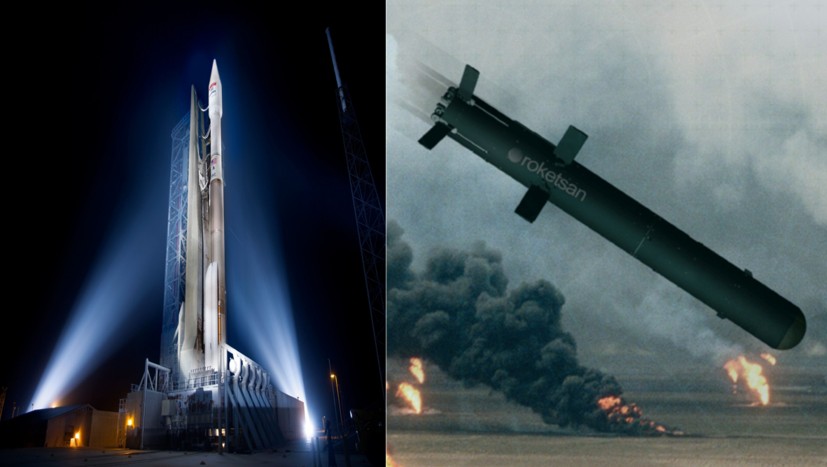
Turn on any news broadcast covering a modern conflict, and you will likely hear the terms “rocket” and “missile” used interchangeably. To the general public, both are flying cylinders of explosives leaving a trail of fire in the sky. However, to defense engineers, military strategists, and artillery officers, the difference between the two is monumental.
The distinction dictates how a weapon is deployed, how much it costs, and what type of target it is designed to destroy. At its core, the difference boils down to a single, critical component: The Brain.
What is a Rocket? (Raw Power, Zero Brains)
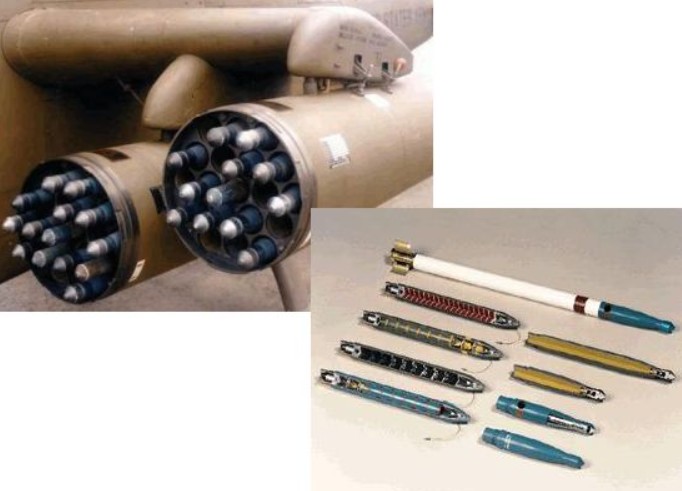
In military terminology, a rocket is an unguided munition. It consists of a warhead, a solid-fuel rocket motor for propulsion, and aerodynamic fins for basic flight stability.
Once a rocket is fired, its trajectory is entirely determined by the angle of the launch tube and the laws of physics. It cannot alter its course mid-flight to track a moving target or compensate for sudden crosswinds.
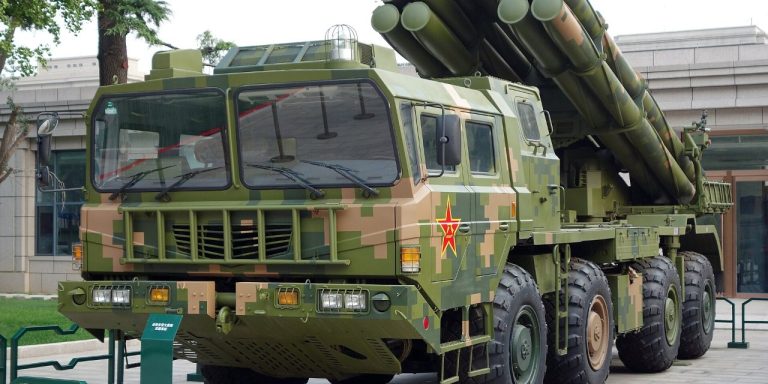
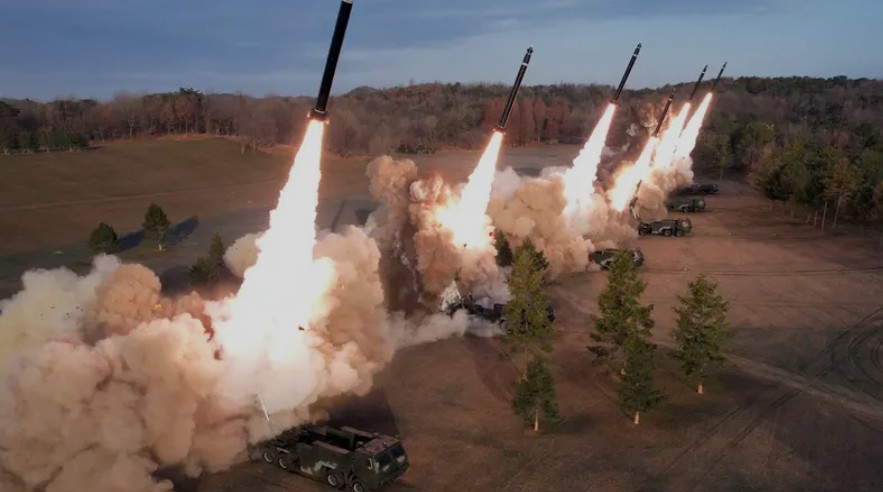
Because they lack complex internal computers or sensors, rockets are incredibly cheap and easy to mass-produce. They are used for saturation attacks or area denial. Systems like the Soviet-era BM-21 Grad or the unguided M26 rockets of the MLRS are designed to fire in massive salvos, blanketing a wide geographic grid with explosives to suppress enemy infantry or destroy light armor. You do not fire a rocket to hit a specific sniper in a window; you fire a barrage of rockets to level the entire building.
What is a Missile? (Surgical Precision)
A missile is essentially a rocket that has been given a “brain.” It contains the same basic elements (warhead and propulsion), but it is equipped with a highly sophisticated Guidance System.
Because of this internal guidance, a missile can actively alter its flight path after it has been launched. It uses small maneuvering fins or thrust-vectoring nozzles to steer itself toward a specific, precise coordinate or a moving target. Missiles are categorized by their “seekers” (the eyes that feed data to the brain):
Infrared (IR) Seekers: Used in heat-seeking missiles like the FIM-92 Stinger or AIM-9 Sidewinder to track the engine exhaust of aircraft.
Active Radar Homing: Used in missiles like the AIM-120 AMRAAM, which emit their own radar waves to find and chase down enemy jets.
GPS/INS Guidance: Used in cruise missiles like the Tomahawk to navigate thousands of miles and strike a specific concrete bunker.
Due to the immense cost of these electronic brains, missiles are vastly more expensive than rockets and are reserved for High-Value Targets (HVTs) where precision is mandatory and collateral damage must be minimized.
The Hybrid Era: “Smart Rockets”
In recent years, the absolute boundary between rockets and missiles has begun to blur. Militaries realized they had millions of cheap, unguided rockets in storage and wanted to make them more accurate without buying entirely new missiles.
The solution was the “guidance kit.” By screwing a small laser-seeker and control-fin section onto an old, unguided 70mm Hydra rocket, defense contractors created the APKWS (Advanced Precision Kill Weapon System). It transforms a “dumb” rocket into a highly accurate, guided missile for a fraction of the cost. Similarly, adding GPS guidance to unguided artillery rockets birthed the GMLRS system used by HIMARS.
Conclusion
To summarize the rule of thumb for the modern battlefield: If you aim it, fire it, and hope it hits based on math and gravity, it is a rocket. If the weapon actively thinks, steers, and hunts its target after leaving the launch tube, it is a missile.