
Defense News US: From the Persian Gulf Surge to Next-Gen Laser Defense – The Weekly Briefing

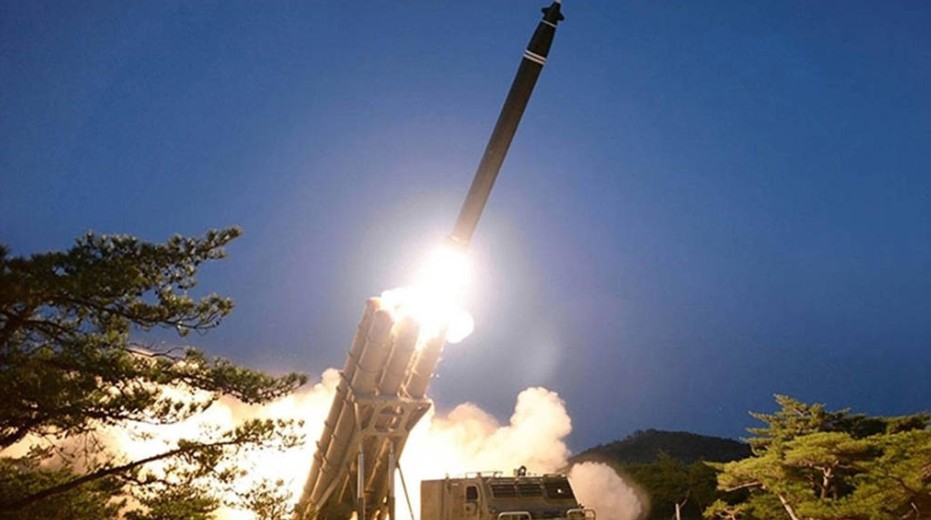

WASHINGTON D.C. – This week in Washington has been defined by historic ultimatums and massive realignments in military procurement. As the White House navigates a 48-hour deadline in the Middle East and officially pivots away from the Ukrainian theater, the Pentagon is rapidly adjusting its global force posture.
For defense analysts and industry professionals, here is your executive summary of the five most critical developments in U.S. defense news for the week of April 16, 2026.
1. The Persian Gulf Surge: 10,000 Troops Deployed
Dominating the headlines is the unprecedented execution of a massive U.S. troop surge in the Middle East. Following President Trump’s 48-hour ultimatum to Tehran, the Pentagon has officially deployed over 10,000 personnel to the region. The arrival of the USS George H.W. Bush Carrier Strike Group and the Boxer Amphibious Ready Group has solidified the U.S. Navy’s total maritime blockade, choking off 90% of Iran’s maritime economic activity in a matter of days.
2. The “America First” Munitions Pivot
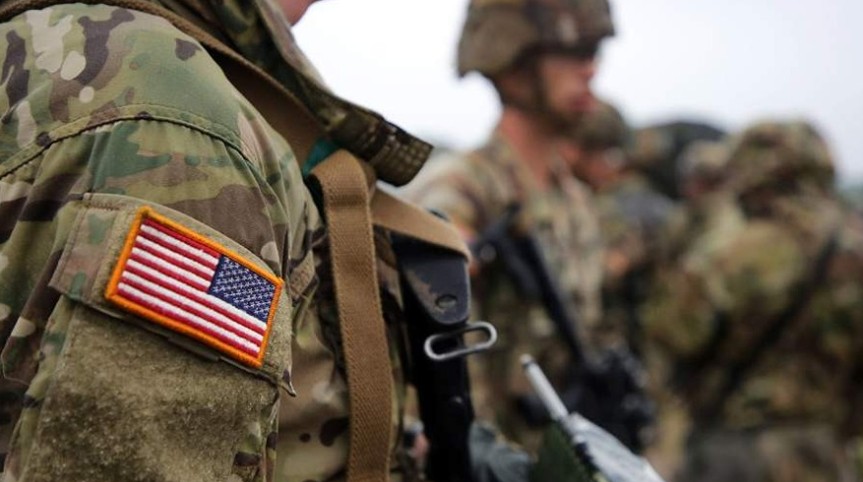
Following Vice President JD Vance’s controversial remarks regarding the cessation of military aid to Kyiv, the Department of Defense has officially initiated a “munitions pivot.” Production lines for MIM-104 Patriot interceptors, previously earmarked for Ukraine, are now being aggressively redirected. These critical anti-ballistic assets are being funneled directly into U.S. Indo-Pacific Command (INDOPACOM) stockpiles and to CENTCOM bases to protect American assets from potential hypersonic glide vehicle (HGV) attacks in the Middle East.

3. US Navy Accelerates Directed Energy Weapons (DEW)
Faced with the rising threat of low-cost suicide drone swarms and high-speed maneuvering warheads, the U.S. Navy has fast-tracked its Directed Energy defense programs. This week, the Navy awarded a $1.2 billion contract expansion to outfit ten additional Arleigh Burke-class destroyers with 300kW High-Energy Laser Weapon Systems (HELWS). Unlike traditional interceptors, these lasers offer a nearly infinite magazine depth with a cost-per-shot measured in dollars, providing a critical shield against asymmetric swarm tactics.
4. The Future of Air Dominance: CCA Contracts Awarded
In a major milestone for the Next-Generation Air Dominance (NGAD) ecosystem, the U.S. Air Force has finalized the prototyping contracts for the Collaborative Combat Aircraft (CCA) program. Defense tech innovators Anduril Industries and General Atomics have been selected to produce the next batch of autonomous, AI-driven “Loyal Wingman” drones. These highly maneuverable, uncrewed aircraft will fly alongside manned stealth fighters, acting as advanced sensor nodes and flying missile magazines.
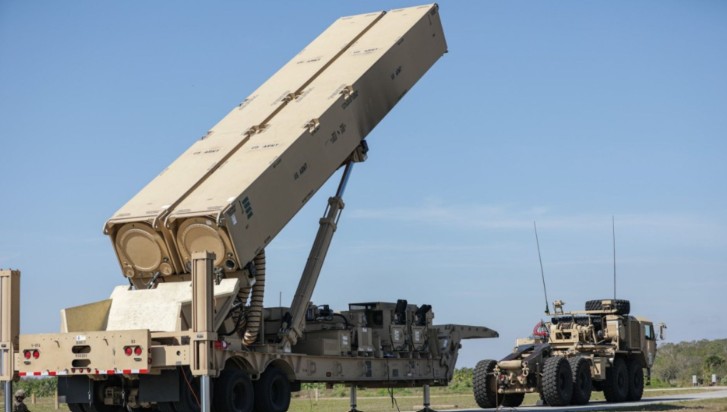
5. “Dark Eagle” Hypersonic Battery Deployed in the Pacific
While the Middle East commands immediate attention, Washington has not taken its eyes off the pacing threat of China. The U.S. Army announced the successful operational deployment of a Long-Range Hypersonic Weapon (LRHW) “Dark Eagle” battery to a classified allied location in the Indo-Pacific. Capable of striking targets at speeds exceeding Mach 5 with pinpoint accuracy, the deployment sends a clear strategic message regarding America’s capability to project immediate, unstoppable kinetic force across the Pacific theater.
Editor’s Note: This weekly briefing captures the rapid evolution of U.S. military strategy. As the 48-hour Middle East deadline approaches, Defense & Tech will provide real-time tactical updates on the posture of the USS George H.W. Bush Strike Group.