
THE SHIELD AGAINST THE SWARM: DECODING NEXT-GEN COUNTER-UAV TECHNOLOGIES


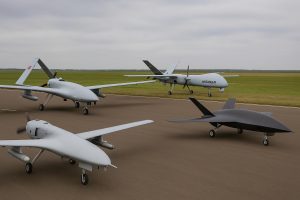
STRATEGIC ANALYSIS — In the modern theater of operations, the sky is no longer dominated solely by multi-million dollar fighter jets. It is saturated with “the snipers of the air”: low-cost, high-lethality drones. As seen in the recent conflicts of 2026, the ability to detect, track, and neutralize these unmanned threats is no longer a luxury—it is a fundamental requirement for survival.
Counter-UAV (C-UAS) systems have evolved from simple signal jammers into multi-layered, AI-driven ecosystems designed to neutralize everything from a single hobbyist drone to an orchestrated swarm.

1. The First Pillar: Detection and Identification
A C-UAS system is only as good as its sensors. Detecting a small, plastic drone with a low Radar Cross Section ($RCS$) is a significant technical challenge.
-
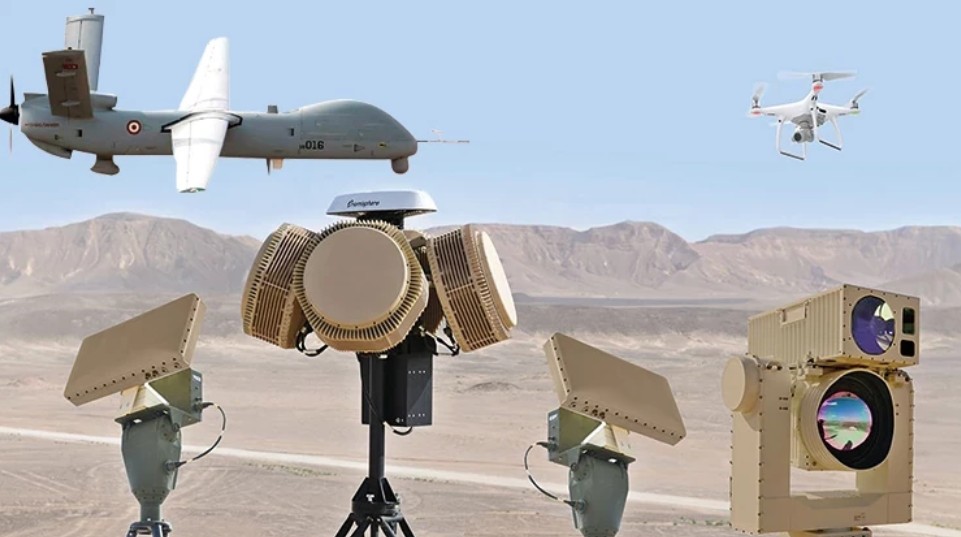
AESA Radars: Modern micro-AESA radars are designed specifically to filter out “clutter” (like birds) and lock onto the distinct flight patterns of drones.
-
RF (Radio Frequency) Analyzers: These systems “listen” to the electromagnetic spectrum to detect the communication link between the drone and its operator.
-
EO/IR (Electro-Optical/Infrared): High-definition cameras and thermal sensors provide visual confirmation. AI-driven image recognition now allows these systems to identify the specific model of a drone even in low-light conditions.
-
Acoustic Sensors: Specialized microphone arrays detect the unique “hum” of drone propellers, serving as a vital sensor in urban environments where radar may be obstructed.
2. The “Soft Kill”: Electronic Neutralization
Soft-kill methods focus on severing the “digital umbilical cord” of the drone without using physical force.
-
Smart Jamming: Target-specific jamming disrupts the GPS or remote-control frequencies ($2.4GHz$ or $5.8GHz$), forcing the drone to land or return to home.
-
GPS Spoofing: A more sophisticated technique where the C-UAS system sends fake GPS coordinates to the drone, “tricking” it into flying to a secure location or crashing.
-
Protocol Manipulation (Cyber Takeover): Advanced systems can “hack” the drone’s software in mid-air, allowing the defender to take full control of the craft.
3. The “Hard Kill”: Physical Destruction
When electronic measures fail, or when dealing with autonomous “dark drones” (those that do not use RF links), hard-kill systems take over.
-
High-Energy Lasers (HEL): Systems like Raytheon’s HELWS or ASELSAN’s GÖKBERK use concentrated light beams to burn through drone housings or optics. Cost-per-shot is near zero, making it ideal against large numbers of threats.
-
High-Power Microwaves (HPM): Devices like the Epirus Leonidas emit a wide-angle burst of microwave energy that fries the electronic circuits of an entire swarm simultaneously. This is the ultimate “anti-swarm” weapon.
-
Kinetic Interceptors: These include “net-guns,” kamikaze interceptor drones, and specialized 35mm air-burst ammunition (e.g., ASELSAN KORKUT/ŞAHİN) that creates a “cloud of lead” in the drone’s flight path.
4. The AI and Command-Control (C2) Integration
The most critical evolution in 2026 is the integration of Autonomous Command and Control. Human reaction times are often too slow to handle a swarm of 50 drones. Modern C-UAS suites utilize AI to:
-
Automatically fuse data from multiple sensors.
-
Classify the threat level.
-
Recommend (or automatically execute) the most efficient kill method—prioritizing soft-kill to save ammunition.