
SDAL Completes Bhargavastra Counter-Drone System Trials


Lead
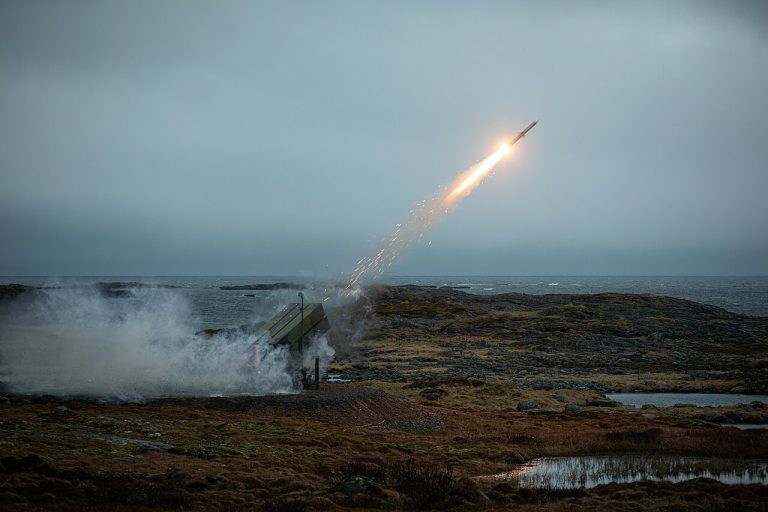
Solar Defence and Aerospace Limited (SDAL), a Nagpur-based subsidiary of explosives and ammunition maker Solar Industries India Limited, said on November 27 that it has completed in-house development trials of Bhargavastra, its vehicle-mounted, two-layer counter-drone system, at the Pokhran field firing ranges in Rajasthan. According to the company, the trials ran from November 20 to 24 and validated a system that pairs unguided air-defense rockets with a second layer of indigenously developed guided micro-missiles carrying infrared seekers, tied together by an AI-enabled command-and-control suite. SDAL describes Bhargavastra as India’s first indigenously designed, two-layer, vehicle-mounted counter-swarm drone system, and says the design, hardware, software and intellectual property are entirely its own. The announcement, made via a company statement, moves the program a step closer to formal evaluation by the Indian armed forces, though no service has yet ordered or deployed the system.
What Happened
SDAL said its engineering and trials team ran a round of in-house development trials at the Pokhran ranges over five days in late November, testing the integrated Bhargavastra system against simulated drone-swarm threats. The company’s statement, carried by the Indian defense outlet IDRW on November 27, describes the trials as having validated the system’s two-layer engagement architecture: a first layer of rocket-based air-defense munitions meeting the Indian Army’s original requirement, and a second, higher-precision layer of guided micro-missiles that SDAL developed on its own initiative, which it says exceeds that original requirement.
This is a company announcement, not an Indian Army or Ministry of Defence statement, and it describes trials conducted and declared successful by the manufacturer itself. No independent test authority, service headquarters or third-party observer has yet confirmed the results, and the next step described by SDAL’s own earlier statements is a transition from internal development trials to formal user trials overseen by the Army. “Development trials complete” is a distinct milestone from “selected,” “ordered” or “operational,” and Defense & Tech is treating it as such.
The Product/System
Bhargavastra is a vehicle-mounted counter-swarm drone system first shown publicly in 2025, when SDAL test-fired its rocket-based interceptor layer at the Gopalpur range and later demonstrated detection and micro-missile components at Balasore and Pokhran. SDAL gave Indian Army, Navy and Air Force representatives a full system demonstration at its Nagpur facility in July 2026, where a simulated drone swarm was detected, tracked and assigned to launchers in real time, though live rocket firing was not carried out at that site for safety reasons.
The system integrates radio-frequency detectors and surveillance radar for early detection and tracking, electro-optical and infrared sensors for continuous day/night target tracking, and an artificial-intelligence-enabled C4I (command, control, communications, computers and intelligence) layer that fuses sensor data and cues the weapons. All of this is mounted on a single vehicle platform alongside the launchers, rather than split across separate detection and engagement vehicles. At the July 2026 demonstration, SDAL’s chairman, Satyanarayan Nuwal, said the radar could detect aerial targets out to roughly 10 kilometers and the electro-optical tracking system to about 6 kilometers, against an Indian Army requirement of 2.5 kilometers for the baseline system. The company has said it is also developing a longer-range, roughly 6-kilometer missile layer beyond the baseline rocket interceptor.
SDAL positions Bhargavastra as a building block for India’s planned Sudarshan Chakra layered national air-defense shield, a multi-tier program targeting full operational capability by the mid-2030s that is meant to combine systems operating at ranges from a few kilometers out to national-level, long-range air defense.
Who Uses It
No armed force operates Bhargavastra yet. It remains a privately developed system undergoing manufacturer trials, demonstrated to Indian Army, Navy and Air Force observers but not formally inducted, contracted or fielded by any of the three services. SDAL has framed the Indian Army’s rocket-based requirement as the baseline the system is built to meet, which suggests the Army is the intended first customer, but this is an inference from the company’s own framing rather than a confirmed procurement decision.
Export/Procurement History
There is no confirmed procurement contract, formal Army trial result or export order for Bhargavastra at this stage. The publicly documented history is a sequence of company-run milestones: micro-missile component trials at Gopalpur and Balasore/Pokhran in 2025, a system-level demonstration in Nagpur in July 2026, and now a round of in-house development trials at Pokhran in November 2026. SDAL has said it expects to move into formal user trials once internal development testing concludes, which would be the step that typically precedes a service evaluation report and any eventual order under India’s Make-II indigenous procurement category. Solar Industries, SDAL’s parent, is already an established supplier of ammunition, explosives and rocket motors to the Indian armed forces, which gives the subsidiary an existing industrial and regulatory relationship with India’s defense establishment even though Bhargavastra itself has not been contracted.
Global Competitors
Bhargavastra enters a crowded and fast-growing counter-drone market shaped by the drone-swarm threats seen in Ukraine, the Red Sea and Sudan. Western and allied systems in the same broad category include Germany’s Rheinmetall Skyranger and KNDS’s newly unveiled Fennek Air 30mm counter-drone vehicle, the UK’s BAE Systems passive-radar counter-drone sensors, and various short-range gun- and missile-based systems fielded by NATO members. Turkiye’s ASELSAN has pushed a different approach with its EJDERHA high-power-microwave system, designed to disable drone swarms electronically rather than through kinetic interceptors. Russia has pitched its own layered “anti-drone dome” concept, built around systems like Pantsir and shorter-range interceptors, to CSTO partners. China’s defense industry has likewise expanded its counter-UAS offerings around systems tied to the HQ family and various gun-based mounts. Bhargavastra’s distinguishing claim is combining both a rocket-based hard-kill layer and a guided micro-missile layer with infrared terminal guidance on a single Indian-built vehicle, at a cost SDAL has pitched as lower than importing comparable Western systems.
Why It Matters
Low-cost drone swarms have become one of the defining threats of recent conflicts, overwhelming traditional point air-defense systems built for crewed aircraft and larger missiles, and forcing militaries worldwide to look for layered, lower-cost counter-UAS solutions. For India, a domestically designed, owned-IP system addressing that threat fits directly into the broader push toward self-reliant defense production (Atmanirbhar Bharat) and reduces dependence on imported short-range air-defense technology. If Bhargavastra performs as SDAL describes in independent Army trials, it would give India a lower tier of its planned Sudarshan Chakra air-defense architecture built entirely by domestic industry, with potential export relevance to other countries facing the same drone-swarm problem, from the Gulf to Africa’s conflict zones. The caveat is that every claim so far about the system’s performance, range and reliability comes from the manufacturer, not from an independent trial authority.
What Happens Next
SDAL has indicated that completing development trials clears the way for formal user trials, which would typically be conducted by Indian Army Air Defence evaluators under standard test protocols rather than company-run demonstrations. Those trials, if they proceed, would determine whether Bhargavastra moves toward a General Staff Qualitative Requirement-based procurement case and eventual order. No timeline for user trials has been officially confirmed by the Army or the Ministry of Defence as of this writing.
FAQ
What is Bhargavastra?
Bhargavastra is a vehicle-mounted, two-layer counter-drone system developed by India’s Solar Defence and Aerospace Limited (SDAL), combining unguided air-defense rockets with guided, infrared-seeking micro-missiles, integrated with radar, electro-optical sensors and an AI-enabled command-and-control system to counter drone swarms.
Who makes Bhargavastra?
Solar Defence and Aerospace Limited, a Nagpur-based subsidiary of Solar Industries India Limited, designed, developed and manufactured the system entirely in-house, including its software, and holds the full intellectual property rights.
Has the Indian Army ordered Bhargavastra?
No. As of late November 2026, SDAL has completed internal development trials; the Indian Army has not announced a procurement contract, and the system has not been formally inducted or deployed.
What ranges can Bhargavastra engage?
SDAL has said its radar can detect targets out to roughly 10 kilometers and its electro-optical tracking system to about 6 kilometers, against an Indian Army baseline requirement of 2.5 kilometers, with a longer-range missile layer reported to be in development.
How does Bhargavastra relate to Sudarshan Chakra?
SDAL and Indian officials have described Bhargavastra as a building block for Mission Sudarshan Chakra, India’s planned multi-layer national air-defense shield targeted for full capability by the mid-2030s.
Sources
- IDRW, “SDAL Completes Development Trials of Bhargavastra Vehicle-Mounted Counter-Drone System,” November 27, 2026, company press release republished by IDRW — primary source for the November 2026 Pokhran trials, dates and technical layers.
- IDRW, “Bhargavastra Counter-Drone System to Complete Internal Trials in 3 Months, Says SDAL Chairman Satyanarayan Nuwal,” July 2026 — source for the July 2026 Nagpur demonstration and stated sensor ranges.
- Business Standard, “What’s ‘Bhargavastra’, India’s new weapon designed to destroy enemy drones?” — background on the system’s origin and SDAL’s role.
- Outlook India, “SDAL Develops Homegrown Counter Drone System ‘Bhargavastra’, Trials Prove Successful” — background on earlier 2025 trial results.
- Defense & Tech, “Mission Sudarshan Chakra Explained: India’s Plan for a National Air Defence Shield by 2035” — internal context on how Bhargavastra fits India’s broader air-defense roadmap.