North Korea Tests New Air-Defense Missile System
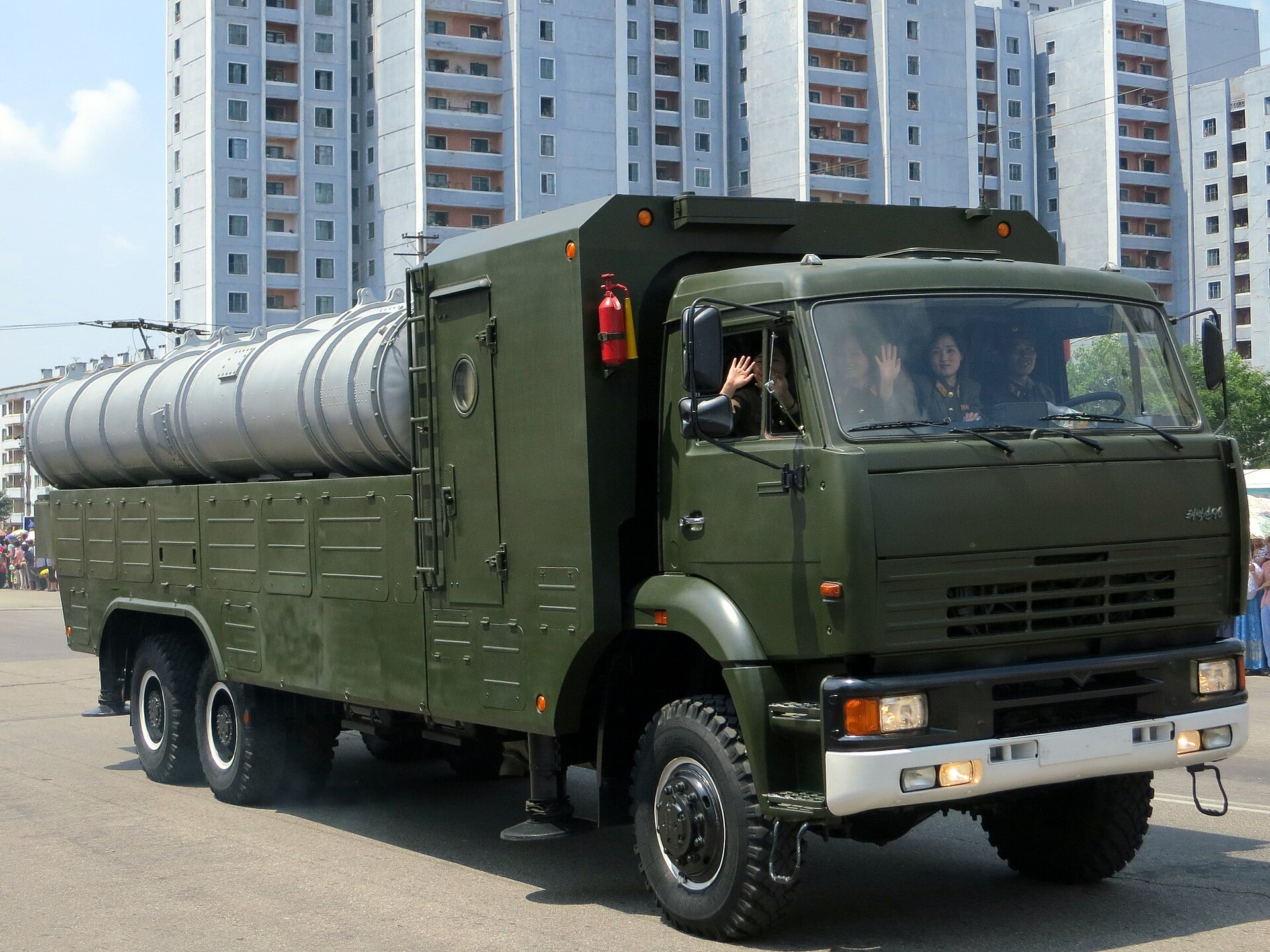

North Korea test-fired a “newly designed” air-defense missile system on November 4, 2026, and separately ran a long-range cruise missile strike drill the same day, state media reported, the fourth weapons trial Pyongyang disclosed in a single week. The Korean Central News Agency (KCNA) said the Missile Administration oversaw the air-defense test and that it “proved the technical specifications and reliability” of the system’s guidance package, though it released no performance figures, flight-test footage, or a designation for the missile. South Korea’s Joint Chiefs of Staff separately detected missiles fired toward the East Sea from the Sondok area of South Hamgyong Province, assessed to have flown less than 300 km.
What Happened
According to KCNA’s November 5 report, the test on November 4 assessed the new missile’s “intelligent multiple guided mode,” along with the system’s target identification, tracking, and detection-information processing. State images showed a slender, cylindrical missile with a pointed nose and small base fins launched vertically from a 10×10 wheeled transporter-erector-launcher. KCNA did not disclose the test site. The same day, a firepower subunit of North Korea’s long-range strategic cruise missile force in the country’s east conducted a separate strike drill against a simulated airfield target, with state photos showing a mock runway marked with aircraft silhouettes and impact craters. KCNA did not state whether the two events were directly linked.
The test capped a dense run of North Korean weapons trials: a tactical ballistic missile dispersal-warhead test on October 31, a 600mm multiple rocket launcher test attended by Kim Jong Un, a strategic cruise missile dispersal-warhead test on November 2, and the air-defense and cruise missile drills on November 4. Iran’s Tasnim News Agency, citing the pattern, described the air-defense test as Pyongyang’s fourth weapons trial within a week.
The Product/System
KCNA attributed the test to North Korea’s Missile Administration, with oversight from Kim Jong-sik, a senior Workers’ Party military-industry official widely regarded as one of the architects of the country’s missile program alongside Ri Pyong-chol and Jang Chang-ha. North Korea has not named the new interceptor, and open-source analysts have not yet matched it to a known designation. It is a distinct test from two other air-defense programs North Korea has disclosed over the past 18 months:
- August 2025: Live-fire tests of two new short-range interceptor types that KCNA said intercepted drone and low-flying cruise missile targets, which outside analysts assessed as a potential upgrade over the older KN-06 (Pongae-5) system.
- December 2025: A first test launch of a high-altitude, long-range surface-to-air missile, which KCNA said destroyed a simulated target at 200 km — widely read by analysts such as Shin Jong-woo of the Korea Defense and Security Forum as a replacement effort for North Korea’s aging SA-5-derived long-range system.
The November 4 system appears to sit between those two efforts, based on its truck-mounted vertical-launch configuration and the stated focus on guidance and tracking rather than long-range intercept altitude. North Korea’s existing layered air-defense inventory has historically leaned on Soviet-era SA-2/SA-3/SA-5 derivatives and the road-mobile KN-06, a gap regional militaries have watched closely as Pyongyang faces repeated US-South Korea flights by stealth aircraft and the proliferation of small attack drones over the peninsula.
Who Uses It
North Korea is the only confirmed operator, and the system has not been declared operational. State media described the November 4 event as a test of technical characteristics rather than a unit-acceptance trial, and no induction timeline was given.
Export/Procurement History
North Korea does not export the system; if anything, the technology flow runs the other way. Ukrainian military intelligence chief Kyrylo Budanov has said Russia helped correct guidance errors in North Korea’s KN-23 short-range ballistic missile, and Russia is reported to have transferred Pantsir-S1 air-defense systems to North Korea following the two countries’ 2024 strategic partnership treaty and North Korean troop deployments to support Russia’s war in Ukraine. Those claims, repeated by regional outlets after the August 2025 interceptor tests, remain unverified by independent, on-the-record sources, and KCNA has not acknowledged Russian technical assistance for any of its 2025-2026 air-defense programs.
Global Competitors
North Korea’s new interceptor would compete, in a strictly regional sense, with the systems its neighbors and adversaries field: South Korea’s indigenous KM-SAM Cheongung and the longer-range L-SAM under development; Russia’s Pantsir-S1 and S-400, both reportedly supplied in some form to Pyongyang; and China’s HQ-9 and HQ-19. Against the backdrop of repeated allied exercises pairing F-35 stealth fighters with Aegis-equipped destroyers, Pyongyang has framed its recent interceptor programs around countering low-altitude drones and cruise missiles rather than publicly claiming an anti-stealth capability.
Why It Matters
The test adds to a pattern analysts have tracked since mid-2025: North Korea shifting part of its missile-industrial effort from purely offensive systems toward a more layered air-defense posture, built around interceptors for different altitude bands and threat types. Combined with December’s high-altitude SAM test and August’s short-range interceptors, the November 4 trial suggests Pyongyang is trying to field a tiered system rather than a single new missile. It also comes against a backdrop of deepening, if only partially verified, Russian technical cooperation, which South Korean and Western officials have cited as a wider concern following North Korean troop deployments to Russia’s war effort. For Seoul, Tokyo, and Washington, the tests complicate planning assumptions built around North Korea’s historically thin, Soviet-derived air defenses.
What Happens Next
KCNA’s description of the November 4 trial as evaluating “technical specifications and reliability” suggests further testing before any operational declaration, consistent with North Korea’s practice of multiple trials before publicly inducting a system, as seen with its submarine-launched cruise missile program. South Korea’s Joint Chiefs of Staff said it is monitoring North Korea under the combined US-South Korea defense posture. No North Korean statement has indicated an induction date, and KCNA has not released the system’s designation.
FAQ
What did North Korea test on November 4, 2026?
A newly designed air-defense missile system, fired from a 10×10 wheeled launcher, alongside a separate long-range cruise missile strike drill against a simulated airfield target. KCNA released no designation or performance figures.
Is this the same system North Korea tested in August or December 2025?
No. KCNA has now disclosed three distinct air-defense programs since August 2025: short-range interceptors (August 2025), a high-altitude long-range SAM (December 2025), and the newly designed system tested on November 4, 2026. North Korea has not said how, or whether, these programs connect.
Has Russia helped North Korea build these interceptors?
Ukrainian intelligence and regional reporting say Russia transferred Pantsir-S1 systems to North Korea and assisted with KN-23 missile guidance, following the countries’ 2024 strategic partnership and North Korean troop deployments to Russia. North Korea has not confirmed Russian technical assistance for its air-defense programs, so the extent of cooperation remains unverified.
How did South Korea respond to the launch?
South Korea’s Joint Chiefs of Staff said it detected the launches from the Sondok area in advance and tracked them under the South Korea-US combined defense posture, assessing a flight distance of under 300 km. It did not report any damage or incursion.
What is North Korea’s Missile Administration?
The Missile Administration is the North Korean state body KCNA has credited with testing the country’s recent interceptor and strike-missile programs, overseen in this case by senior military-industry official Kim Jong-sik.
Sources
- Sohini Mandal, “North Korea tests newly designed air-defence missile system,” Janes, November 5, 2026 — primary technical details of the November 4 test.
- Korea Herald, “N. Korea says it tested new air defense missile system,” November 5, 2026 — confirmation of Kim Jong-sik’s oversight and KCNA wording.
- Tasnim News Agency, “North Korea Says Test-Fired New Air Defense Missile System, Long-Range Cruise Missile,” November 5, 2026 — context on the week’s broader weapons-test tempo.
- United24 Media, “With Russian backing, North Korea unveils missiles to hunt drones and US F-35s,” August 25, 2025 — background on the August 2025 interceptor tests and claimed Russian technology transfers.
- UPI, “N. Korea tests new long-range air defense missile system,” December 25, 2025 — details of the December 2025 high-altitude SAM test and analyst comment from Shin Jong-woo.
- CSIS Missile Threat, “KN-06 (Pon’gae-5)” — background on North Korea’s existing road-mobile SAM system.
Featured image: File photo of North Korea’s Pon’gae-5 (KN-06) air-defense system at the 2013 Victory Day parade; not the newly tested missile. Stefan Krasowski / CC BY 2.0, via Wikimedia Commons