F-35 Parts: GAO Says 17,000 Components Worth $1.3bn Were Missing From Pentagon Records
The Pentagon cannot fully account for the F-35 parts it owns, according to the US Government Accountability Office. In a report released on 9 November 2026, the congressional watchdog said that as of March 2026 the F-35 Joint Program Office (JPO) had not entered about 17,000 parts that were in maintenance or repair, worth about $1.3 billion, into its official inventory system. Defence Department officials told GAO the true value could be as high as $2.5 billion once missing cost data and overheads are counted.
- The US Government Accountability Office (GAO) published report GAO-27-108713 on 9 November 2026
- As of March 2026, about 17,000 F-35 parts in maintenance or repair, valued at about $1.3bn, had not been entered into the programme’s inventory system
- The F-35 programme holds about 26 million parts worth about $31bn at more than 700 facilities worldwide
- Parts valued at over $85m that GAO reported lost in 2023 were still unaccounted for; DoD agreed with all four new recommendations
What GAO found
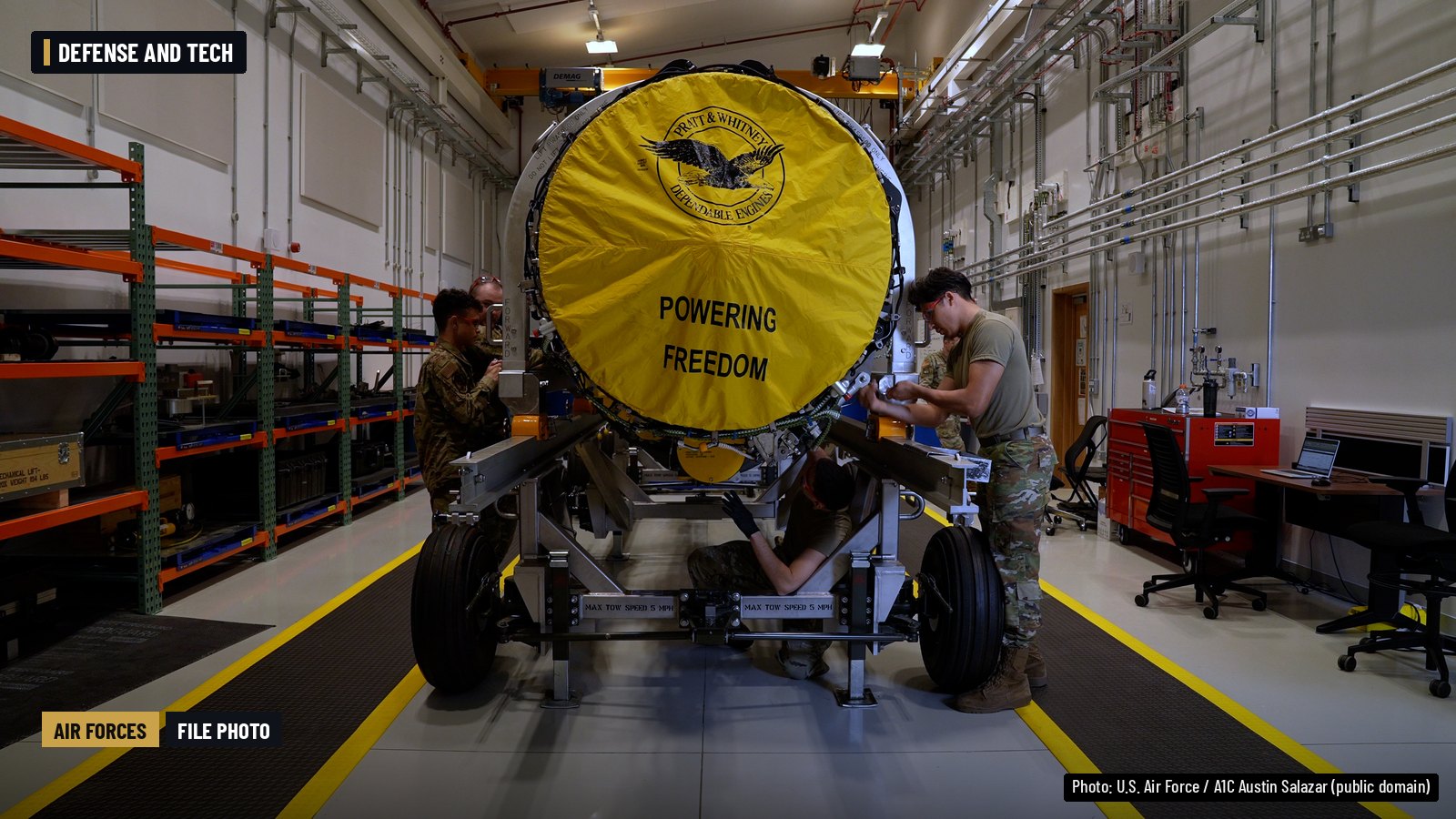
The F-35 programme shares one global pool of parts, from engines and tyres to support equipment, bolts and screws. GAO puts that pool at about 26 million items worth roughly $31 billion, held at more than 700 contractor- and government-managed sites. Contractor sites hold about 30 percent of the parts; government sites such as military bases and Defense Logistics Agency warehouses hold the other 70 percent. The parts belong to the US government, but GAO says the department “does not maintain complete records” of them.
The full report lists several data problems. Records in the Enterprise Logistics Management System (ELMS), the programme’s accountable property system, do not show changes in real time because ELMS is not linked to the property systems of the two prime contractors, Lockheed Martin (airframe) and Pratt & Whitney (engine). Data for the joint spares pool arrives through quarterly contractor submissions, so it can be more than three months old. In a December 2025 submission, only 29 percent of part records carried serial numbers and 43 percent carried National Stock Numbers, and almost 6 percent showed an acquisition cost of one cent or less, which GAO flags as possible data errors.
Physical stock counts have not closed the gap. GAO says the JPO has spent at least $17 million on physical inventories since fiscal year 2020, but those counts did not fully verify that parts exist or that records are complete. Some contractor data was inaccurate and, according to the report, parts in transit can fall outside the count altogether.
Lost parts and what happens next
The report also returns to an older problem. In 2023 GAO reported lost F-35 parts valued at more than $85 million; as of March 2026, the JPO still did not know their status. GAO adds that the programme has no effective procedures for reviewing losses reported at government-managed facilities, which it says weakens the ability to detect fraud, waste or theft.
GAO made four recommendations, covering procedures for monitoring part losses and the training, procedures and structure of the programme’s accountable property officers. The department concurred with all four, GAO says. Two remedies are still in progress, according to officials quoted in the report: the JPO was testing a live data link with one prime contractor in July 2026 and expected it to go live in September 2026, and the Defense Contract Audit Agency was preparing a first full inventory with a target completion date of March 2027. The report does not say whether the September link went live.
Platform background
The F-35 Lightning II is a single-engine stealth fighter built by Lockheed Martin in three versions: the conventional F-35A, the short take-off and vertical landing F-35B and the carrier-based F-35C. GAO calls it the Pentagon’s most costly weapon system, with life-cycle costs estimated at more than $1.9 trillion, including about $1.4 trillion to operate and support the fleet until 2088. Our short F-35 explainer covers the aircraft itself.
Who shares the parts pool
According to GAO, the pool serves the US Air Force, Navy and Marine Corps, seven partner nations (Australia, Canada, Denmark, Italy, the Netherlands, Norway and the United Kingdom) and, as of September 2026, twelve foreign military sales customers: Belgium, the Czech Republic, Finland, Germany, Greece, Israel, Japan, Poland, Romania, Singapore, South Korea and Switzerland. Poor records in one shared pool therefore matter well beyond the United States, because partner fleets draw on the same stock.
Previous developments
None of this is new to auditors. GAO reported in 2022 that the JPO was only planning the contractor data links, and the Pentagon’s Inspector General has issued two reports with 17 recommendations on F-35 financial management, including a 2023 finding that DoD lacked controls to verify that F-35 parts existed. Trade press coverage by Breaking Defense and National Defense Magazine reports the same core figures from the GAO document.
Industry context
Sustainment, not purchase price, is the largest cost of the F-35, and parts availability drives how many jets can fly. The report does not quantify any effect on readiness, but it warns that without accurate records managers “will not have the information” needed to support it. For how the F-35 compares with other big-ticket programmes, see our ranking of the most expensive weapons programmes.
Sources: US Government Accountability Office, GAO-27-108713, “F-35 Program: DOD Needs to Strengthen Oversight of Tens of Billions of Dollars in Parts”, 9 November 2026; Breaking Defense and National Defense Magazine, 9–10 November 2026.