North Korea Tests Submarine-Launched Cruise Missiles as Korea Missile Race Heats Up

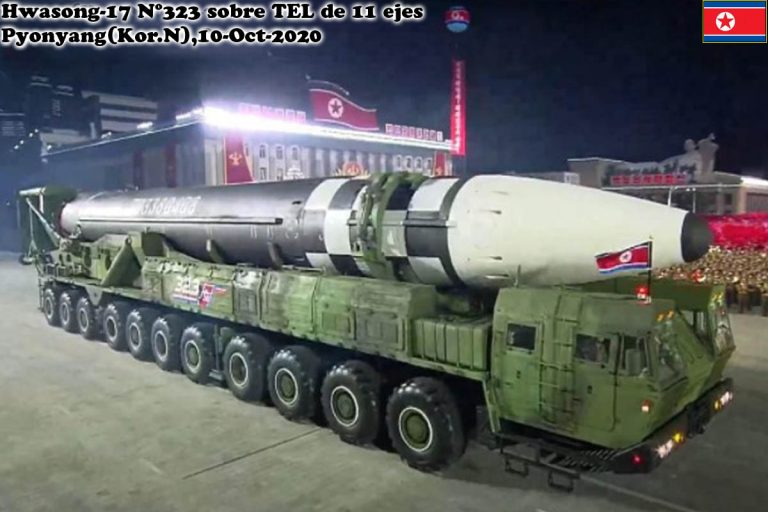
North Korea test-fired two types of submarine-launched cruise missiles in the Sea of Japan on October 14, becoming the latest flashpoint in a month-long exchange of missile tests between Pyongyang and Seoul. State media said the launches were conducted from an underwater platform believed to be the converted missile submarine Hero Kim Kun Ok, and came less than two weeks after North Korea tested a hypersonic intermediate-range missile and South Korea conducted its own first public hypersonic missile test under President Lee Jae Myung. Neither country’s claims about missile performance have been independently verified.
What Happened
North Korea’s state-run Korean Central News Agency (KCNA) reported on October 15 that the country had tested two types of submarine-launched strategic cruise missiles the previous day. South Korea’s Joint Chiefs of Staff confirmed detecting the launches, which it said used two different missile types: one fired from a vertical launch tube and the other from a torpedo tube.
KCNA did not disclose the identity of the launch platform, but imagery reviewed by South Korean analysts and defense outlets points to the Hero Kim Kun Ok, a heavily modified Romeo-class diesel-electric submarine that North Korea first unveiled in September 2023. Kim Jong Un did not personally oversee the test; KCNA named Kim Jong Sik, a member of the Workers’ Party Central Military Commission, and Missile Administration chief Jang Chang Ha as the officials who supervised it. North Korea described the launches as a check on “the current mobilized posture” of its underwater combat systems and said they did not adversely affect neighboring countries.
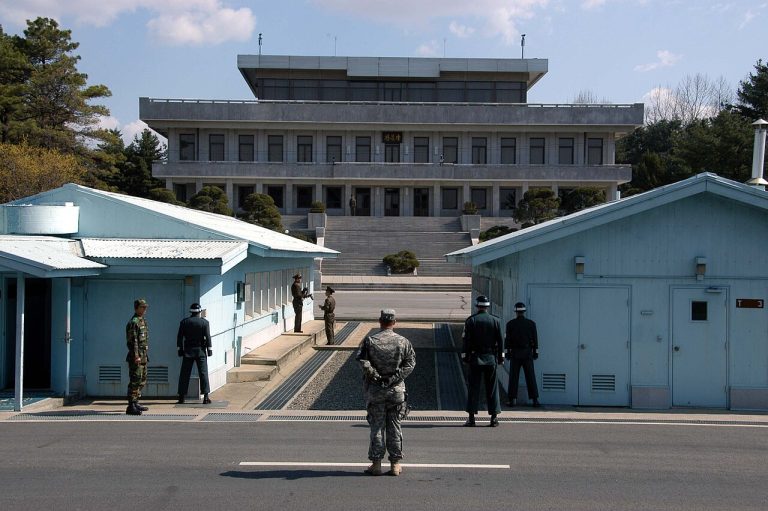
It was North Korea’s first publicly disclosed submarine-launched cruise missile test since January 2024. The test followed weeks of friction between the two Koreas along the DMZ, including a landmine explosion along their shared border, and came 11 days after North Korea tested a hypersonic intermediate-range missile on October 3 that Pyongyang said was designed to evade missile defenses in South Korea and Japan. South Korea answered with its own hypersonic missile test, overseen in person by President Lee, an unusual public display by a sitting South Korean leader.
The Product/System
South Korean military analysts assess that the October 14 salvo paired North Korea’s two known submarine-launched cruise missile designs: the Hwasal-2, a longer-range strategic cruise missile that Pyongyang has previously said is nuclear-capable and carries an operational range estimated between 1,500 and 2,000 kilometers, and the shorter-range Pulhwasal-3-31, a land-attack cruise missile with a claimed range in the range of 1,000 to 2,000 kilometers depending on the source. North Korea has not officially confirmed either designation for this specific test, and South Korean officials have previously said Pyongyang may exaggerate the flight performance of missiles such as the Pulhwasal-3-31, which KCNA has at times described as still in development.
Both missiles are built around North Korea’s push to field a credible submarine-based strike capability without relying on the slower, more vulnerable fixed ballistic missile silos and mobile launchers that make up the bulk of its arsenal. The Hero Kim Kun Ok itself illustrates the limits of that push: independent assessments, including from CSIS’s Beyond Parallel project, describe the submarine as not yet fully operational and not known to have conducted an extended patrol. Imagery analysis has suggested it could carry up to ten missiles, though KCNA has never specified a missile load, and the figure is not independently confirmed.
Who Uses It
The Hero Kim Kun Ok and its cruise missile armament are operated exclusively by the Korean People’s Army Navy. Kim Jong Un has said he intends for North Korea’s wider fleet of roughly 20 aging Romeo-class submarines, acquired from China decades ago, to eventually be converted along similar lines, though it remains unclear how many of those hulls are structurally viable for conversion. No other country operates this specific submarine or missile combination, and North Korea has not been reported exporting submarine-launched cruise missile technology.
Export/Procurement History
North Korea’s submarine-launched cruise missile program is entirely indigenous and developed under international sanctions that bar the country from importing most military hardware and technology. The Hero Kim Kun Ok’s hull traces back to Romeo-class boats Pyongyang received from China in the 1970s and 1980s; the conversion into a missile platform, and the missiles it carries, were developed domestically by North Korea’s Missile Administration. There is no confirmed foreign supplier relationship for the Hwasal-2 or Pulhwasal-3-31 programs, and no known export customers, consistent with North Korea’s status as a sanctioned, closed defense-industrial base.
Global Competitors
North Korea’s effort to field submarine-launched cruise missiles places it in a field long dominated by the US Tomahawk-armed attack submarines, Russia’s Kalibr-equipped boats, and China’s CJ-10K-capable submarines, all of which have decades of combat or at-sea testing behind them. South Korea itself has deployed submarine-launched ballistic missiles from its Dosan Ahn Chang-ho-class boats, part of a conventional submarine fleet, including the Type 214 design in service with several navies, that significantly outclasses North Korea’s converted Cold War-era hulls in stealth and endurance. Analysts broadly agree that North Korea’s submarine deterrent remains a developmental, unproven capability rather than an operational threat on par with these established programs.
Why It Matters
The test underscores how the inter-Korean missile competition has broadened beyond the ballistic and hypersonic missile tests that have dominated headlines this year to include the underwater domain, which is harder for South Korea and the United States to track and intercept. Even an unproven North Korean submarine-launched cruise missile capability complicates allied missile defense planning, because a strike platform that can maneuver off North Korea’s coastline before launching reduces warning time compared with fixed, known launch sites. The timing, sandwiched between hypersonic tests from both Koreas, also signals that Pyongyang is pursuing diversification across multiple delivery methods simultaneously rather than concentrating on a single weapons category, a trend other missile powers are mirroring: Russia’s submarine-launched Bulava ICBM test from the Sea of Okhotsk the same week underlines how central sea-based strike platforms have become to major and emerging missile programs alike.
What Happens Next
South Korea and the United States are likely to continue monitoring the Hero Kim Kun Ok for signs of extended sea trials that would indicate it is moving toward operational status, a threshold independent analysts say it has not yet crossed. Whether North Korea proceeds with converting additional Romeo-class hulls, as Kim Jong Un has said he intends, will be a key indicator of how seriously Pyongyang is investing in this capability versus using it primarily for propaganda and negotiating leverage. Further reciprocal missile tests between Seoul and Pyongyang remain likely given the pattern established this month.
FAQ
What missiles did North Korea test on October 14, 2026?
South Korea’s military said North Korea tested two types of cruise missiles from a submarine: one from a vertical launch tube and one from a torpedo tube. Analysts believe these were the Hwasal-2 and Pulhwasal-3-31, though North Korea has not confirmed the designations.
What submarine launched the missiles?
South Korean and open-source analysts believe the launch platform was the Hero Kim Kun Ok, a converted Romeo-class diesel-electric submarine North Korea unveiled in September 2023. KCNA did not name the vessel.
Is North Korea’s submarine missile capability operational?
Independent assessments, including from CSIS’s Beyond Parallel project, say the Hero Kim Kun Ok is not yet known to be fully operational and has not been observed on an extended patrol.
How does this relate to South Korea’s own missile tests?
The submarine test came after North Korea tested a hypersonic intermediate-range missile on October 3 and after South Korean President Lee Jae Myung personally oversaw his country’s first public hypersonic missile test, part of a broader tit-for-tat exchange this month.
Has North Korea exported this submarine or missile technology?
No. North Korea’s submarine-launched cruise missile program is indigenous and developed under international sanctions, with no confirmed export customers or foreign suppliers.
Sources
- Al Jazeera, “North Korea tests two submarine-launched missiles, state media reports,” October 15, 2026 — confirms KCNA report, South Korean JCS assessment of two missile types, and submarine identification.
- South China Morning Post, “North Korea tests submarine-launched cruise missiles, heightening tensions with Seoul,” October 15, 2026 — context on inter-Korean tensions and timing relative to the border landmine incident.
- Army Recognition, “North Korea Tests Two Types of Submarine-Launched Strategic Cruise Missiles in the Sea of Japan,” October 2026 — technical identification of Hwasal-2 and Pulhwasal-3-31 designations.
- CSIS Beyond Parallel, “North Korea’s First Ballistic Missile Submarine: Still Not Operational” — independent assessment of the Hero Kim Kun Ok’s operational status and missile load uncertainty.
- Stars and Stripes, “North Korea submarine-launched cruise missiles,” October 15, 2026 — reporting on officials who supervised the test and the absence of Kim Jong Un.