Spain Launches F-112 Roger de Lauria, Second F-110 Frigate, Four Months Early
Spain has launched the F-112 Roger de Lauria, the second of five F-110 frigates being built for the Spanish Navy, at Navantia’s shipyard in Ferrol. The Spanish Ministry of Defence said on its official X account on 27 October 2026 that the ship had “touched the sea”, with Secretary of State for Defence Amparo Valcarce highlighting the programme’s dual value: new capabilities for the Armada and a boost for the Spanish naval industry.
- Ship: F-112 Roger de Lauria, second of five F-110 (Bonifaz-class) frigates
- Launched: 27 October 2026, Navantia Ferrol, about four months earlier than planned
- Planned delivery: 2029, one year after lead ship F-111 Bonifaz
- Programme value: about €4.9 billion after a budget increase approved in May 2025
- Key sensor: Lockheed Martin SPY-7 radar with Navantia’s SCOMBA combat system
Launch ahead of schedule
According to Spanish media reports, the frigate slid down slipway No. 3 at high tide in the Ferrol estuary. The launch had originally been expected in early 2027. Valcarce attended alongside the Chief of Naval Staff, Admiral Antonio Piñeiro, and Navantia chairman Ricardo Domínguez. The ship’s sponsor was writer Almudena de Arteaga, a descendant of the medieval admiral Roger of Lauria after whom the frigate is named.
Construction began in December 2023 and the keel was laid in April 2025. The launch does not mean the ship is ready for service: outfitting afloat, integration of the combat system and an extensive test programme still lie ahead, with delivery planned for 2029.
What the F-110 brings
The F-110 frigates, about 145 metres long and displacing more than 6,000 tonnes, are designed for air defence, anti-submarine warfare and surface combat. Their centrepiece is the SPY-7 solid-state radar, integrated with Navantia’s SCOMBA combat management system and Aegis-related technology. The class also features a digital twin that uses onboard sensor data to anticipate failures, plan maintenance and support crew training. The ships will replace the Santa María-class (F-80) frigates in service since the 1980s.
Industrial impact and next hulls
The programme’s budget was raised from about €4.3 billion to roughly €4.9 billion in May 2025. Navantia estimates the work will sustain around 9,000 jobs over more than a decade, with some 500 companies involved and about 65% of supplies sourced from Spanish firms.
Lead ship F-111 Bonifaz was launched in September 2025 and is now in systems installation, with sea trials targeted for 2027 and delivery in 2028. Blocks for the third ship, F-113 Menéndez de Avilés, are already on the slipway, while early construction of F-114 has started at Navantia’s new digital block factory.
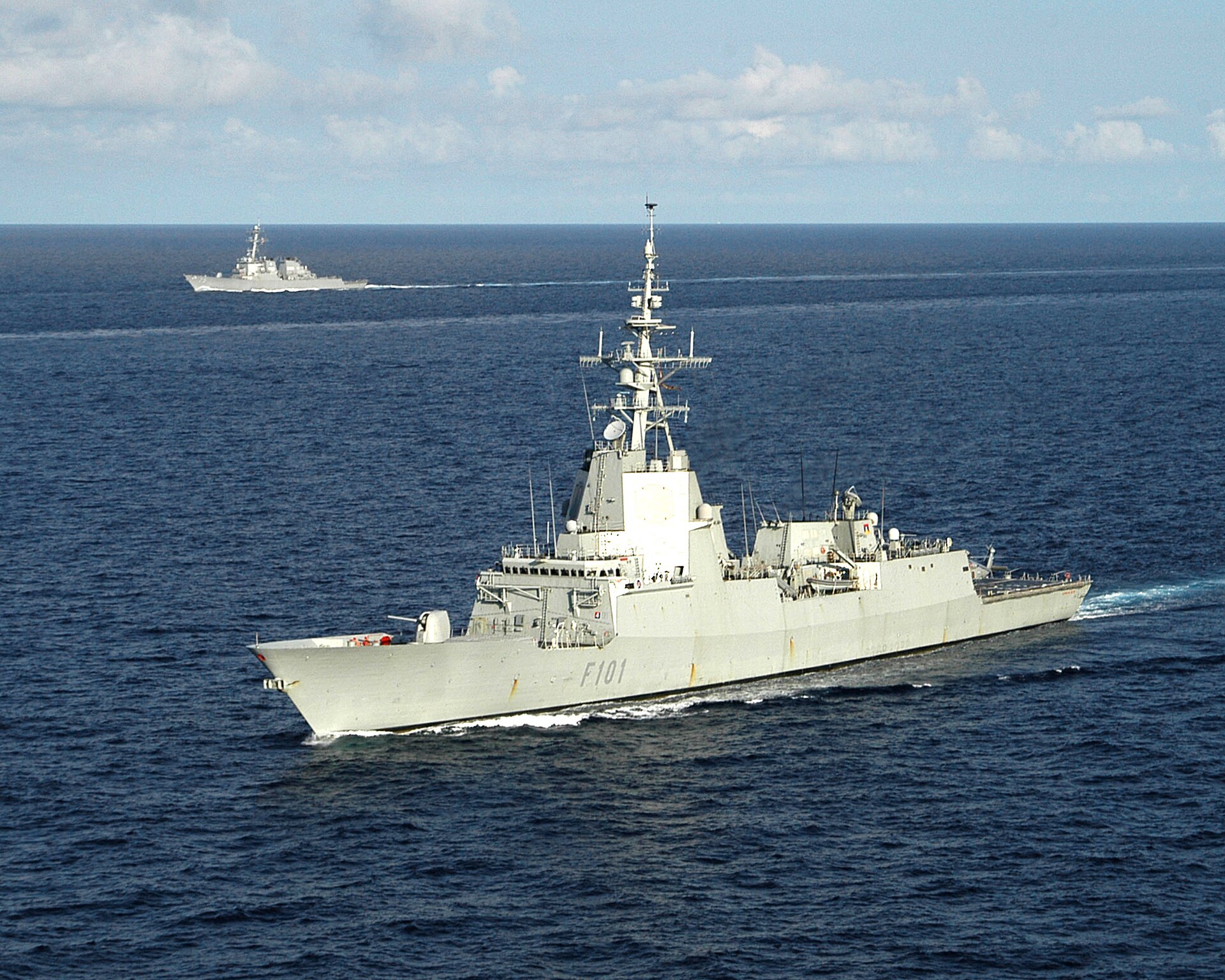
Featured image: U.S. Navy photo by Photographer’s Mate Airman Eben Boothby / Public domain, via Wikimedia Commons (file photo of the Spanish Navy frigate Álvaro de Bazán, F101)