Morocco’s First F-16 Block 72 Takes Flight, Opening a New Chapter in North Africa’s Air Race
Morocco’s First F-16 Block 72 Takes Flight, Opening a New Chapter in North Africa’s Air Race
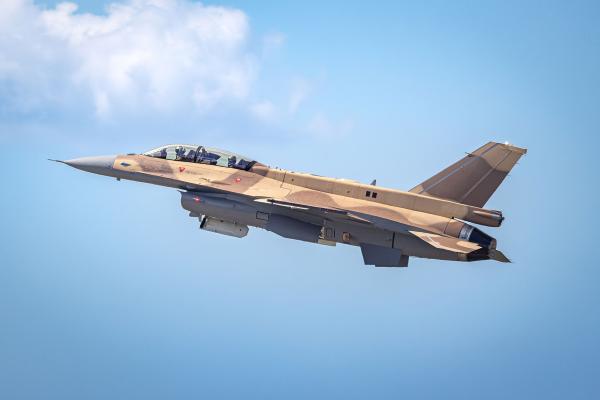
The Royal Moroccan Air Force’s first F-16 Block 72 flew for the first time on October 6, 2026, at Lockheed Martin’s Greenville, South Carolina plant, the manufacturer announced. The aircraft, a two-seat F-16D, is the first of 25 jets ordered under a program approved by Washington in March 2019, and it makes Morocco the launch customer for the newest version of the Fighting Falcon anywhere in the world. The milestone moves a program that has taken more than seven years to reach flight test into its final stretch, as Rabat works to close a widening capability gap with neighboring Algeria, which has begun receiving Russian Su-57E stealth fighters.
What Happened
Lockheed Martin said the F-16 Block 72 completed a successful first flight and has now entered flight testing ahead of delivery to the Royal Moroccan Air Force (RMAF). Mike Shoemaker, vice president and general manager of Lockheed Martin’s Integrated Fighter Group, called the flight a reflection of “meaningful progress” on Morocco’s program and a critical step toward strengthening the country’s future airpower. The company did not disclose a firm delivery date, the aircraft’s tail number, or how many additional jets are currently in production, though industry reporting places first deliveries to Morocco in the 2027 timeframe.
The flight comes 7.5 years after the U.S. State Department notified Congress in March 2019 of a possible sale to Morocco of 25 F-16C/D Block 72 aircraft, valued at approximately $3.787 billion. That package included 29 F100-PW-229 engines, with four as spares, and 26 AN/APG-83 Active Electronically Scanned Array (AESA) radars, with one as a spare. Morocco’s long wait mirrors that of other Block 70/72 customers: Bahrain’s first new-build Block 70 flew in January 2023, nearly a decade after the variant was first marketed.
The Aircraft: Background, Manufacturer and Role
The F-16 Block 72, also marketed as the F-16V Viper, is Lockheed Martin’s latest production version of a design that first flew in 1974. It shares its airframe, mission computer and cockpit architecture with the Block 70, and both variants carry a 12,000-hour structural service life, more than 50% longer than earlier production F-16s. The one meaningful technical split between the two blocks is the engine: Morocco’s Block 72s use the Pratt & Whitney F100-PW-229, rated at roughly 129.7 kN with afterburner, while Block 70 customers such as Bahrain and Bulgaria fly the General Electric F110-GE-129. The difference matters for Morocco specifically because its existing Block 52+ fleet already runs on the F100 family, letting the air force avoid introducing a second engine logistics chain.
Beyond the airframe, the jet brings a substantial sensor and systems upgrade over Morocco’s current F-16s. The AN/APG-83 AESA radar can track more than 20 targets simultaneously and generate synthetic-aperture radar imagery for ground mapping; Lockheed Martin states its reliability is three to five times that of the mechanically scanned radars on older F-16 variants. The cockpit adds a widescreen Center Pedestal Display, Link 16 data-sharing, and an infrared search-and-track (IRST) system for passive, non-radar target detection. The aircraft also carries the Viper Shield electronic-warfare suite and can be fitted with conformal fuel tanks adding roughly 440 U.S. gallons (1,666 liters) of internal fuel, along with Sniper targeting pods and helmet-mounted cueing for both air-to-air and precision air-to-ground missions.
Who Uses It: Confirmed and Prospective Operators
Morocco is the only confirmed launch customer of the Block 72 specifically, though the broader Block 70/72 Viper family already flies with several air forces. Bahrain and Bulgaria operate the GE-powered Block 70, while Slovakia and Taiwan have Block 70/72-family orders in progress. Morocco’s order is distinguished by its use of the F100 engine to maintain commonality with its legacy fleet rather than by any unique airframe feature. No other confirmed Block 72 (F100-powered) customer has been publicly identified at this stage; analysts describe Morocco as effectively the type’s debut operator.
Procurement History
Morocco’s relationship with the F-16 dates to 2010-2011, when the RMAF took delivery of 24 Block 52 aircraft (16 single-seat F-16Cs and 8 two-seat F-16Ds). One was lost in a 2015 crash during operations in Yemen, leaving 23 in service. In March 2019, alongside the new-build order, Washington separately approved an estimated $985 million program to upgrade those 23 surviving jets to the Block 52+ standard, adding the same AN/APG-83 radar and other F-16V-family equipment carried by the new aircraft. Once both programs are complete, Morocco’s F-16 fleet would grow to 48 aircraft, combining 25 new Block 72s (about 52%) with 23 modernized Block 52+ jets (about 48%) — more than double its pre-2019 fleet size.
Supporting infrastructure is being built in parallel. In August 2026, training-systems firm CAE received a contract worth up to $42.1 million, with $38.0 million obligated at award, to supply two Block 72 full-mission simulators and associated logistics support, with work split between Arlington, Texas, and Sidi Slimane Air Base in Morocco and completion scheduled for April 2029. Separately, Lockheed Martin’s joint venture Maintenance Aero Maroc is building a maintenance, repair and overhaul (MRO) facility exceeding 8,000 square meters at Benslimane, between Rabat and Casablanca. It was originally planned to support Morocco’s C-130 Hercules fleet but is now slated to expand to cover F-16 heavy maintenance as well, part of what Lockheed Martin describes as a defense relationship with Morocco spanning more than 50 years since the first C-130H delivery in 1974.
Regional Competitors and Context
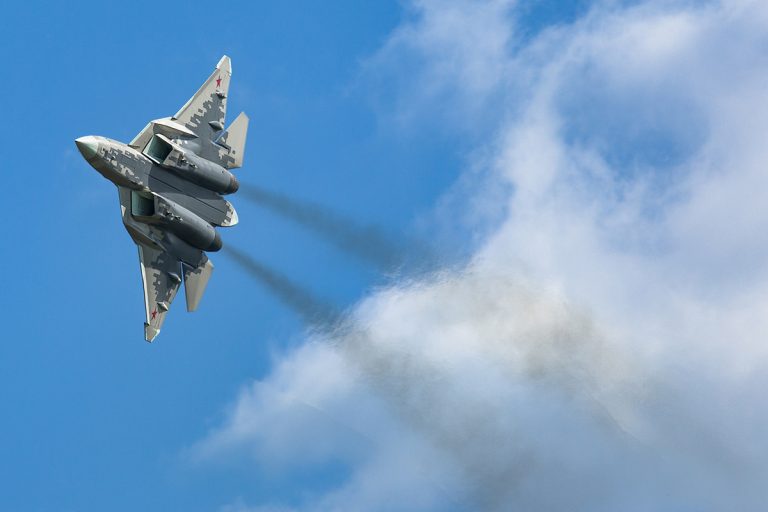
The Block 72’s arrival lands against a backdrop of renewed air-power competition between Morocco and Algeria. Algeria has reportedly begun taking delivery of Russian Su-57E stealth fighters under a deal that regional defense outlets describe as covering roughly 12 aircraft, though neither Moscow nor Algiers has published official figures on contract size or delivery schedule, and independent confirmation of the total order remains limited — what is confirmed and what remains unverified about Algeria’s Su-57E program is addressed in a separate analysis. Algeria’s existing combat fleet otherwise still leans heavily on older Soviet- and Russian-era types, including Su-30, MiG-29 and aging Su-24 and MiG-25 aircraft.
Analysts broadly agree the Su-57E carries a theoretical stealth and sensor-fusion edge that no F-16 variant, including the Block 72, can match on paper. But several regional assessments also note that Morocco’s integration timeline and logistics commonality — built around a single engine family and a long-established U.S. training and sustainment relationship — give the RMAF a more predictable path to an operational capability than Algeria’s newer and still largely unproven Su-57E fleet. The comparison remains contested and politically charged in both North African capitals, and neither country’s air force has released performance data that would allow a neutral technical judgment.
The Block 72 purchase is one piece of a broader Moroccan defense-modernization push that has also brought India’s MKU a deal to build an electro-optics and armor plant in Morocco, part of a wider pattern of Rabat diversifying its suppliers and building domestic defense-industrial capacity alongside its U.S. and European acquisitions.
Why It Matters
For Morocco, the Block 72 is less a single jet than a fleet-wide generational jump: the program will roughly double RMAF fighter numbers while bringing AESA radar, modern electronic warfare and sensor fusion to a force that has operated 1970s-vintage F-16 architecture since 2011. For the wider region, the aircraft’s arrival sharpens an air-power competition with Algeria that both governments frame in terms of deterrence rather than confrontation, but that is increasingly visible in procurement announcements, first-flight ceremonies and competing claims of technological advantage. For Lockheed Martin, Morocco’s status as the first Block 72 customer to fly gives the company a flight-test and production template it can point to for other prospective Viper buyers.
What Happens Next
The aircraft now moves through Lockheed Martin’s flight-test program at Greenville before acceptance and ferry delivery to Morocco; the company has not published a firm delivery date, though industry reporting points to deliveries beginning in 2027. Completion of the parallel Block 52+ upgrade program for Morocco’s 23 existing F-16s, along with the CAE simulator contract due in 2029 and the Benslimane MRO facility expansion, will determine how quickly the RMAF can field the enlarged, modernized fleet as an integrated force rather than two separate aircraft types.
FAQ
How many F-16 Block 72 aircraft did Morocco order?
Morocco ordered 25 F-16C/D Block 72 aircraft, a mix of single- and two-seat jets, under a sale the U.S. State Department approved in March 2019 at an estimated value of $3.787 billion.
When will Morocco receive its new F-16 Block 72 jets?
Lockheed Martin has not announced an official delivery date. The first aircraft completed its maiden flight on October 6, 2026, and industry reporting expects deliveries to begin in 2027, with the full order arriving over the following years.
What is the difference between the F-16 Block 70 and Block 72?
The two variants share the same airframe, radar, cockpit and mission systems. The main difference is engine choice: Block 70 customers use the General Electric F110-GE-129, while Block 72 customers, including Morocco, use the Pratt & Whitney F100-PW-229 — the same engine family already powering Morocco’s existing F-16 fleet.
Is Morocco the first country to fly the F-16 Block 72?
Yes. Morocco’s October 2026 first flight makes it the launch customer for the Block 72 specifically. Other Viper-family customers, such as Bahrain, fly the GE-powered Block 70, which first flew in January 2023.
How does Morocco’s F-16 Block 72 compare to Algeria’s Su-57E?
The two aircraft are not directly comparable: the Su-57E is a twin-engine stealth fighter with sensor fusion that no F-16 variant matches on paper, while the Block 72 is a non-stealth multirole upgrade of an established airframe. Neither Rabat nor Algiers has released performance data allowing an independent technical comparison, and Algeria’s Su-57E delivery numbers remain only partly confirmed.
Sources
- Lockheed Martin, “Lockheed Martin Announces First Flight of Morocco’s First F-16 Block 72,” press release, October 6, 2026 — official manufacturer announcement of the first flight, aircraft description and executive quote. news.lockheedmartin.com
- Army Recognition, “Morocco’s First U.S.-Made F-16 Block 72 Takes Flight as Air Force Modernization Enters New Phase,” October 2026 — program history, fleet composition figures and CAE simulator contract details. armyrecognition.com
- The War Zone, “First F-16 Block 72 Has Flown,” October 2026 — independent technical analysis of the first flight and program timeline. twz.com
- Aviation A2Z, “First F-16 Block 72 Flies as Morocco Nears New $3.787 Billion Fighter Delivery,” October 7, 2026 — contract value and delivery-timeline reporting. aviationa2z.com
- Air Data News, “First Moroccan F-16 Block 72 Flies Amid Rising Viper Production,” October 2026 — Viper-family production and customer context. airdatanews.com