ISWAP Overruns Nigerian Army Base at Mairari in Borno Offensive
Lead
Fighters from the Islamic State West Africa Province (ISWAP) overran a Nigerian Army forward operating base at Mairari in Borno State’s Guzamala council area in mid-October, the most severe of at least three attacks on security forces in the state over a 12-day span. The wave, which also hit a special forces position at Kukawa and struck a patrol vehicle with a roadside bomb near Gamboru, has renewed questions about whether Nigeria’s long-running counter-insurgency campaign in the Lake Chad Basin is keeping pace with an insurgent force that has steadily added armed drones, vehicle-borne bombs and better coordination to its tactics.
What Happened
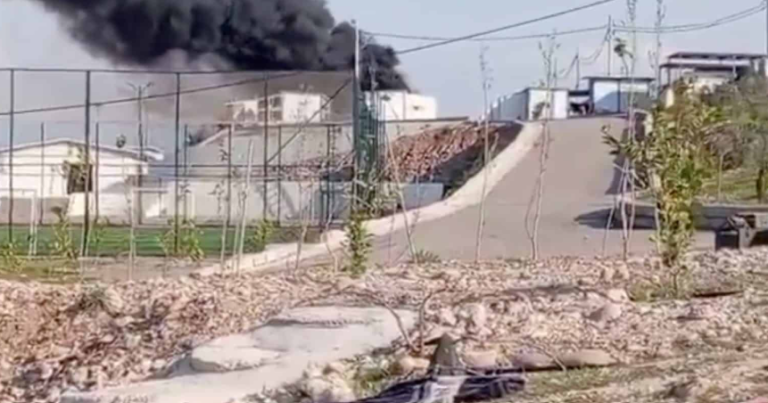
According to multiple Nigerian outlets citing AFP, security sources and local officials, suspected ISWAP and Boko Haram fighters attacked the Forward Operating Base at Mairari, in Guzamala Local Government Area, on the night of October 13 into October 14. Reports attributed to AFP said roughly 15 soldiers and five members of the Civilian Joint Task Force (CJTF) militia were killed and the base was burned, with surviving troops withdrawing toward Monguno. Reuters-sourced reporting gave a lower, partial figure of at least 10 soldiers killed and about 20 wounded. As of October 16, the Nigerian Army had not issued a full public casualty count for the incident, according to Premium Times, so the toll should be treated as unconfirmed pending an official statement.
The Mairari assault followed an October 6 attack on a base housing the Army’s 101 Special Forces Battalion at Kukawa, where military sources said at least eight soldiers were killed before air support helped troops repel the attackers; the Army separately said more than 25 attackers were killed in the same engagement, a figure that has not been independently verified. On October 17, at least eight more soldiers died when their patrol vehicle struck a landmine attributed to ISWAP near Gamboru, close to the border with Cameroon. The Nigerian Army’s Chief of Staff visited Maiduguri, Borno’s capital, in the aftermath of the attacks, though a detailed public statement on the Mairari raid had not been released at the time of writing.
Mairari itself has been a recurring target: the same base was attacked in July 2026, when the military said troops repelled an assault involving vehicle-borne improvised explosive devices (VBIEDs) without the base being breached. The October raid, by contrast, is reported to have resulted in the facility being overrun and set alight — a more serious outcome that analysts and local reporting describe as among ISWAP’s most coordinated operations in the area this year. It also follows a deadly ISWAP raid in Borno in April 2026 that killed civilians and prompted a similar military counter-claim of dozens of insurgents killed.
The Threat and the Response
ISWAP, which split from Boko Haram in 2016 and operates mainly around Lake Chad’s islands and the Nigeria-Niger-Chad-Cameroon border zone, has spent much of 2026 expanding its tactical toolkit beyond small-arms raids. Nigerian military and local reporting from earlier this year — including a January attack on a base at Sabon Gari and reporting by ADF Magazine on the group’s growing use of armed drones — describe ISWAP fighters using quadcopter-type drones for reconnaissance and to drop explosives ahead of ground assaults, alongside RPG attacks aimed specifically at armored vehicles and VBIEDs used to breach base perimeters. Nigeria’s Operation Hadin Kai, the military’s counter-insurgency command for the Lake Chad Basin, has reported repelling several coordinated attacks on forward bases this year and recovering weapons including RPG tubes and PKT machine guns, but the string of October incidents suggests the insurgents retain the initiative in parts of Borno.
The attacks land in the middle of a Nigerian hardware modernization push explicitly aimed at this fight. Bell and Textron began production this year of Nigeria’s first AH-1Z Viper attack helicopters, intended in part for close air support in exactly this kind of counter-insurgency role, while Leonardo’s M-346FA light attack jets are clearing testing ahead of delivery. Ankara-based DASAL has also signed a deal to supply Nigeria with 100,000 loitering munitions, and a Nigerian firm, BabaSky, recently unveiled an integrated counter-drone system to the Army and Air Force — a direct response to the kind of drone-backed raids seen at Sabon Gari and, reportedly, in the run-up to the Mairari attack. None of that equipment appears to have been in place in time to prevent the October wave, underlining a lag between procurement announcements and fielded capability that is common in African counter-insurgency campaigns.
Regional Context
The Lake Chad Basin campaign is coordinated loosely through the Multinational Joint Task Force (MNJTF), which groups Nigeria, Chad, Cameroon, Niger and Benin, but the force’s cohesion has been strained this year after Niger’s withdrawal from the arrangement amid its own political and security realignment. Regional analysts, including the International Crisis Group, have pointed to funding gaps, overlapping national commands and slow procurement cycles as persistent constraints on the MNJTF’s ability to respond to an adaptive insurgency. ISWAP’s pattern in October — hitting three separate locations across a roughly 150-kilometer stretch of northern and eastern Borno within less than two weeks — mirrors tactics used by other decentralized insurgent and militia networks in the Sahel, where mobile units strike dispersed, under-resourced outposts rather than contesting fixed positions directly.
Why It Matters
Borno State sits at the center of an insurgency now in its sixteenth year, and the scale of the October losses — even taking the more conservative casualty figures — represents one of the heavier tolls on Nigerian forces in 2026. The attacks also test the credibility of a major, multi-supplier re-equipment program spanning American, Italian, Turkish and domestic Nigerian firms. Whether that pipeline of helicopters, light attack aircraft, loitering munitions and counter-drone systems translates into fewer overrun bases over the coming months will be a key indicator of whether Nigeria’s security forces can regain the initiative in the Lake Chad Basin, or whether ISWAP’s drone-and-VBIED playbook continues to outpace the military’s response.
What Happens Next
The Nigerian Army has not announced a specific operational response to the Mairari attack beyond the Chief of Army Staff’s visit to Maiduguri. Analysts following the campaign expect increased air patrols and a possible reinforcement of forward bases in Guzamala and Kukawa in the near term, while the delivery timelines for the AH-1Z Vipers, M-346FA jets and DASAL loitering munitions — most of which point to 2027 for meaningful fielded numbers — remain the slower-moving variable in the campaign.
Frequently Asked Questions
What happened in Borno State in October 2026?
ISWAP fighters attacked Nigerian military positions at Kukawa (October 6), overran and burned a forward operating base at Mairari (October 13-14), and detonated a roadside bomb that killed soldiers near Gamboru (October 17). Reported death tolls vary by source and have not been fully confirmed by the Nigerian Army.
Who is ISWAP and how does it differ from Boko Haram?
ISWAP split from Boko Haram in 2016 after pledging allegiance to the Islamic State. It operates mainly in the Lake Chad Basin and has generally focused more on attacking military and government targets than on civilian atrocities, which remain more associated with the rival Boko Haram faction led until his 2021 death by Abubakar Shekau.
What weapons has ISWAP been using in its recent attacks?
Nigerian military reporting and local media describe ISWAP increasingly combining small quadcopter-type drones for reconnaissance and dropping munitions, RPGs aimed at armored vehicles, and vehicle-borne improvised explosive devices to breach base perimeters, alongside conventional small-arms assaults.
How is Nigeria responding to the escalation?
Nigeria is in the middle of a broader modernization effort that includes AH-1Z Viper attack helicopters entering production, M-346FA light attack jets nearing delivery, a 100,000-unit loitering munitions order from Turkey’s DASAL, and a new domestically built counter-drone system from BabaSky Technologies. Most of this hardware is not expected to reach meaningful operational numbers before 2027.
Is the Multinational Joint Task Force still active in the region?
Yes, but its effectiveness has been questioned after Niger’s withdrawal from the force and persistent reports of funding and coordination gaps among the remaining member states — Nigeria, Chad, Cameroon and Benin.
Sources
- AFP, via Sahara Reporters, “ISWAP Terrorists Kill About 15 Soldiers, Burn Military Vehicles in Attack on Borno Base,” October 15, 2026 — primary casualty and base-overrun details for the Mairari attack.
- Premium Times Nigeria (via UA.news), “20 security personnel killed in Nigeria base attack,” October 2026 — confirms the Army had not issued an official casualty statement.
- allAfrica.com, “Nigeria: 14 Feared Dead As Terrorists Hit Military Base in Borno,” October 16, 2026 — alternative casualty figure and Reuters-sourced detail.
- The Cable, “Eight soldiers killed as patrol vehicle hits ‘ISWAP landmine’ in Borno,” October 2026 — details of the October 17 Gamboru-area landmine attack.
- News Central TV / ThePointNG, coverage of the October 6 Kukawa attack on the 101 Special Forces Battalion base.
- ADF Magazine, “ISWAP turns to armed drones,” 2026 — background on ISWAP’s adoption of armed drones and RPG tactics against armored vehicles.
- Reuters, via Internazionale, “Drone-backed militants attack Nigerian army base, several soldiers dead,” January 29, 2026 — earlier escalation benchmark for ISWAP drone use at Sabon Gari.
- Free Malaysia Today, “Niger withdraws from Lake Chad military force,” March 2025 — context on MNJTF cohesion.