NLAW Explained: The British-Swedish Anti-Tank Missile Made Famous in Ukraine
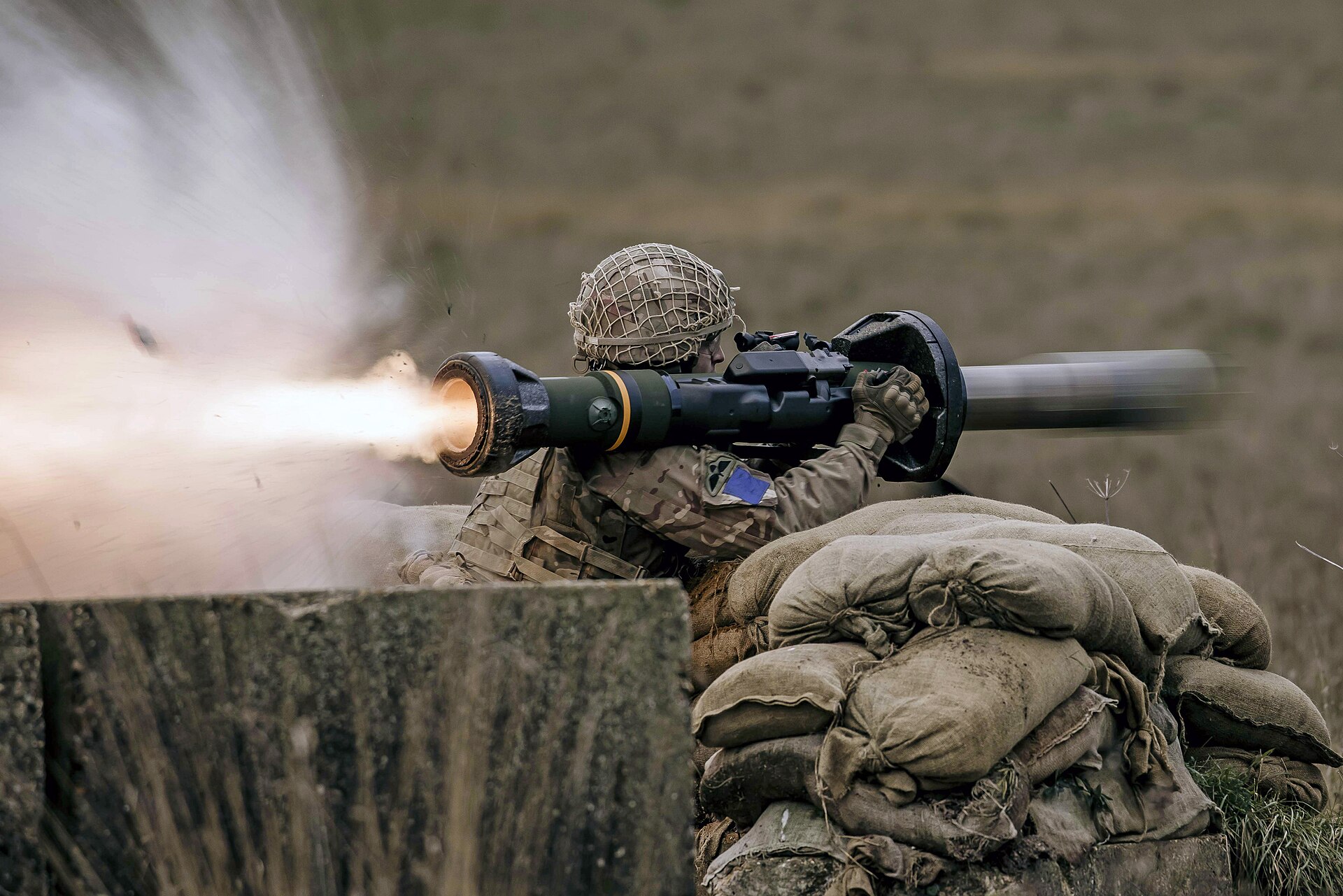
In the first weeks of Russia’s full-scale invasion of Ukraine in 2022, one weapon became a symbol of Ukrainian resistance: the NLAW. Light, simple and lethal at short range, the British-Swedish missile helped infantry stop Russian armoured columns around Kyiv. Here is how it works and why armies keep buying it.
- Next generation Light Anti-tank Weapon, developed by Saab with the UK
- Built in Sweden and at Thales in Belfast, Northern Ireland
- Effective range of roughly 20 to 800 metres
- Weighs about 12.5 kg; single-use, shoulder-launched
- Top-attack and direct-attack modes against armoured vehicles
What is the NLAW?
The NLAW is a short-range, disposable anti-tank missile launched from the shoulder by a single soldier. It was developed by Saab Bofors Dynamics for the British Army and Sweden, which calls it Robot 57, and entered British service around 2009. Thales Air Defence in Belfast produces key components and assembles missiles for the UK.
How does it work?
Unlike the US Javelin, the NLAW does not lock on to a heat signature. It uses Predicted Line of Sight guidance: the soldier tracks the target through the sight for a couple of seconds, the weapon calculates its speed and direction, and the missile then flies to where the target will be. It can be fired from inside buildings thanks to a soft-launch system, which matters in urban combat.
Top attack
The NLAW’s main mode is overfly top attack. The missile flies about a metre above the line of sight and detonates its downward-firing warhead as it passes over the vehicle, hitting the thin roof armour. A direct-attack mode is available for soft targets, buildings or when the target is close.
NLAW in Ukraine
Britain began shipping NLAWs to Ukraine in January 2022, weeks before the invasion, eventually sending several thousand. Ukrainian troops used them in ambushes against Russian tanks and armoured vehicles advancing on Kyiv, Chernihiv and Kharkiv. The weapon’s simplicity meant new soldiers could be trained quickly, and footage of NLAW hits spread widely online.
NLAW vs Javelin
The two missiles complement each other. The Javelin reaches up to around 2.5 to 4 km, uses a reusable command launch unit and an infrared seeker, but is heavier and much more expensive. The NLAW is cheaper, lighter and quicker to use, but only out to several hundred metres. Many units prefer a mix of both.
Verdict
The NLAW proved that a well-designed, affordable short-range missile can change the balance in infantry combat. Demand after 2022 pushed Saab and the UK to expand production, and the weapon remains a key part of NATO anti-armour stocks as Europe rearms.
Featured image: Cpl Danny Houghton / OGL 3, via Wikimedia Commons