The Return of Conscription in Europe: Which Countries Have Military Service in 2026?
After the Cold War most European countries abolished compulsory military service and built smaller professional armies. Russia’s war against Ukraine has reversed that trend. Across the continent, governments are bringing back conscription, extending it or designing new forms of national service. Here is where things stand in 2026.
- Finland, Estonia, Norway, Greece, Austria and Switzerland never dropped it
- Lithuania, Sweden, Latvia and Croatia brought it back
- Denmark extended conscription to women
- Germany and France are expanding voluntary service models
- Manpower is NATO’s growing weak point
Why conscription is back
The war in Ukraine showed that modern conflicts consume soldiers at a frightening rate and that trained reserves are essential. NATO’s new defence plans require far larger forces than most European armies have. Professional armies struggle to recruit enough volunteers, especially with low unemployment and ageing populations, so conscription is returning as a way to build mass and a deeper reserve.
Countries that never stopped
Finland is the model: almost every man serves, and the country can mobilise a wartime force of around 280,000 with a reserve of about 900,000. Estonia, Norway, Greece, Cyprus, Austria and Switzerland also kept compulsory service, as did Türkiye. Norway selects only the most motivated conscripts, and it was the first NATO country to extend service to women.
Countries that brought it back
Lithuania reinstated conscription in 2015 after Russia annexed Crimea. Sweden reactivated it in 2017 and calls up a selected share of each age group. Latvia restored it in 2023. Croatia decided to reintroduce a short basic military training period from 2026. Denmark extended conscription to women and lengthened service to around 11 months.
New hybrid models
Larger countries are moving more cautiously. Germany has adopted a new military service model built on voluntary service, but with compulsory questionnaires and medical screening for young men so that the state knows who is available, and the option of returning to compulsory service if not enough volunteers come forward. France has launched a new voluntary national military service for young people. Poland aims to give basic military training to around 100,000 volunteers a year, and the Netherlands and Belgium are expanding voluntary service years.
The debate
Supporters say conscription builds large reserves, strengthens social resilience and sends a strong deterrent signal. Critics argue it is expensive, takes instructors away from frontline units and produces soldiers less skilled than professionals. Most experts agree that a mix is ideal: a professional core plus trained conscripts or reservists who can be called up quickly.
Verdict
Europe is rediscovering that numbers still matter in war. The countries closest to Russia already rely on conscription; the big Western European powers are slowly moving in the same direction. Whether volunteers will be enough or full conscription returns may be one of the key defence debates of the next decade.
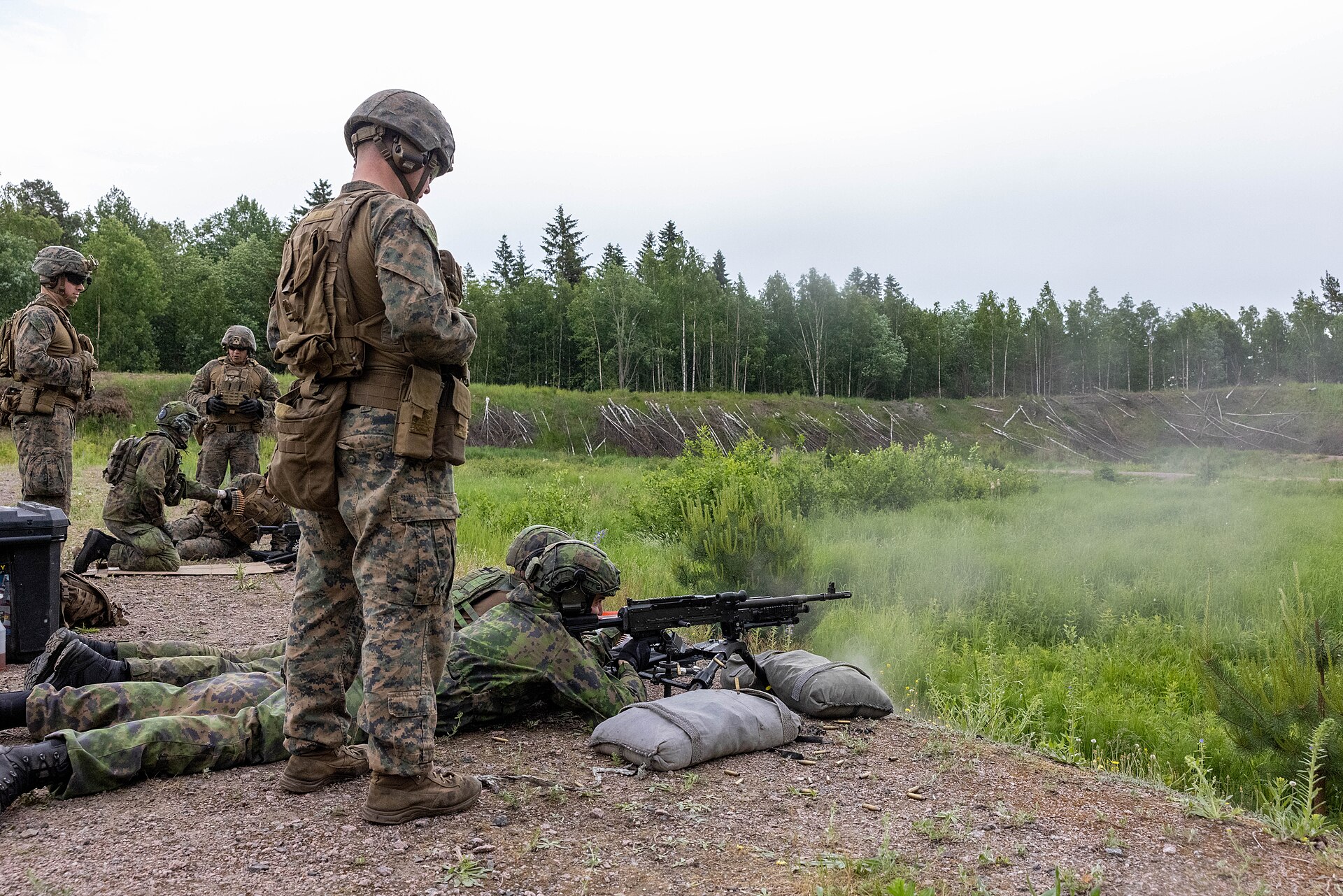
Featured image: U.S. Marine Corps photo by Lance Cpl. Francis Hrosar / Public domain, via Wikimedia Commons