How Strong Is Australia’s Military in 2026?
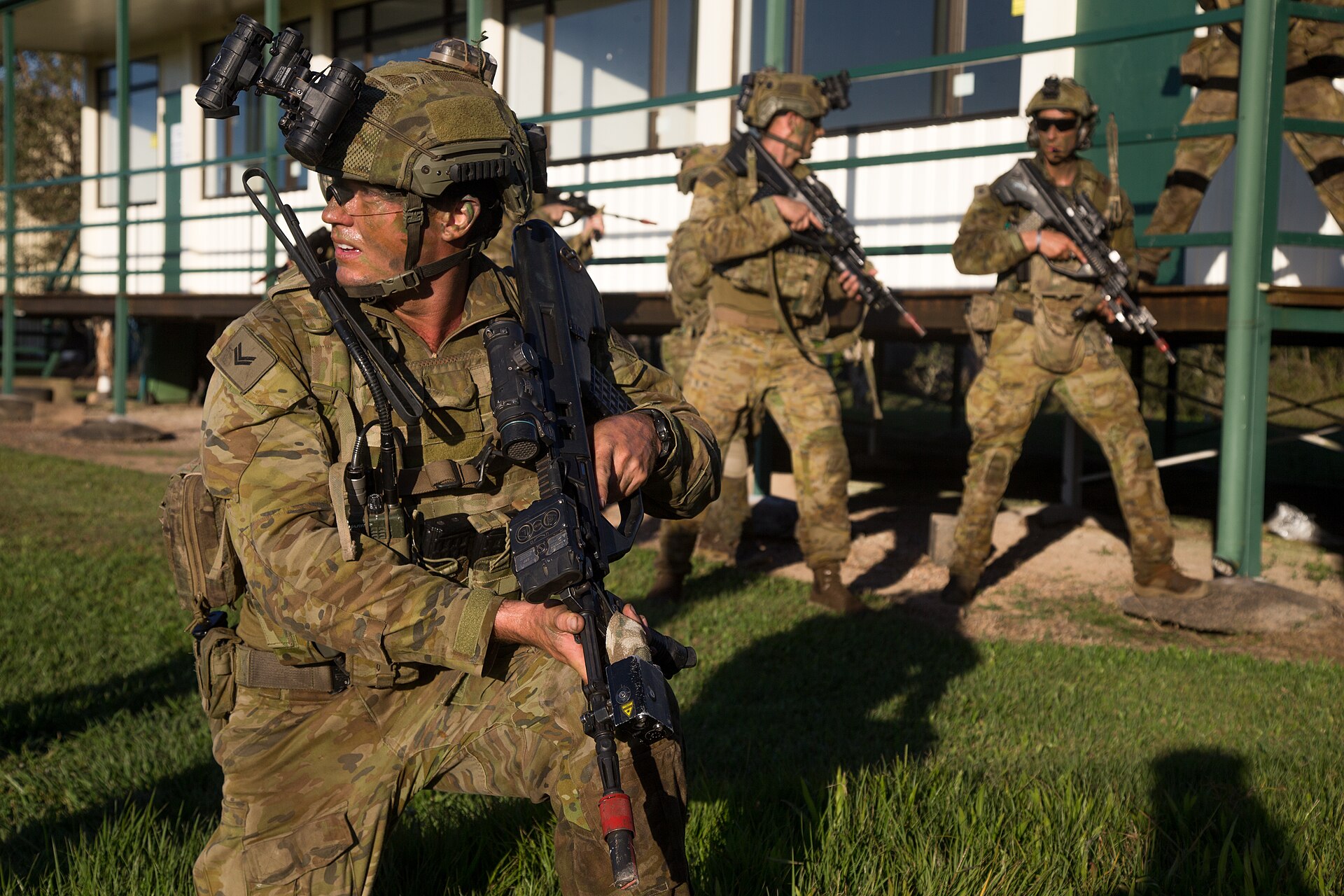
Australia has a small army by global standards, but few countries are changing their defence posture as deliberately. Driven by China’s rise, Canberra has rebuilt its strategy around one idea: keeping any adversary far from Australian shores. Here is how strong the Australian Defence Force (ADF) is in 2026.
- Global Firepower 2026 rank: 17th
- Around 60,000 full-time personnel
- AUKUS: Virginia-class boats from the 2030s, SSN-AUKUS later
- 72 F-35A fighters plus E-7A, P-8A and EA-18G
- Upgraded Mogami chosen for new frigate fleet
Budget and strategy
Australia spends a little over 2 percent of GDP on defence, and the government plans to lift that to around 2.3 percent by the early 2030s, with Washington pressing for considerably more. The 2023 Defence Strategic Review and the 2024 National Defence Strategy replaced the old idea of a balanced force with a “strategy of denial”: long-range missiles, submarines and aircraft that can hold enemy forces at risk in the sea and air approaches to the north. Global Firepower ranks Australia 17th in 2026.
AUKUS and the submarine plan
The centrepiece is AUKUS, the 2021 pact with the US and UK. Under the plan, Australia will buy three to five US Virginia-class nuclear-powered attack submarines from the early 2030s, then build a new SSN-AUKUS design with Britain from the early 2040s. Until then, six Collins-class diesel boats are being life-extended. The project is the largest and most expensive in Australian history, and its schedule depends on American shipyards that are already stretched.
Air power
The Royal Australian Air Force is one of the most advanced in the region. It flies 72 F-35A Lightning IIs, EA-18G Growler electronic attack jets, P-8A Poseidon maritime patrol aircraft, E-7A Wedgetail airborne early warning aircraft and MQ-4C Triton drones. Boeing Australia’s MQ-28 Ghost Bat, a “loyal wingman” drone developed locally, is moving into production.
Navy and the new frigates
The navy operates two Canberra-class amphibious assault ships, three Hobart-class air warfare destroyers and Anzac-class frigates. In 2025 Australia chose Japan’s upgraded Mogami-class design for its new general-purpose frigates, the first major Japanese warship export, while BAE’s larger Hunter-class anti-submarine frigates are under construction in Adelaide.
Army and long-range fires
The army of about 30,000 regular soldiers is being reshaped for littoral operations, with landing craft, Boxer and Redback armoured vehicles, and HIMARS launchers firing the Precision Strike Missile. Through its Guided Weapons and Explosive Ordnance enterprise, Australia is also starting to make missiles at home, including GMLRS rockets.
Strengths and weaknesses
Australia’s strengths are its technology, its deep integration with the US military and its geography. Its weaknesses are a small workforce, long gaps before AUKUS capabilities arrive and a defence industry still scaling up. If the plans hold, the ADF of the late 2030s will be a much more lethal long-range force than the one it is today.
Featured image: U.S. Marine Corps photo by Lance Cpl. Alyssa Chuluda / Public domain, via Wikimedia Commons