How Strong Is India’s Military in 2026? Budget, Troops, Jets and Nuclear Forces
India has the fourth most powerful military in the world in 2026, according to the Global Firepower index, behind only the United States, Russia and China. It combines one of the largest armies on the planet with a growing navy, a nuclear triad and a defense industry that is starting to export at scale. But it also faces a rare challenge: two nuclear-armed neighbors, China and Pakistan, along long and disputed borders.
- Global Firepower 2026 rank: 4th
- Military spending (SIPRI, 2025): $92.1 billion
- Active personnel: about 1.45 million
- Aircraft carriers: 2 (Vikramaditya, Vikrant)
- Nuclear warheads: around 180 (estimates)
Budget: fifth-largest in the world
SIPRI estimates India spent $92.1 billion on its military in 2025, up 8.9% from the year before and the fifth-highest total worldwide. A large share still goes to salaries and pensions for its huge workforce, which limits how much is left for new equipment, a long-running problem for Indian planners.
People: one of the largest armed forces
India has roughly 1.45 million active personnel, most of them in the Army, which guards the Line of Control with Pakistan and the Line of Actual Control with China. Large reserve and paramilitary forces add depth.
Air Force: modern jets, too few squadrons
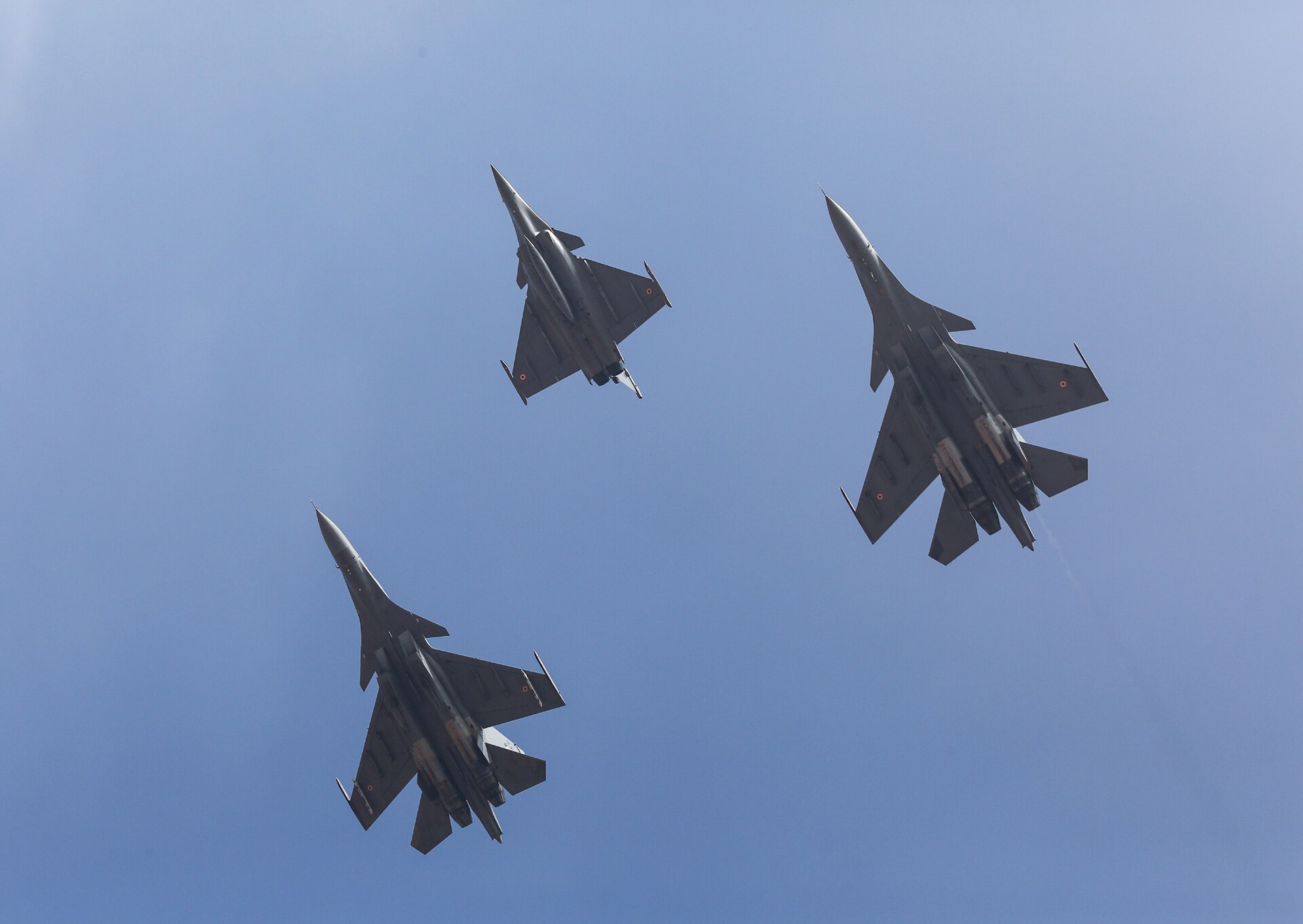
The Indian Air Force flies Su-30MKI, Rafale, Mirage 2000 and Tejas fighters, plus tankers, AWACS and transport aircraft. Its biggest problem is numbers. After the last MiG-21s retired, squadron strength fell to its lowest level in decades, around 29 against an authorized 42. The indigenous Tejas Mk1A is meant to fill the gap, but deliveries have been held up by delays in GE F404 engine supply.
Navy: two carriers and a growing submarine fleet
The Indian Navy operates two aircraft carriers, INS Vikramaditya and the homegrown INS Vikrant, and in 2025 ordered 26 Rafale M fighters to fly from them. It runs Kolkata- and Visakhapatnam-class destroyers, Kalvari-class submarines and nuclear-powered ballistic missile submarines, and keeps adding domestically built ships at a steady pace.
Nuclear forces and missiles
India has a full nuclear triad. Independent estimates put its arsenal at around 180 warheads, deliverable by Agni ballistic missiles, Arihant-class submarines and aircraft. It also fields the BrahMos supersonic cruise missile, developed with Russia, and the S-400 air defense system.
Tested in combat
In May 2025, India launched Operation Sindoor, a short but intense exchange of missile, drone and air strikes with Pakistan. It was the most serious clash between the two in decades and a real-world test of Indian air defenses, precision weapons and drones, lessons that are now shaping procurement.
Defense industry and exports
Under its “Aatmanirbhar Bharat” (self-reliant India) policy, New Delhi has banned imports of hundreds of items and steered orders to local firms. Defense exports reached a record of about ₹23,600 crore in fiscal 2024-25, led by BrahMos, artillery, ammunition and electronics.
Verdict
India is a major military power with real nuclear deterrence, a capable navy and deep manpower. Its main weaknesses are a shrinking fighter fleet, slow procurement and a budget weighed down by personnel costs. How fast its own industry can deliver will decide whether India closes the gap with China.
Featured image: Indian Air Force / PIB / GODL-India, via Wikimedia Commons