

US Negotiates New Military Bases in Greenland to Counter Russia and China

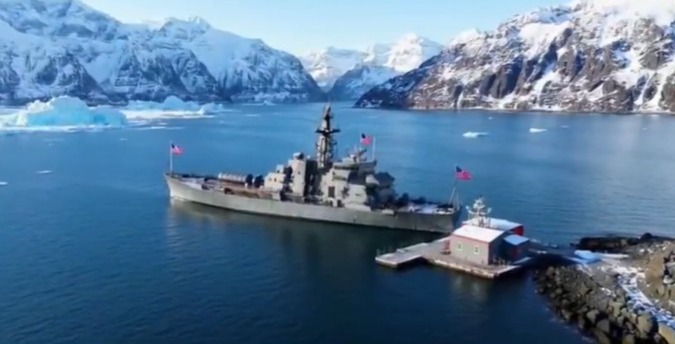

NUUK, GREENLAND – In a move that signals a dramatic escalation in the “Great Power Competition” for the Arctic, the United States is in active negotiations to establish two new military bases in Greenland. According to recent defense news reports, Washington is leveraging a 75-year-old defense pact with Denmark to secure access to the strategic sites of Narsarsuaq and Kangerlussuaq.
The move is seen as a direct response to the rapid expansion of Russian military infrastructure and Chinese economic influence in the High North, a region that is becoming increasingly navigable due to melting polar ice.
The 1951 Defense Pact: A Legal Masterstroke
The legal framework for this expansion is the 1951 Agreement between the U.S. and the Kingdom of Denmark concerning the defense of Greenland. This Cold War-era treaty grants the U.S. the right to establish “Defense Areas” on the island to support NATO operations.
By reactivating these clauses, the U.S. administration aims to bypass the need for an entirely new sovereign treaty, instead building upon an existing alliance framework. This strategy has allowed the U.S. to move quickly in designating Kangerlussuaq and Narsarsuaq as critical logistics and surveillance hubs.
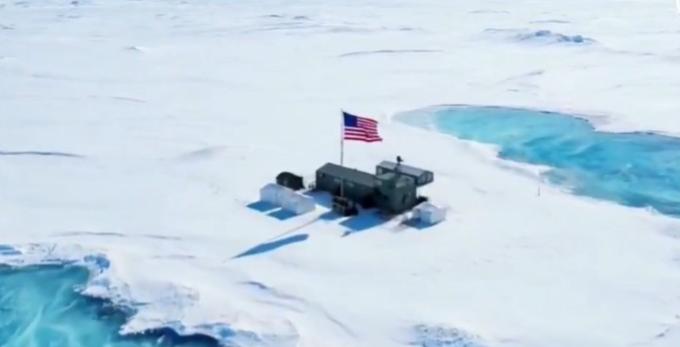
Strategic Geography: Narsarsuaq and Kangerlussuaq
The two selected locations are not incidental; they represent the “gold standard” of Arctic logistics:
-
Kangerlussuaq: Home to Greenland’s largest commercial airport, its massive runway is capable of supporting heavy military transport aircraft, including the C-17 Globemaster and strategic bombers. It serves as the primary gateway to the Greenland Ice Sheet.
-
Narsarsuaq: Located in Southern Greenland, this site offers deep-water port access. Its proximity to the GIUK Gap (Greenland, Iceland, and the United Kingdom) makes it an ideal location for anti-submarine warfare (ASW) and naval refueling operations.
Countering the “Polar Silk Road” and Russian Sorties
The primary driver behind this deployment is the “Arktik” (Arctic) buildup by Moscow and Beijing. Russia has recently modernized over a dozen Soviet-era airfields and ports in the region, aimed at securing the Northern Sea Route. Meanwhile, China has declared itself a “Near-Arctic State,” seeking to establish a “Polar Silk Road” through massive mining and infrastructure investments.
“The Arctic is no longer a buffer zone; it is a front line,” a senior defense official noted. By securing Narsarsuaq and Kangerlussuaq, the U.S. can monitor Russian naval movements from the Northern Fleet more effectively and prevent Chinese state-owned enterprises from gaining a foothold in Greenland’s critical infrastructure.
The Role of Diplomacy
While the U.S. maintains that these bases are strictly for “mutual defense,” the negotiations have placed significant pressure on the Danish government and the Greenlandic home-rule authorities (Naalakkersuisut). The challenge for Washington lies in balancing its military imperatives with the sovereignty concerns of Nuuk and Copenhagen. Recent diplomatic efforts, led by high-ranking officials like Marco Rubio, have focused on ensuring that the local population benefits from the infrastructure upgrades while maintaining a “light footprint” of American personnel.
Conclusion: The New Frontier of Defense
For the global defense news community, the return to Greenland marks the end of the post-Cold War “Arctic Exceptionalism”—the idea that the North was exempt from global conflict. As the U.S. settles back into its historical garrisons, the message is clear: the North Atlantic is once again a contested space, and the battle for the High North has officially moved from the boardroom to the airfield.
Editor’s Note: This report is based on leaked NORTHCOM strategy documents and recent NATO briefing summaries. Defense & Tech will continue to monitor the progress of construction at the Kangerlussuaq site.