
THE EVOLUTION OF AIR DOMINANCE: UNDERSTANDING MODERN FIGHTER JETS


GLOBAL AEROSPACE DESK — A fighter jet is more than just a fast airplane; it is a high-performance military aircraft designed primarily for air-to-air combat. Over the decades, these machines have evolved from simple gun-toting biplanes to stealthy, networked supercomputers capable of engaging targets hundreds of miles away. To understand modern air power, one must understand the “Generations” of fighter technology.
What is a Fighter Jet?
A fighter jet is a specialized aircraft built for speed, agility, and lethality. Its primary role is to establish Air Superiority, ensuring that friendly forces can operate on the ground or sea without threat from the sky. Modern “Multi-role” fighters can also perform ground attacks, reconnaissance, and electronic warfare missions.

The Generation Gap: How They Evolved
Fighter jets are categorized into “Generations” based on significant leaps in technology, electronics, and aerodynamics.
1st & 2nd Generations (1940s – 1950s)
-
The Era of Speed: Transition from propellers to jet engines.
-
Technology: Basic radar, unguided rockets, and early heat-seeking missiles.
-
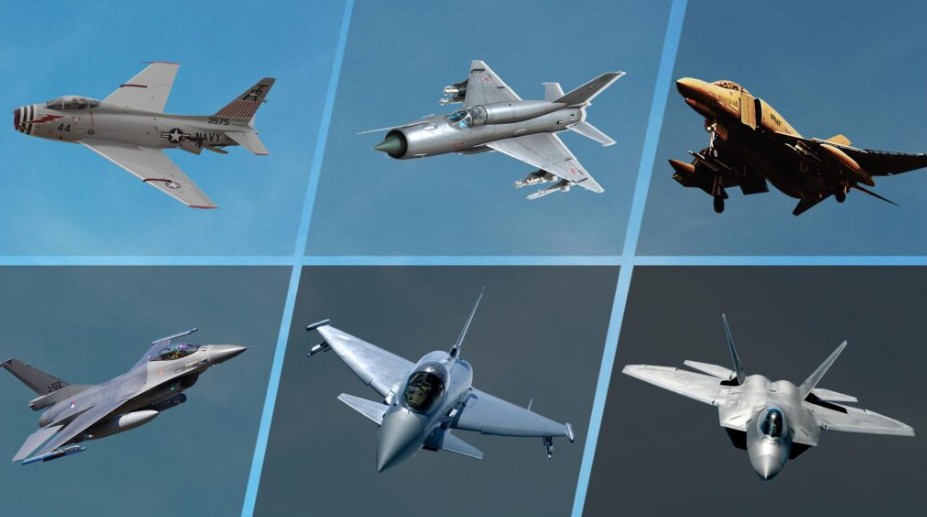
Examples: F-86 Sabre, MiG-15.
3rd Generation (1960s – 1970s)
-
The Era of Missiles: First multi-role capabilities and improved aerodynamics (supersonic flight became standard).
-
Technology: Beyond-Visual-Range (BVR) missiles and automated flight control systems.
-
Examples: F-4 Phantom II, MiG-21.
4th & 4.5 Generation (1980s – Present)
-
The Era of Agility & Glass Cockpits: Fly-by-wire systems allowed for extreme maneuverability.
-
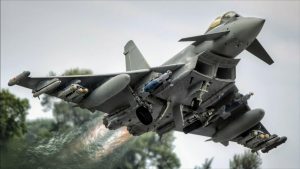
Technology: Digital cockpits, advanced Pulse-Doppler radars, and high-precision GPS weaponry. 4.5 gen (like the Rafale or Typhoon) added AESA radars and reduced radar cross-sections.
-
Examples: F-16 Fighting Falcon, Su-27, Eurofighter Typhoon.
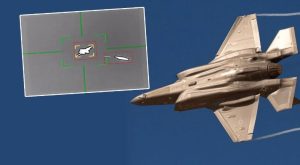
5th Generation (The Modern Standard)
-
The Era of Stealth & Fusion: Designed to be nearly invisible to radar.
-
Technology: Sensor Fusion (combining data from all sensors into one clear picture for the pilot), internal weapons bays, and “Supercruise” (supersonic flight without afterburners).
-
Examples: F-35 Lightning II, F-22 Raptor, J-20.
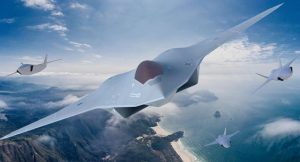
The Future: 6th Generation and Beyond
As we move toward the 2030s, the next leap involves Sixth-Generation fighters. These will feature:
-
Optional Manned/Unmanned flight: Ability to fly with or without a pilot.
-
Directed Energy Weapons: Use of lasers for defense and offense.
-
Digital Ecosystems: Acting as a “mother ship” for swarms of autonomous drones.