
North Korea Unveils the “Invisible Killer”: A New Era of Total Electronic Paralysis

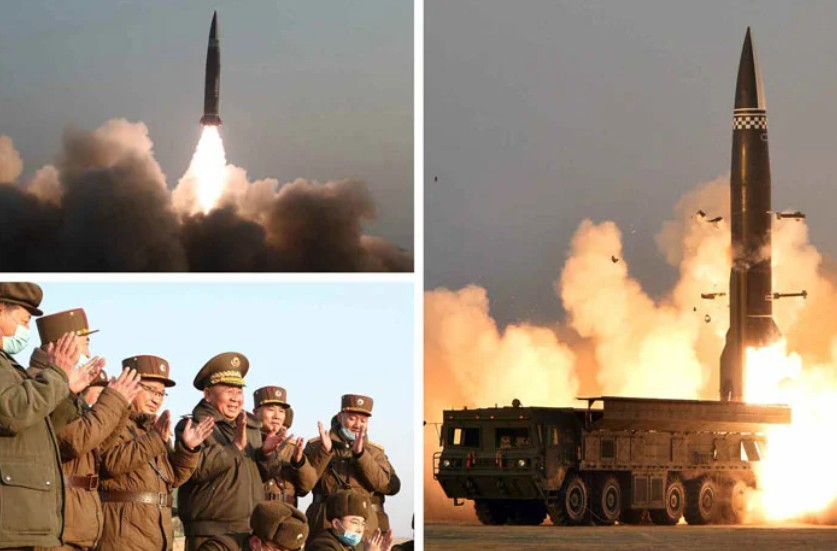

While the global intelligence community has long remained fixated on North Korea’s nuclear trajectory, a new and perhaps more immediate threat has emerged from the shadows: The Invisible War.
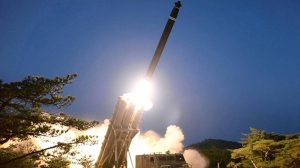
In a series of groundbreaking tests concluded this week, North Korea officially unveiled its “Invisible Killer” arsenal—a dual-threat system combining Carbon Fiber “Blackout” bombs with High-Power Microwave (HPM) warheads. This transition marks a shift in North Korean doctrine from physical destruction to total systemic neutralization.
1. The Spiderweb: North Korea’s Carbon Fiber “Blackout” Bomb
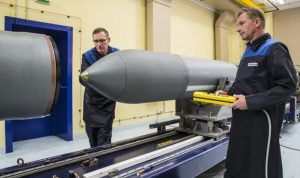
The first component of this new arsenal is a specialized missile designed to trigger a cascading failure of national infrastructure. Instead of high explosives, the warhead disperses millions of ultra-conductive carbon fiber filaments over a target area.
Once these microscopic threads settle on power grids and substations, they induce massive, uncontrollable short-circuits. The result? A “clean” strike that leaves buildings intact but plunges entire military bases or cities into a permanent blackout, effectively severing the enemy’s power supply in seconds.
2. The 7-Hectare “Electronic Dead Zone”
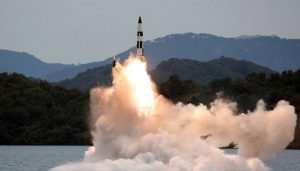
The second, and more technologically advanced, breakthrough is the tactical High-Power Microwave (HPM) warhead. North Korean state media confirmed that the missile creates an “Electronic Dead Zone” covering approximately 7 hectares (70,000 square meters).
Within this radius, a concentrated burst of electromagnetic energy penetrates the hardened shells of digital devices, “frying” microchips and permanently disabling computers, radar arrays, and communication nodes. In an era where every military unit depends on a digital “brain,” North Korea has just developed a way to lobotomize an entire battalion instantly.
3. The Aviation Kill-Switch: Dropping Drones from the Sky
Perhaps the most chilling aspect of the North Korean report is the “one-touch” neutralization of aerial assets. Modern fighter jets, helicopters, and UAVs rely on complex “Fly-by-Wire” and avionic systems.
North Korea’s HPM technology is specifically tuned to disrupt the frequencies used by these systems. By projecting an electromagnetic pulse into a flight corridor, the weapon forces a total system failure within the aircraft. Without its electronic nervous system, even the most advanced 5th-generation platform becomes a “ghost,” losing all aerodynamic control and plummeting to the ground without a single bullet ever being fired.
Strategic Implications: The End of Network Dominance?
For decades, Western defense strategy has been built on “Network-Centric Warfare.” The core assumption was that the army with the best data and the fastest connection wins. North Korea’s new weapons target that exact assumption.
“We are moving into an era where stealth is irrelevant if your sensors are melted,” notes a senior defense analyst for Defense & Tech. “If North Korea can deploy these weapons reliably, the tactical advantage shifts to whoever can fight effectively in the dark.”
Final Assessment: The Virus of Doubt
As the world analyzes the technical data from these tests, the true victory for North Korea may be psychological. By demonstrating the ability to shut down the grid and the cockpit alike, they have introduced a “virus of doubt” into Allied command structures.
The question for the Pentagon and regional allies has shifted: It is no longer about whether you can see the enemy, but whether your screens will stay on long enough to react when they arrive.
Editor’s Note: This report covers the April 2026 tests. All technical specifications regarding the 7-hectare HPM radius and carbon fiber dispersal patterns have been cross-referenced with regional signal intelligence reports.